



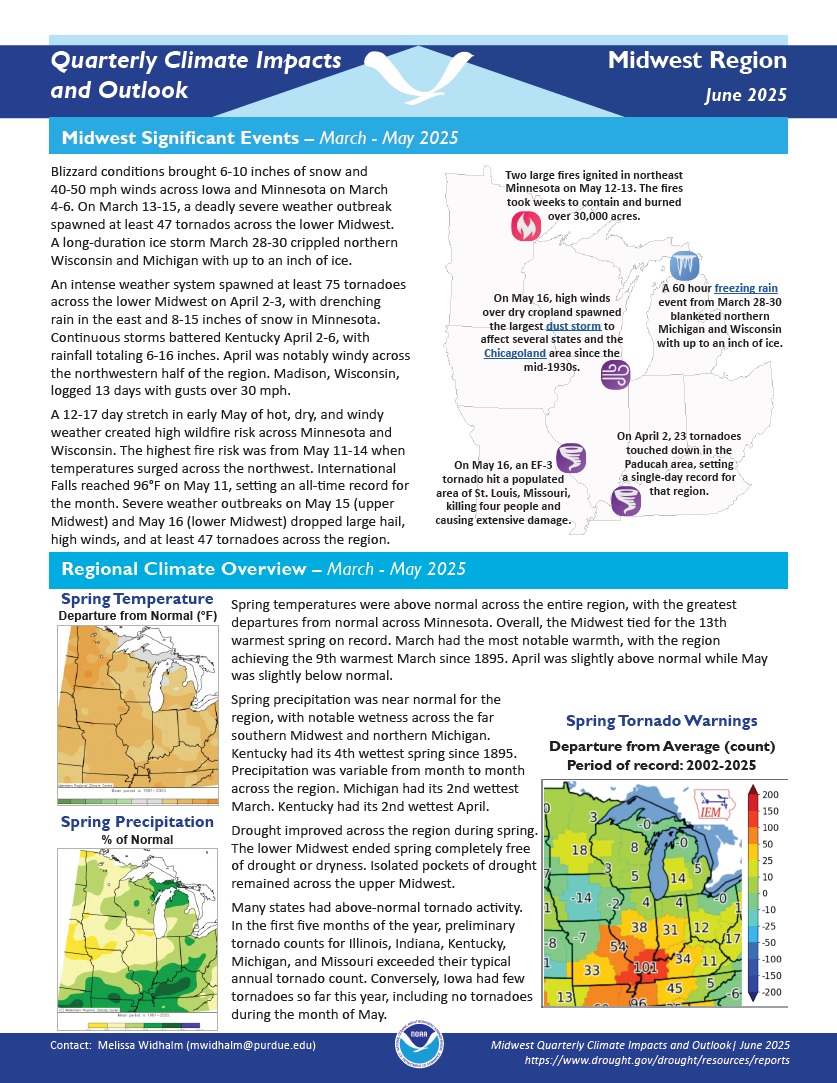
Quarterly Climate Impacts and Outlook for the Midwest Region for March–May 2025. Dated June 2025.
Spring temperatures were above normal across the entire region, with the greatest departures from normal across Minnesota. Overall, the Midwest tied for the 13th warmest spring on record. Spring precipitation was near normal for the region, with notable wetness across the far southern Midwest and northern Michigan. Kentucky had its 4th wettest spring since 1895.
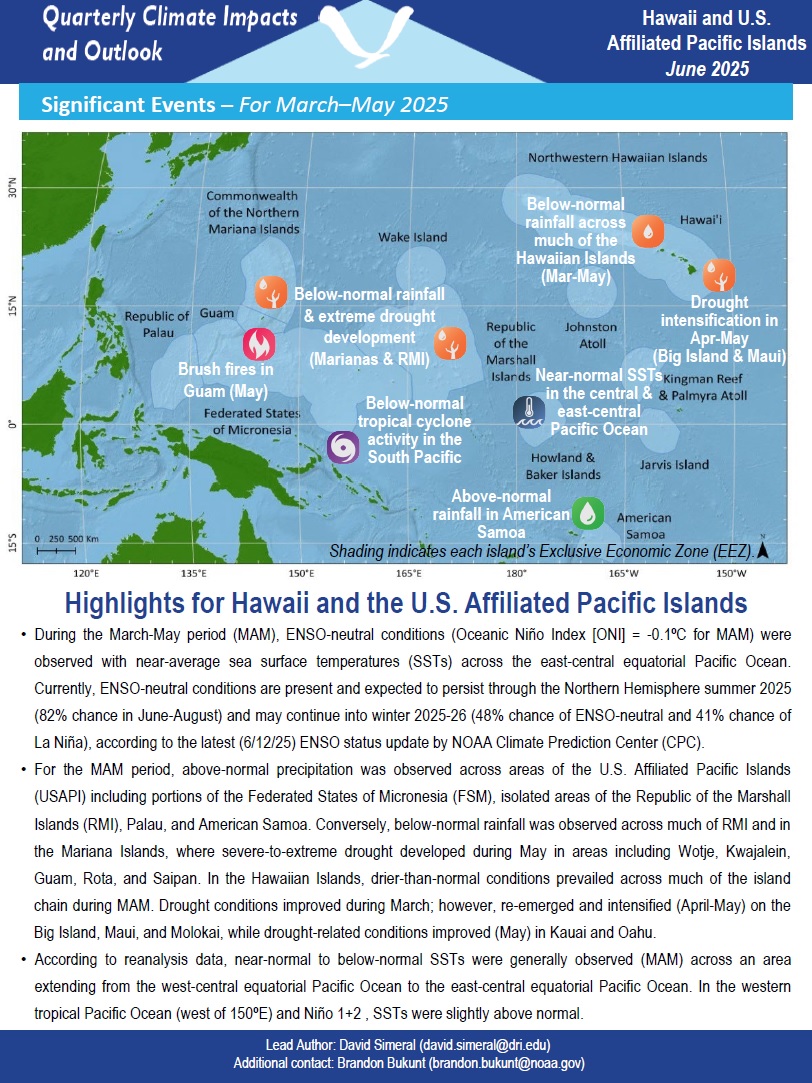
Quarterly Climate Impacts and Outlook for the Pacific Region for March–May 2025. Dated June 2025.
For the March-May period, above-normal precipitation was observed across areas of the U.S. Affiliated Pacific Islands (USAPI) including portions of the Federated States of Micronesia (FSM), isolated areas of the Republic of the Marshall Islands (RMI), Palau, and American Samoa. Conversely, below-normal rainfall was observed across much of RMI and in the Mariana Islands. In the Hawaiian Islands, drier-than-normal conditions prevailed across much of the island chain.
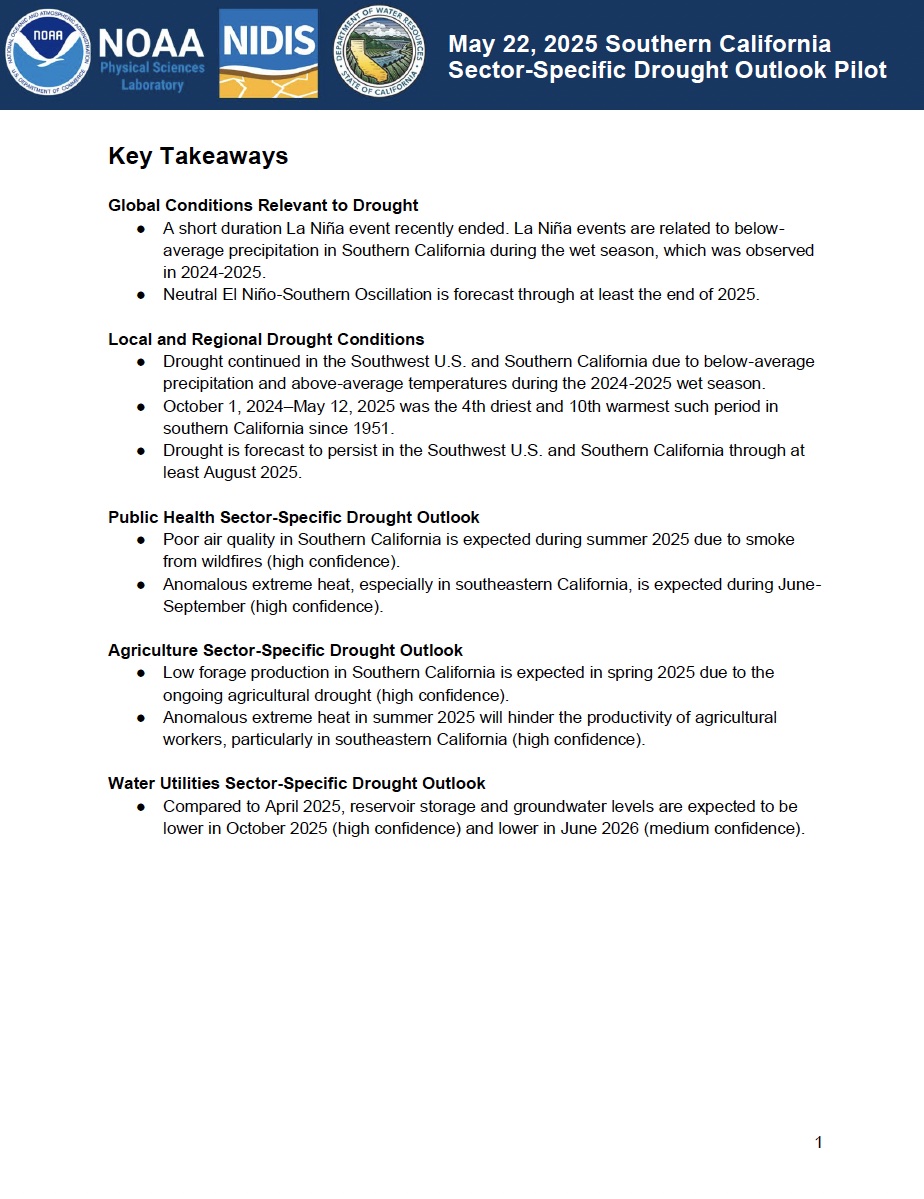
NOAA’s National Integrated Drought Information System (NIDIS) and Physical Sciences Laboratory are partnering with the California State Climatologist/California Department of Water Resources, NOAA’s National Weather Service and National Centers for Environmental Information, and the California-Nevada Adaptation Program (a NOAA CAP team) on the Sector-Specific Drought Early Warning Outlook – Southern California Pilot.
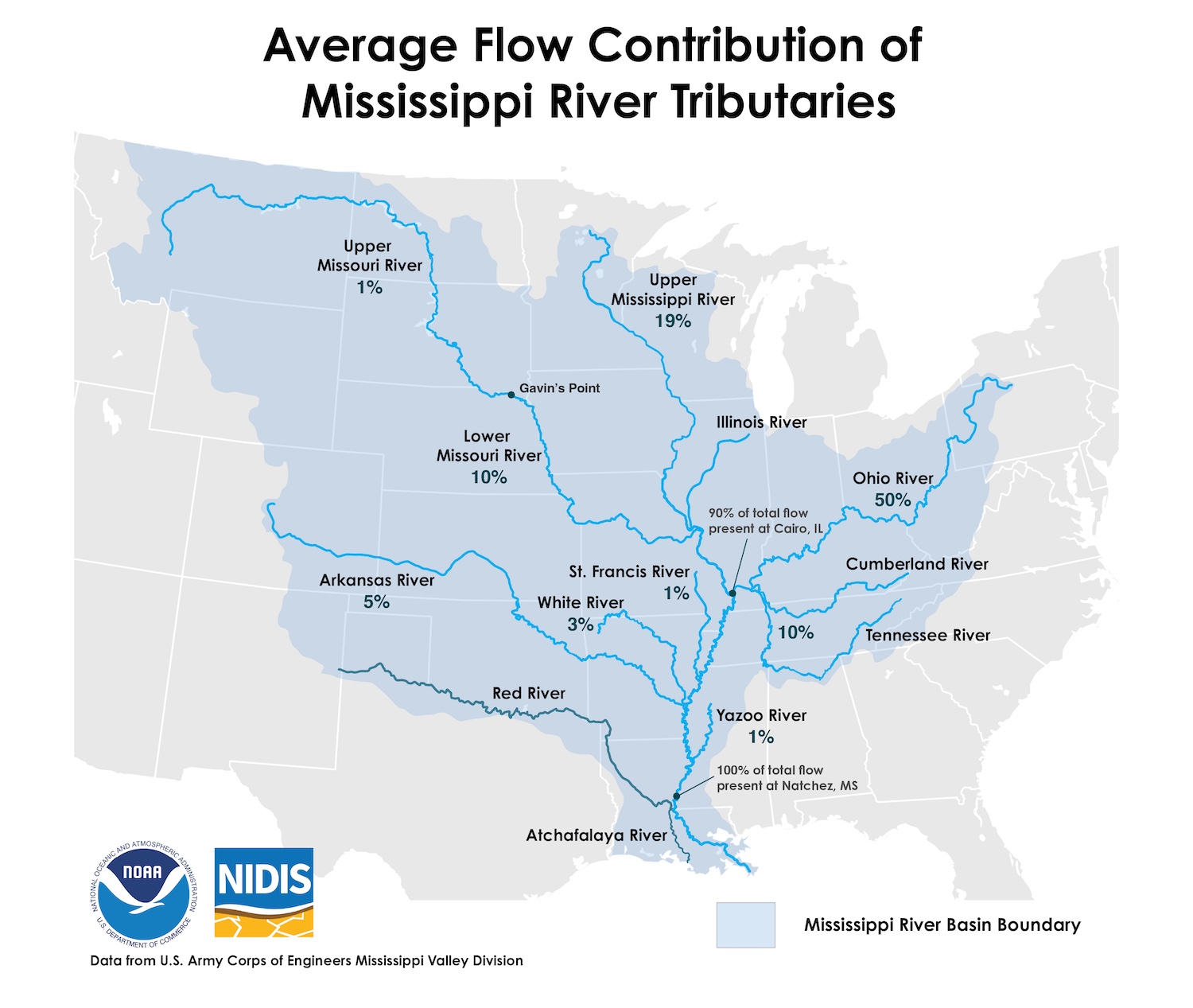
This graphic shows flow distribution across the Mississippi River Basin using data from the U.S. Army Corps of Engineers.
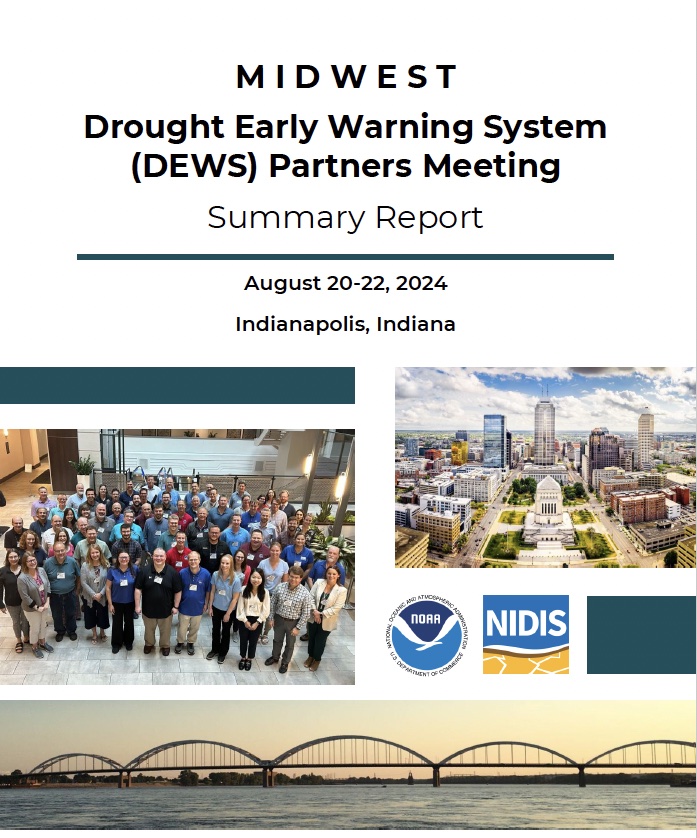
This report summarizes the ideas and thoughtful participation of speakers and attendees of the 2024 Midwest Drought Early Warning System (DEWS) Partners Meeting, held in Indianapolis, Indiana on August 20-22, 2024.
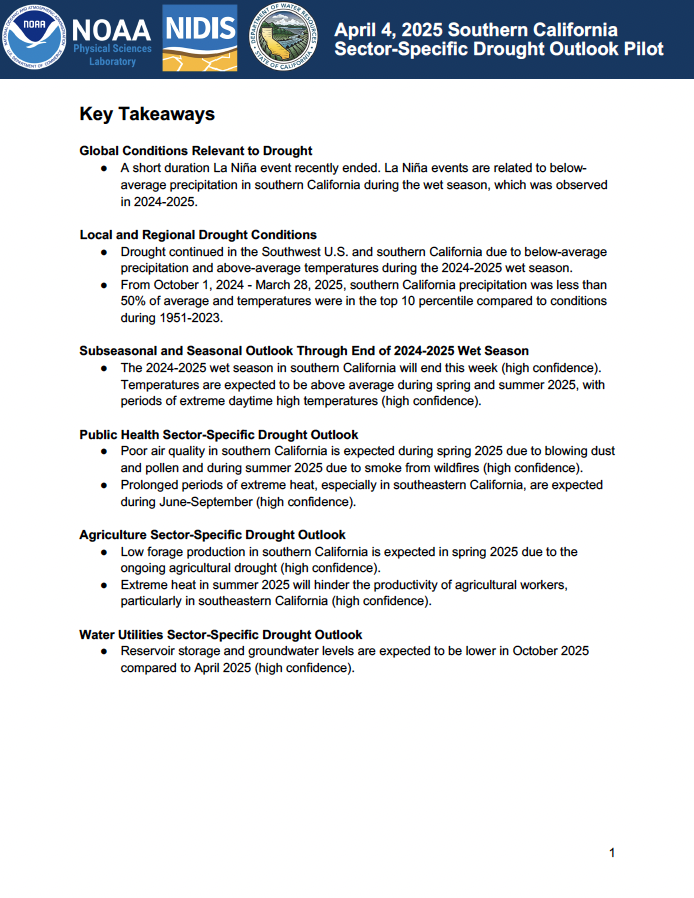
NOAA’s National Integrated Drought Information System (NIDIS) and Physical Sciences Laboratory are partnering with the California State Climatologist/California Department of Water Resources, NOAA’s National Weather Service and National Centers for Environmental Information, and the California-Nevada Adaptation Program (a NOAA CAP team) on the Sector-Specific Drought Early Warning Outlook – Southern California Pilot.
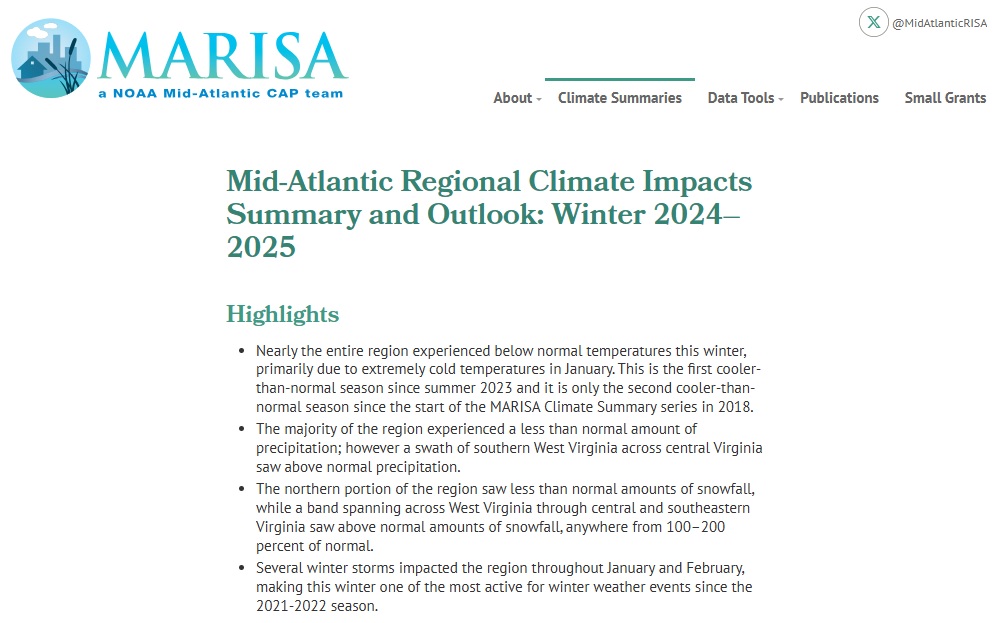
Quarterly Climate Impacts and Outlook for the Mid-Atlantic Region for December 2024–February 2025. Dated March 2025.
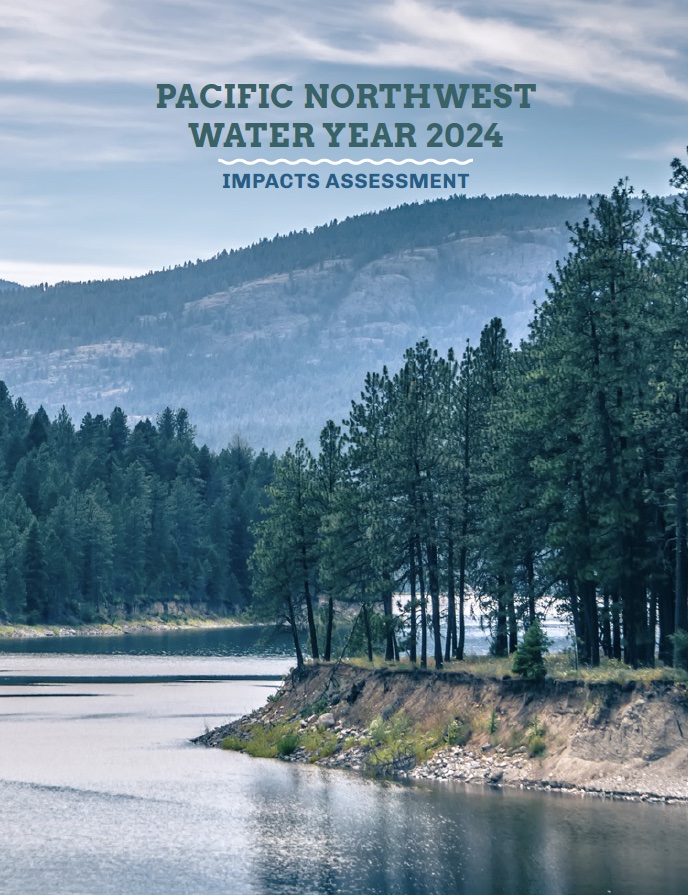
The purpose of the Pacific Northwest Water Year 2024 Impacts Assessment is to connect the water year conditions to sector-specific impacts to inform planning, response actions, and technical and scientific information needs. Ultimately, the assessment can be used as a resource for future management of drought and other climate extremes.
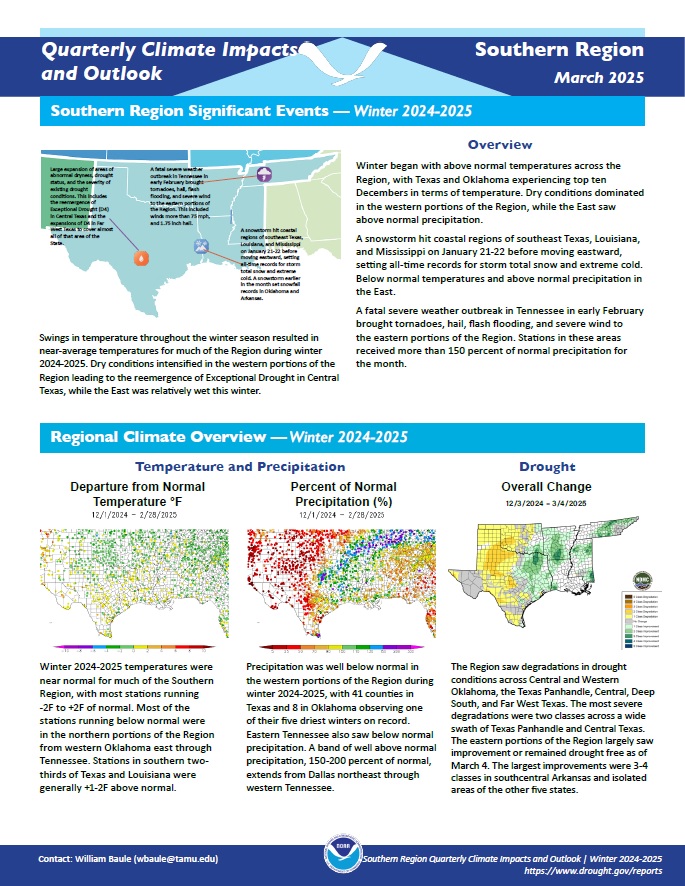
Quarterly Climate Impacts and Outlook for the Southern Region for December 2024–February 2025. Dated March 2025.
Winter 2024-2025 temperatures were near normal for much of the Southern Region, with most stations running 2°F below normal to 2°F above normal. Precipitation was well below normal in the western portions of the region, with 41 counties in Texas and 8 in Oklahoma observing one of their five driest winters on record.
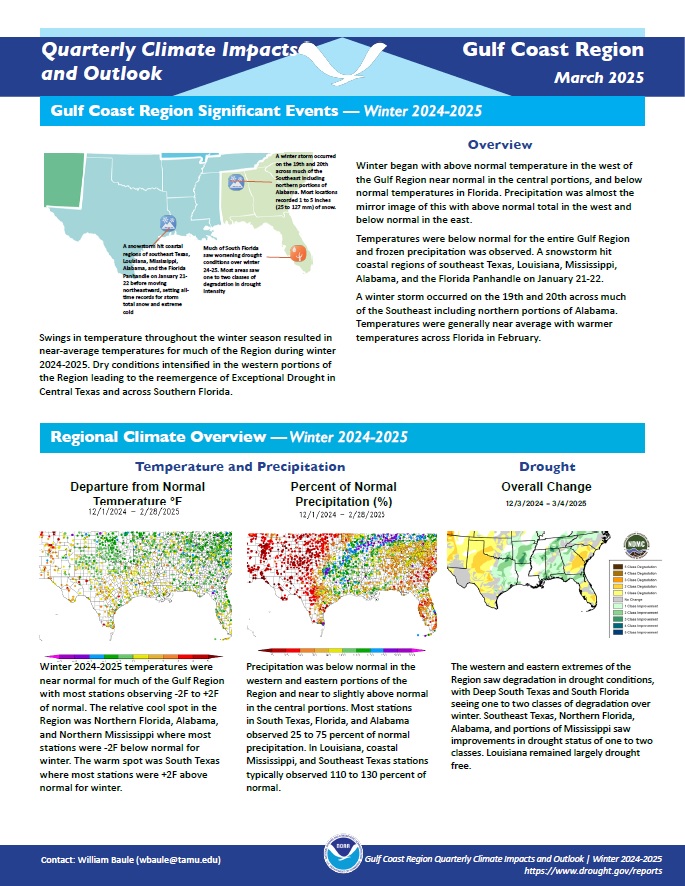
Quarterly Climate Impacts and Outlook for the Gulf Coast Region for December 2024–February 2025. Dated March 2025.
Winter 2024-2025 temperatures were near normal for much of the Gulf Region, with most stations observing temperatures 2°F below normal to 2°F above normal. Precipitation was below normal in the western and eastern portions of the region and near to slightly above normal in the central portions.