



Presented at the California Drought Forum May 15-16, 2014 in Sacramento, CA.
Presented at the California Drought Forum May 15-16, 2014 in Sacramento, CA.
Presented at the California Drought Forum May 15-16, 2014 in Sacramento, CA.
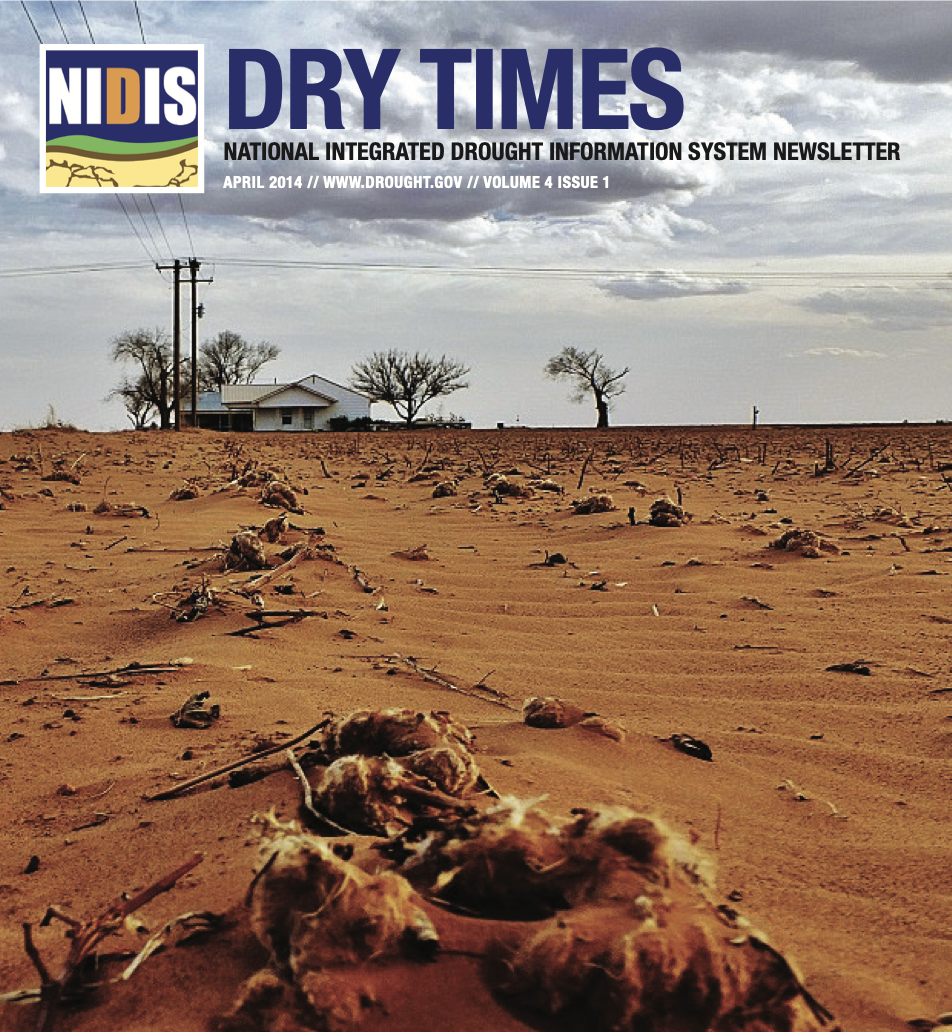
Dry Times Volume 4 Issue 1
Prior to becoming a bi-weekly email newsletter, “Dry Times,” the NIDIS newsletter, appeared twice a year in the spring and fall.
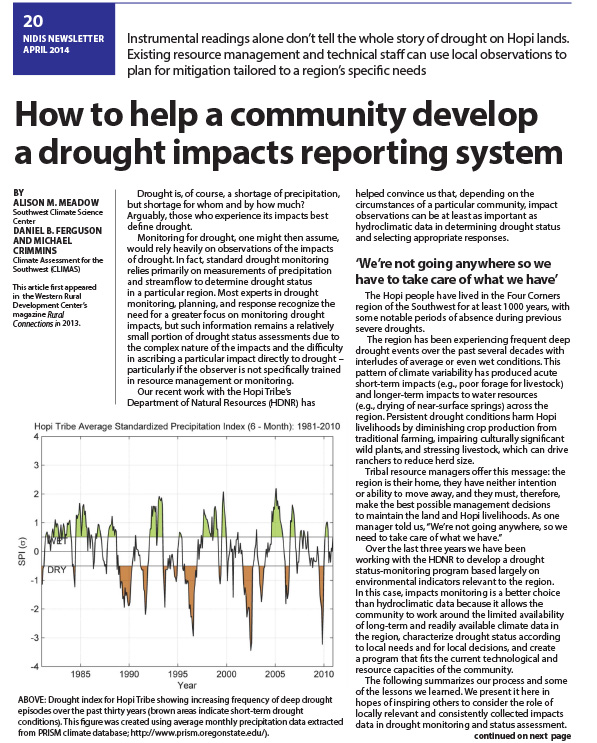
NIDIS news story about helping communities develop drought impacts reporting methods. The article spends time talking about issues faced on tribal lands, specifically on Hopi lands.
Suggest EDIT:
Story about issues on tribal lands, specifically Hopi lands, on how communities can develop drought impacts reporting methods. Existing resource management and technical staff can use local observations to plan for mitigation tailored to a region’s specific needs.
From Dry Times, the NIDIS newsletter.
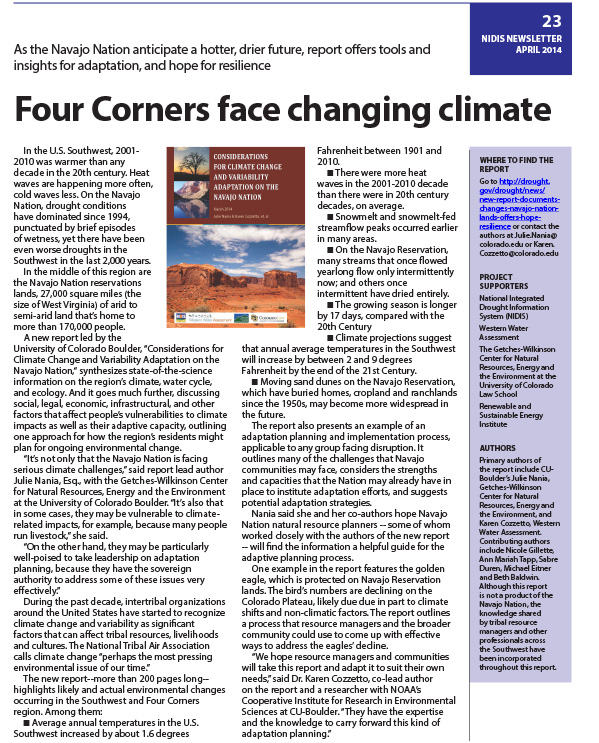
NIDIS Newsletter about the climate change concerns occuring in the Four Corners region of the southwest. Uses weather data from the region to support the claims of a changing climate in the region.
Suggested edit:
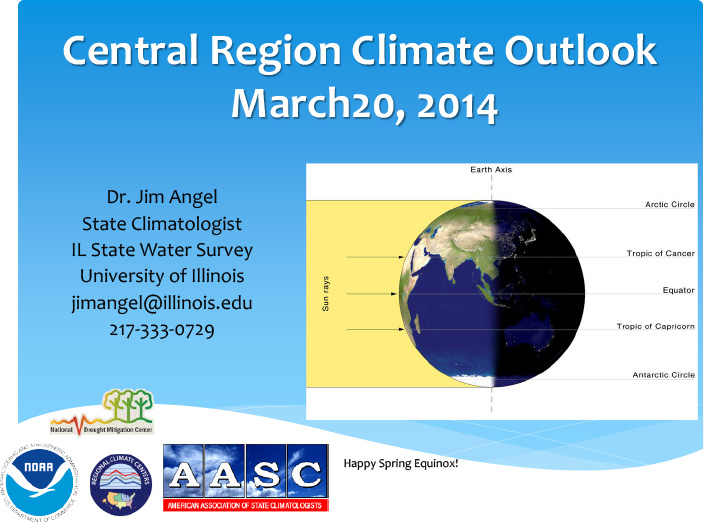
Presented at the March 20, 2014 Central Region Webinar. Includes drought and climate.
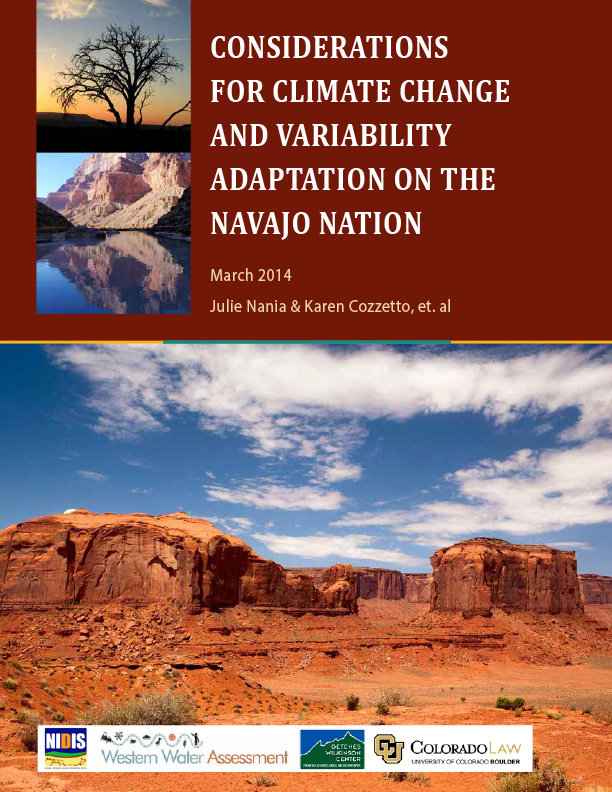
This report provides information to the Navajo Nation that has been deemed important for the future development of a climate change adaptation plan and is intended to be used by decision makers on the Nation.
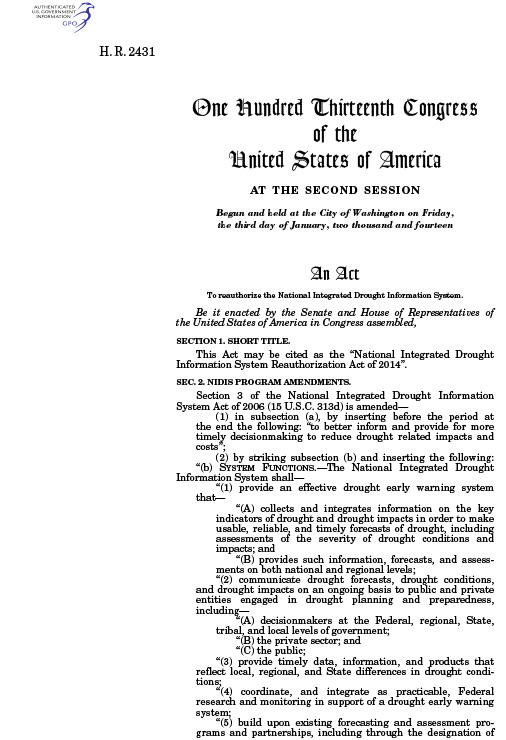
Public Law reauthorizing NIDIS.
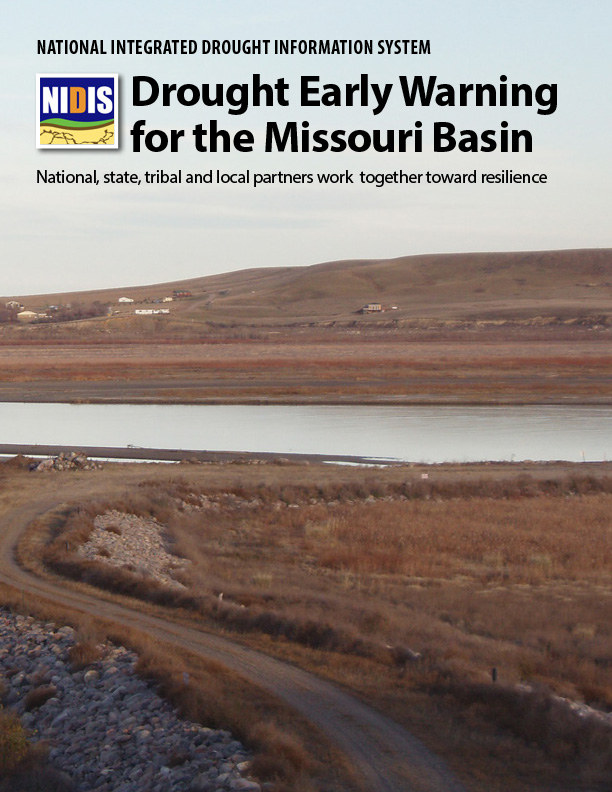
This report documents the development of the regional Drought Early Warning System (DEWS) for the Missouri River Basin from 2012 to present, with a focus on the 2014 launch meeting in Nebraska City, Nebraska. Meeting organizers included NIDIS and the National Oceanic and Atmospheric Administration (NOAA), and the National Drought Mitigation Center (NDMC) at the University of Nebraska at Lincoln