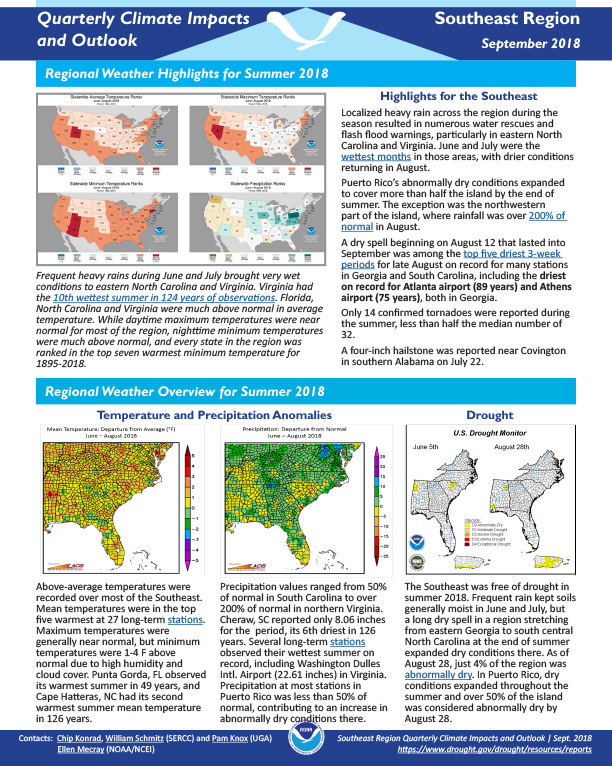
Quarterly Climate Impacts and Outlook for the Southeast Region for June – August 2018. Dated September 2018.
Above-average temperatures were recorded over most of the Southeast. Mean temperatures were in the top five warmest at 27 long-term stations. Maximum temperatures were generally near normal, but minimum temperatures were 1-4 F above normal due to high humidity and cloud cover. Precipitation values ranged from 50% of normal in South Carolina to over 200% of normal in northern Virginia. Several long-term stations observed their wettest summer on record.
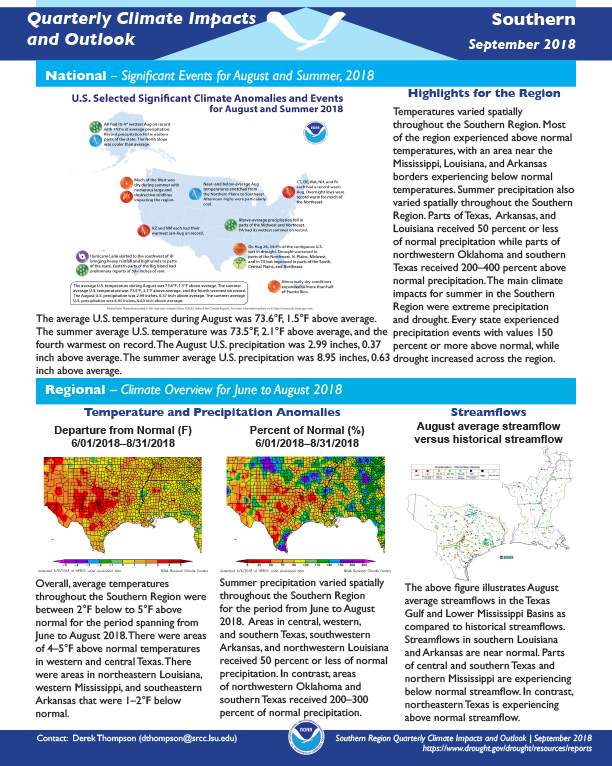
Quarterly Climate Impacts and Outlook for the Southern Region for June – August 2018. Dated September 2018.
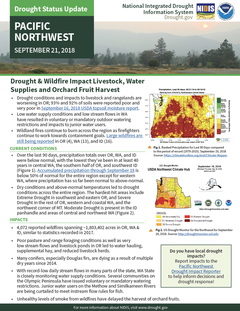
Two-page report on September 2018 Pacific Northwest U.S. drought conditions, impacts, and outlook and wildfires.
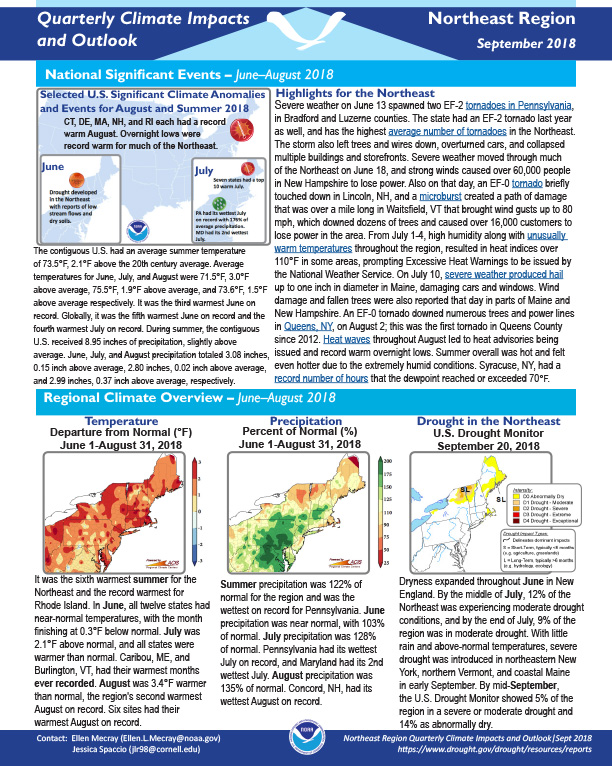
Quarterly Climate Impacts and Outlook for the Northeast Region for June – August 2018. Dated September 2018.
It was the sixth warmest summer for the Northeast and the record warmest for Rhode Island. Summer precipitation was 122% of normal for the region and was the wettest on record for Pennsylvania.
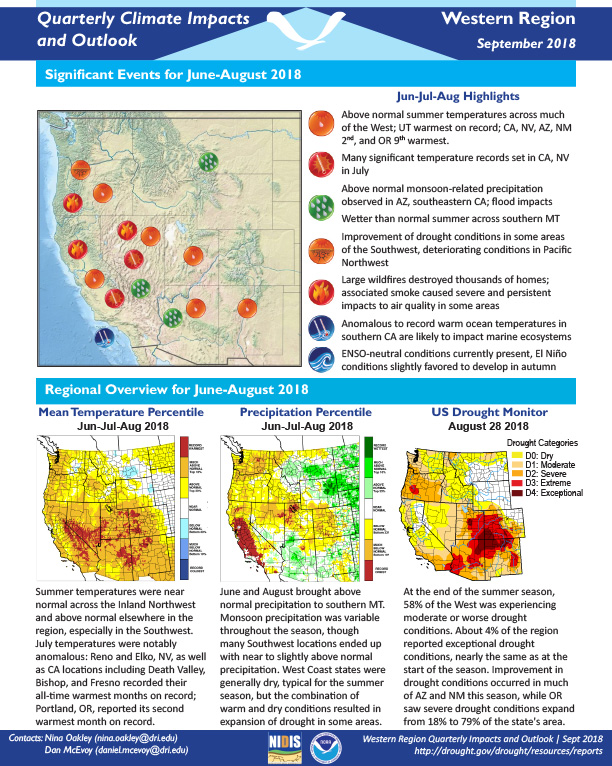
Quarterly Climate Impacts and Outlook for the Western Region for June – August 2018. Dated September 2018.
Summer temperatures were near normal across the Inland Northwest and above normal elsewhere in the region, especially in the Southwest. Monsoon precipitation was variable throughout the season, though many Southwest locations ended up with near to slightly above normal precipitation.
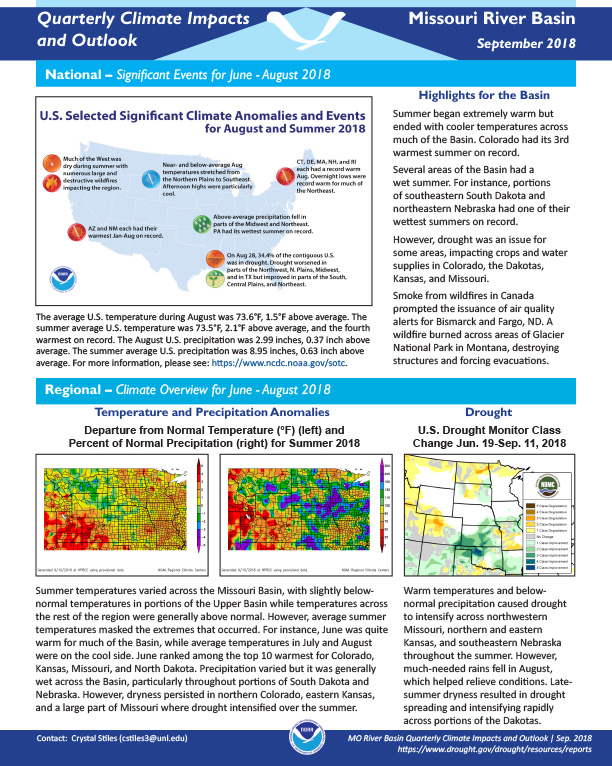
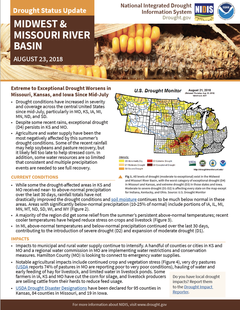
Quarterly Climate Impacts and Outlook for the Missouri River Basin June – August 2018. Dated September 2018.
Summer began extremely warm but ended with cooler temperatures across much of the Basin. Colorado had its 3rd warmest summer on record. Several areas of the Basin had a wet summer. For instance, portions of southeastern South Dakota and northeastern Nebraska had one of their wettest summers on record. However, drought was an issue for some areas, impacting crops and water supplies in Colorado, the Dakotas, Kansas, and Missouri.
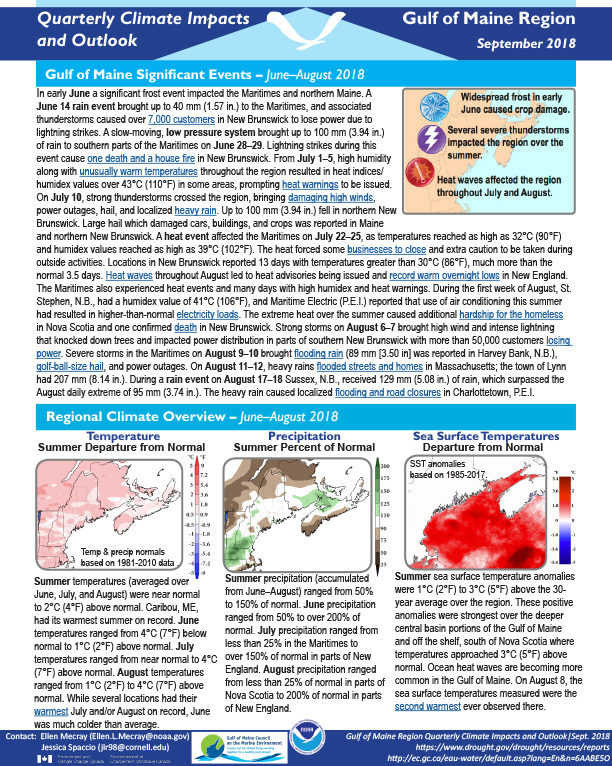
Quarterly Climate Impacts and Outlook for the Gulf of Maine Region for June – August 2018. Dated September 2018.
Summer temperatures were near normal to 2°C (4°F) above normal. Caribou, ME, had its warmest summer on record. Summer precipitation ranged from 50% to 150% of normal.
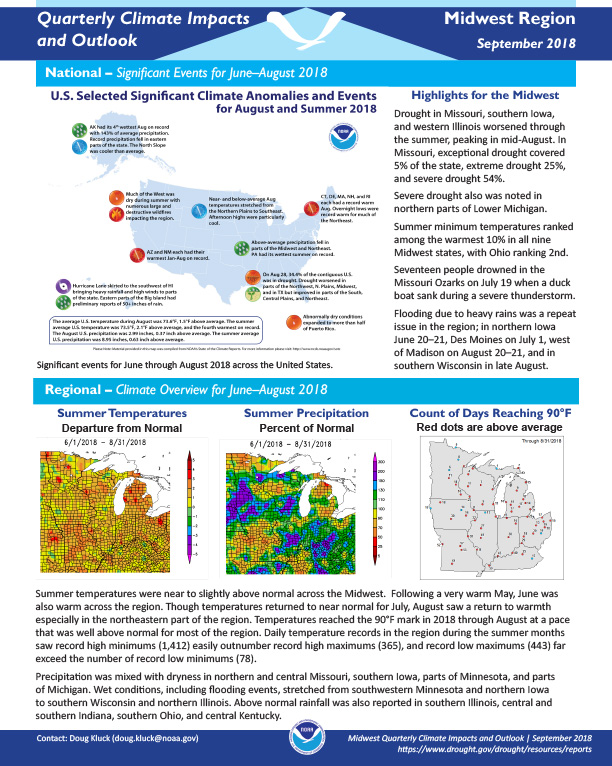
Quarterly Climate Impacts and Outlook for the Midwest Region for June – August 2018. Dated September 2018.
Drought in Missouri, southern Iowa, and western Illinois worsened through the summer, peaking in mid-August. In Missouri, exceptional drought covered 5% of the state, extreme drought 25%, and severe drought 54%. Severe drought also was noted in northern parts of Lower Michigan. Summer minimum temperatures ranked among the warmest 10% in all nine Midwest states, with Ohio ranking 2nd.
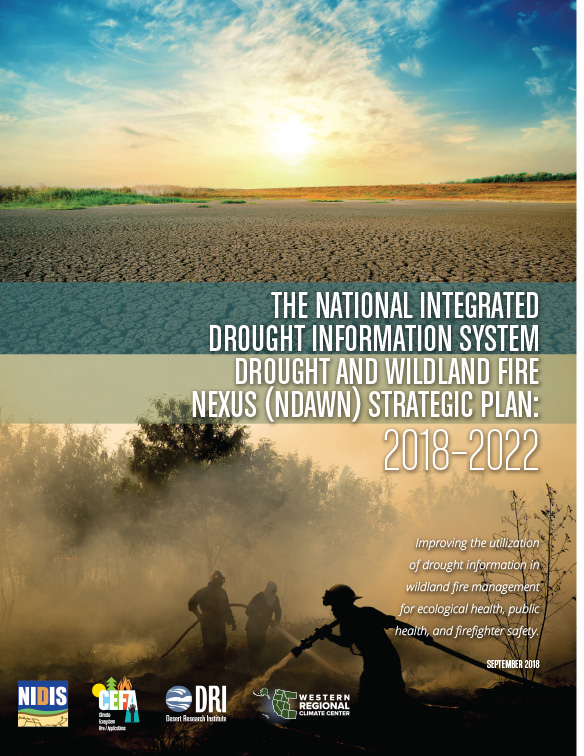
The National Integrated Drought Information System (NIDIS) Drought and Wildland Fire Nexus (NDAWN) defines the needs and challenges of fire managers to effectively utilize drought information and aims to meet those needs and to establish a robust drought and wildland fire decision-support information network. This strategy presents a logical framework to guide how NIDIS investment over the next five years could benefit both wildland firefighters and public health and safety in fire-prone areas of the United States.