



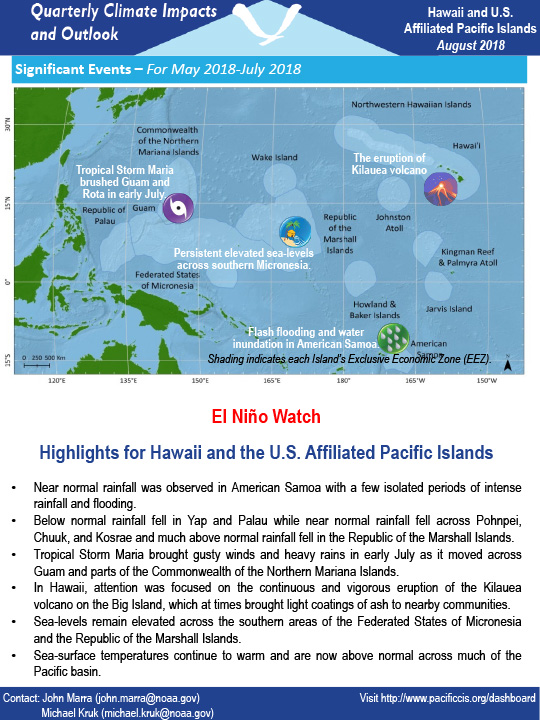
Quarterly Climate Impacts and Outlook for Hawaii and the U.S. Pacific Islands Region for May – July 2018. Dated August 2018.
Includes significant events, regional climate overview, and sectoral impacts for May – July 2018; regional outlook for August – October 2018.
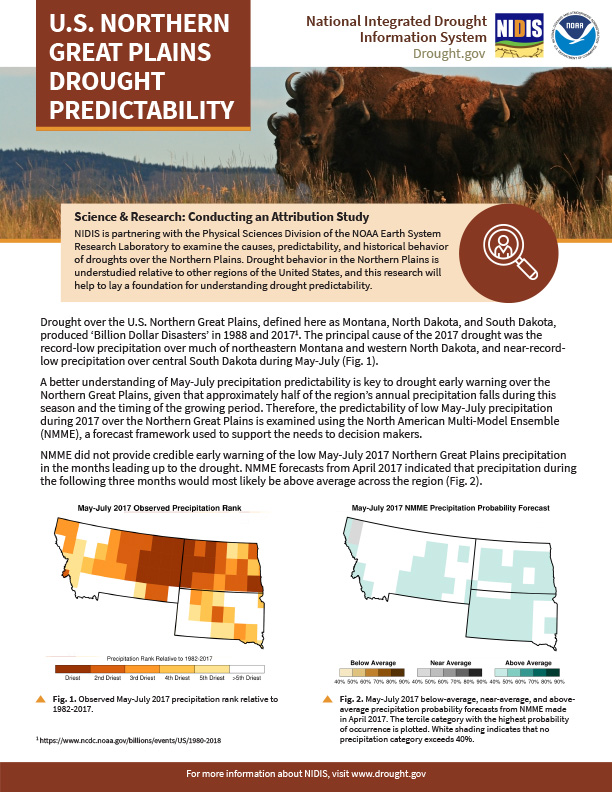
Drought over the U.S. Northern Great Plains, defined here as Montana, North Dakota, and South Dakota, produced ‘Billion Dollar Disasters’ in 1988 and 2017. The principal cause of the 2017 drought was the record-low precipitation over much of northeastern Montana and western North Dakota, and near-record-low precipitation over central South Dakota during May-July.
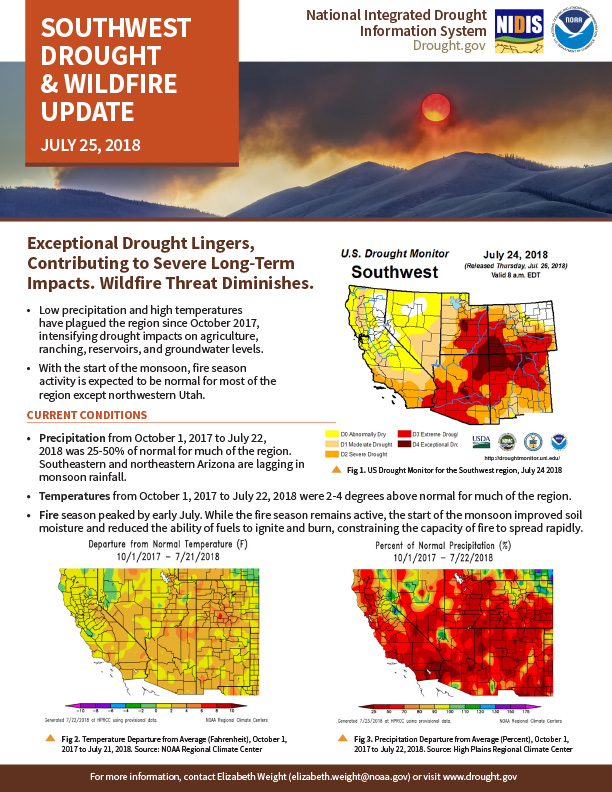
Two-page summary of the July 25, 2018 webinar on current Southwest U.S. drought conditions, impacts, and outlook and wildfires.
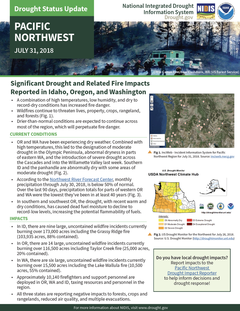
Two-page report on July 2018 Pacific Northwest U.S. drought conditions, impacts, and outlook and wildfires.
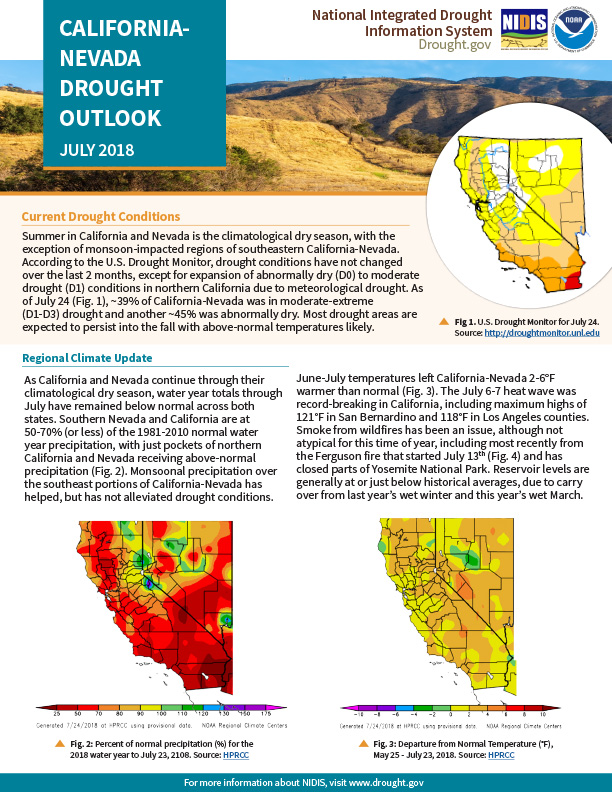
July 2018 drought outlook for the states of California and Nevada. This two page document includes current drought conditions, a regional climate update, drought and climate outlook.
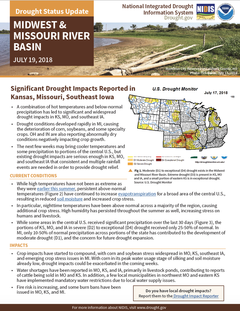
Significant Drought Impacts Reported in Kansas, Missouri, Southeast Iowa
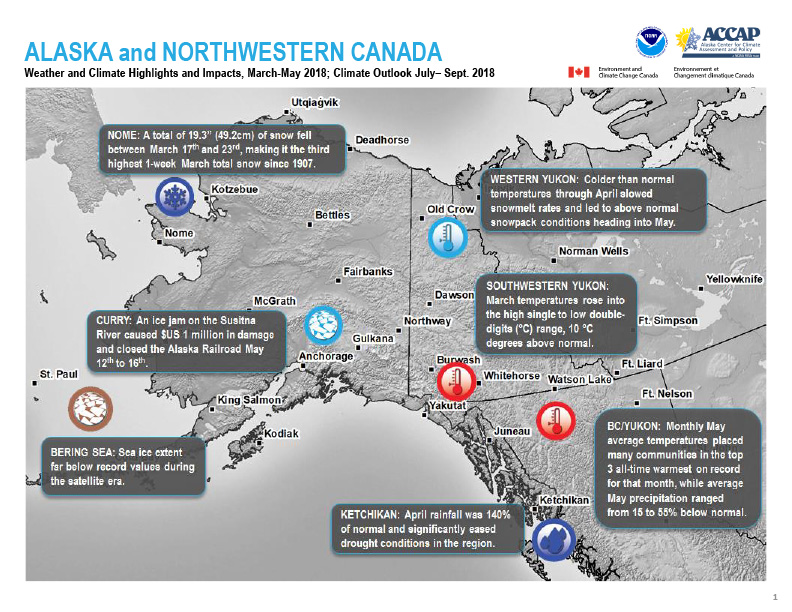
Quarterly Climate Impacts and Outlook for Alaska and Northwestern Canada for March – May 2018; outlook for July – September 2018. Dated June 2018.
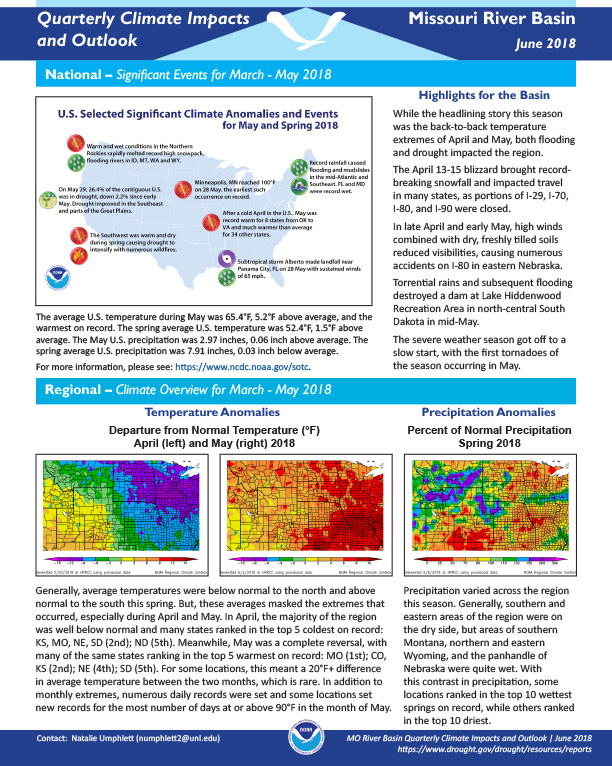
Quarterly Climate Impacts and Outlook for the Missouri River Basin March – May 2018. Dated June 2018.
While the headlining story this season was the back-to-back temperature extremes of April and May, both flooding and drought impacted the region.
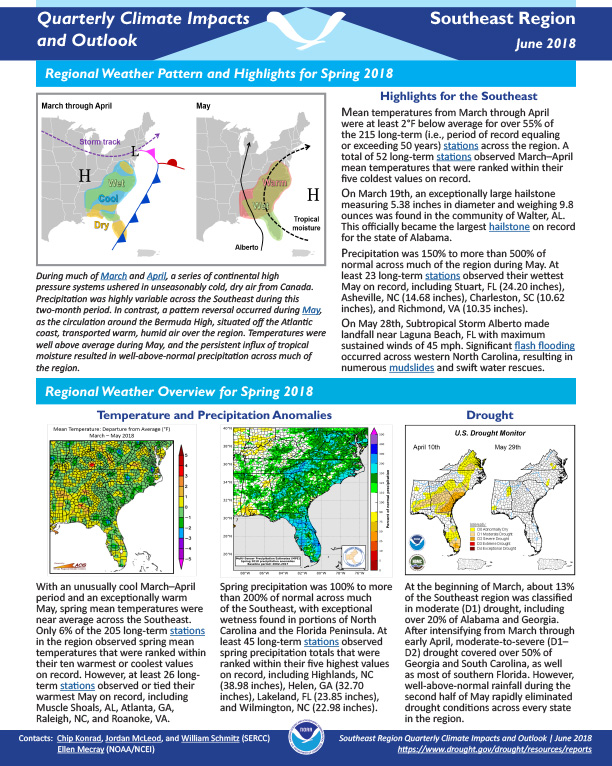
Quarterly Climate Impacts and Outlook for the Southeast Region for March – May 2018. Dated June 2018.
Mean temperatures from March through April were at least 2°F below average for over 55% of the 215 long-term (i.e., period of record equaling or exceeding 50 years) stations across the region. A total of 52 long-term stations observed March–April mean temperatures that were ranked within their five coldest values on record.