



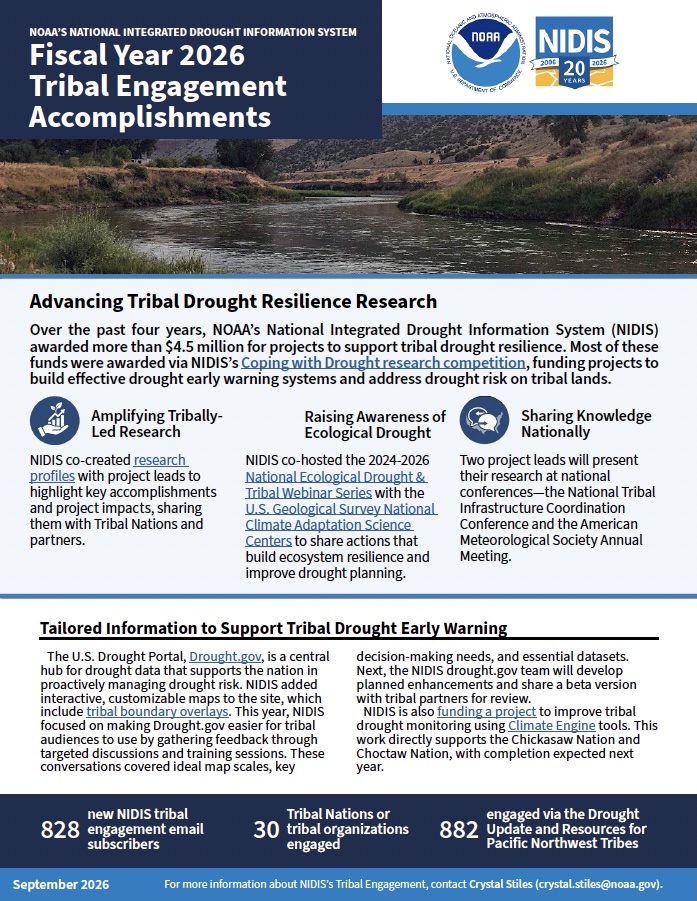
NOAA’s National Integrated Drought Information System (NIDIS) has worked with Tribal Nations on drought issues since its inception. In order to ensure the inclusion of indigenous perspectives in the implementation of regional Drought Early Warning Systems (DEWS), NIDIS launched a Tribal Drought Engagement initiative in 2019 in collaboration with the Masters of the Environment Program at the University of Colorado Boulder.
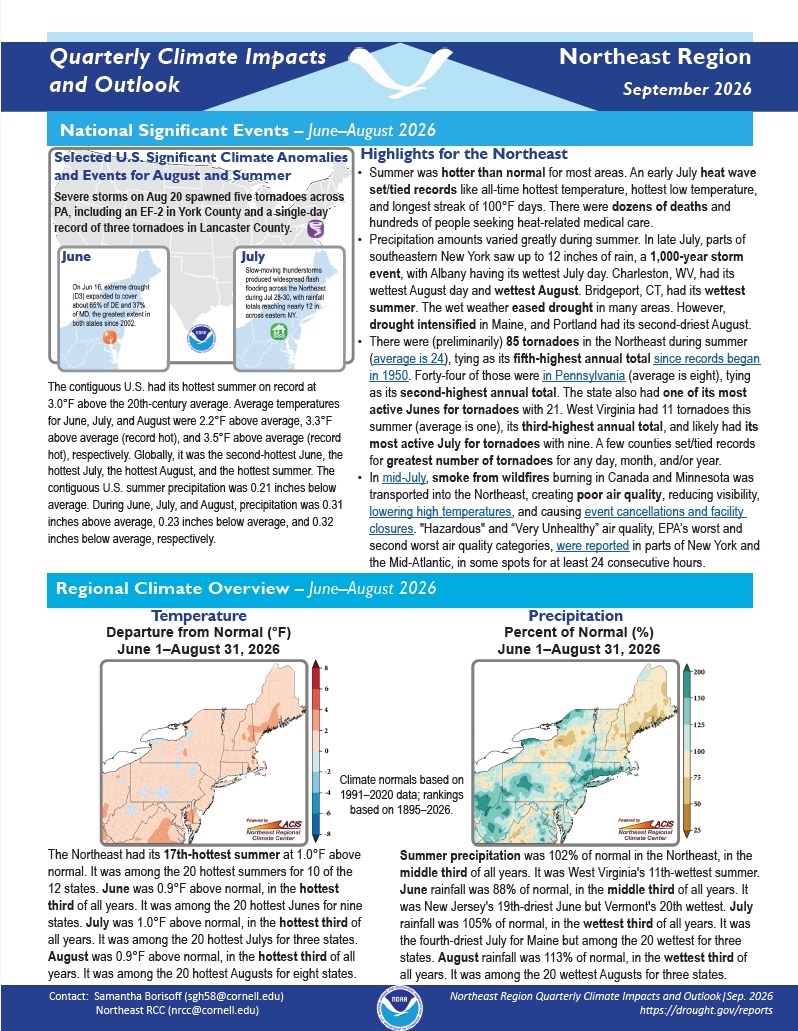
Quarterly Climate Impacts and Outlook for the Northeast Region for June–August 2026. Dated September 2026.
The Northeast had its 17th-hottest summer at 1.0°F above normal. It was among the 20 hottest summers for 10 of the 12 states. Summer precipitation was 102% of normal in the Northeast, in the middle third of all years. It was West Virginia's 11th-wettest summer.
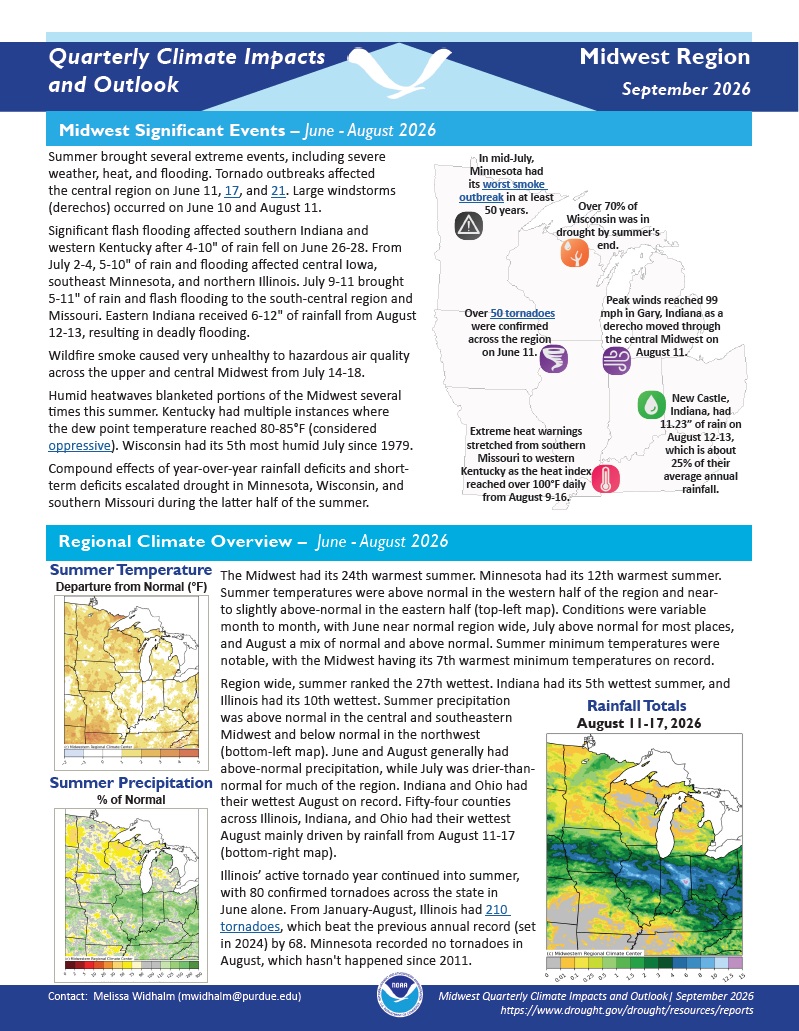
Quarterly Climate Impacts and Outlook for the Midwest Region for June–August 2026. Dated September 2026.
Summer temperatures were above normal in the western half of the region and near to slightly above-normal in the eastern half. Summer precipitationwas above normal in the central and southeastern Midwest and below normal in the northwest.
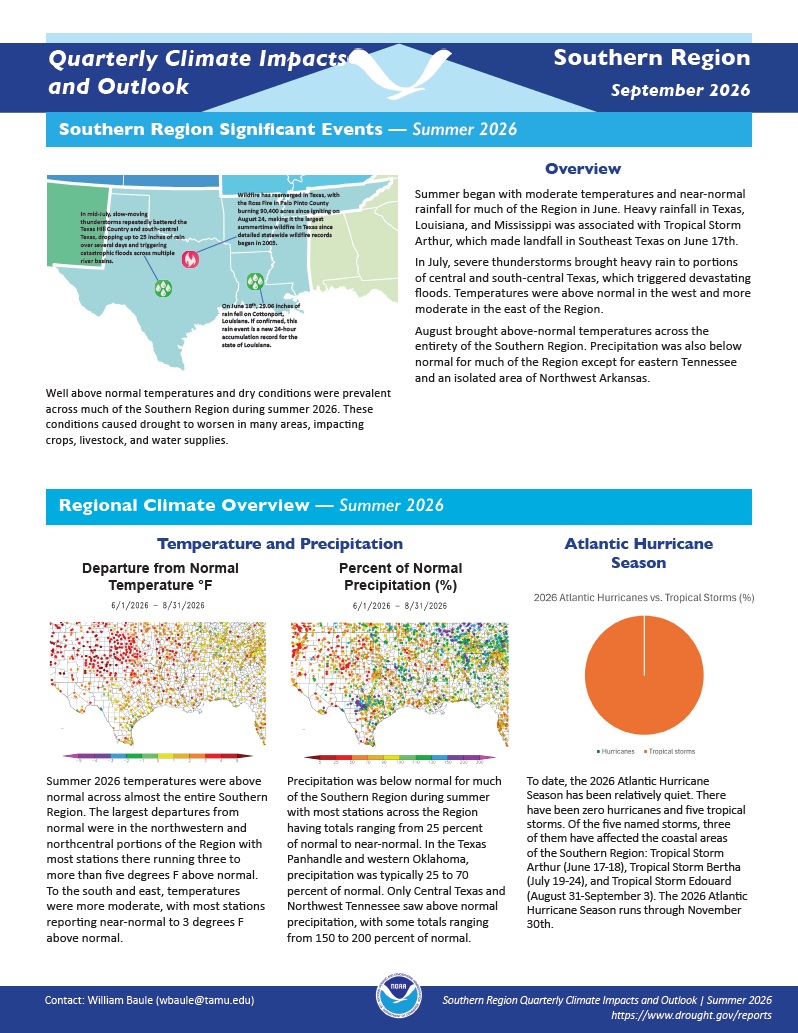
Quarterly Climate Impacts and Outlook for the Southern Region for June–August 2026. Dated September 2026.
Summer temperatures were above normal across almost the entire Southern Region. The largest departures from normal were in the northwestern and northcentral portions of the Region with most stations there running three to more than five degrees F above normal. Precipitation was below normal for much of the Southern Region during summer with most stations across the Region having totals ranging from 25 percent of normal to near-normal.
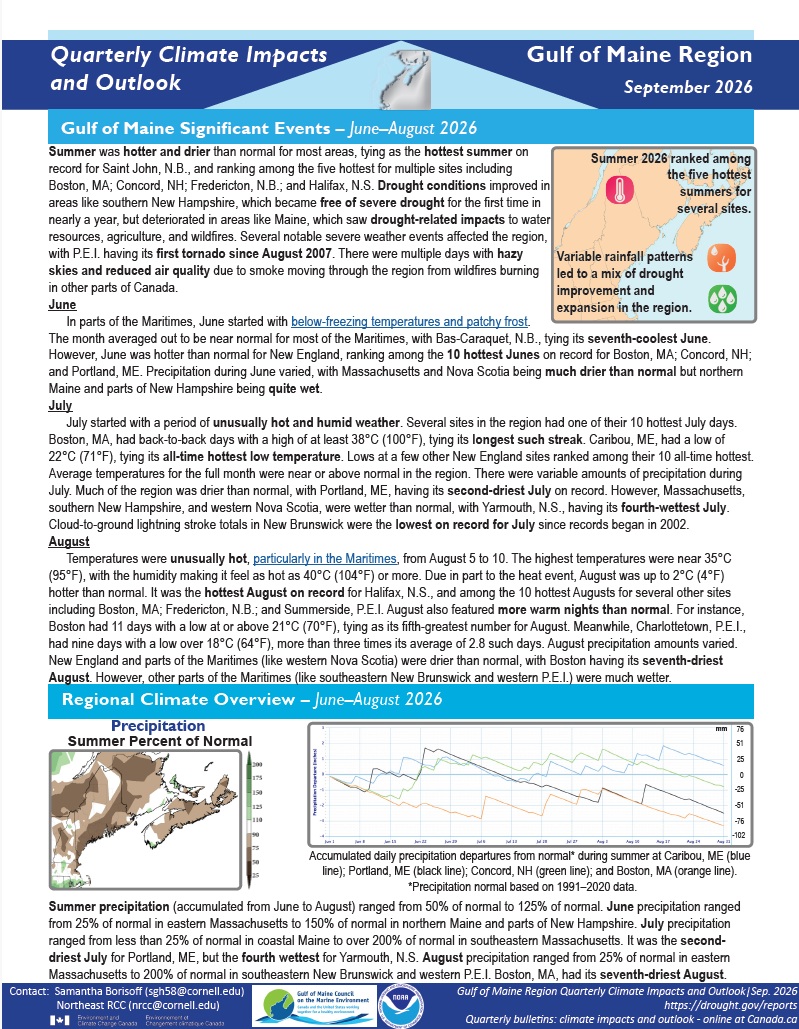
Quarterly Climate Impacts and Outlook for the Gulf of Maine Region for June–August 2026. Dated September 2026.
Summer was hotter and drier than normal for most areas, tying as the hottest summer on record for Saint John, N.B., and ranking among the five hottest for multiple sites including Boston, MA; Concord, NH; Fredericton, N.B.; and Halifax, N.S. Summer precipitation ranged from 50% of normal to 125% of normal.
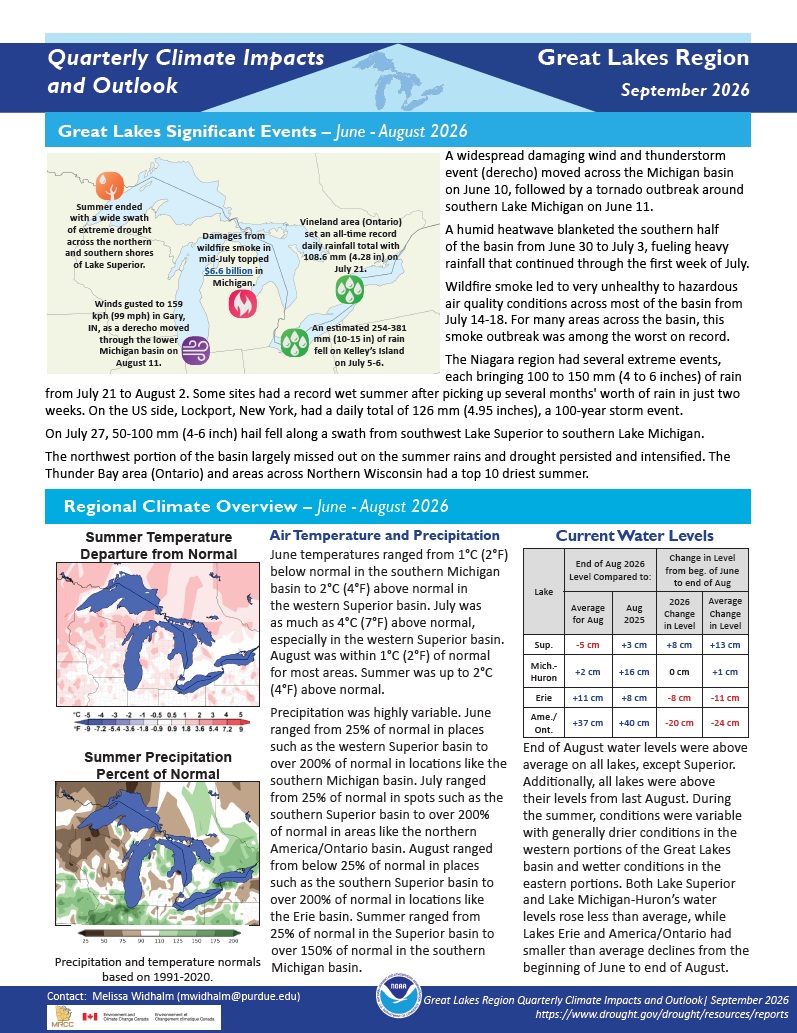
Quarterly Climate Impacts and Outlook for the Great Lakes Region for June–August 2026. Dated September 2026.
Summer temperatures were up to 2°C (4°F) above normal for the region. Precipitation was highly variable. Summer ranged from 25% of normal in the Superior basin to over 150% of normal in the southern Michigan basin.
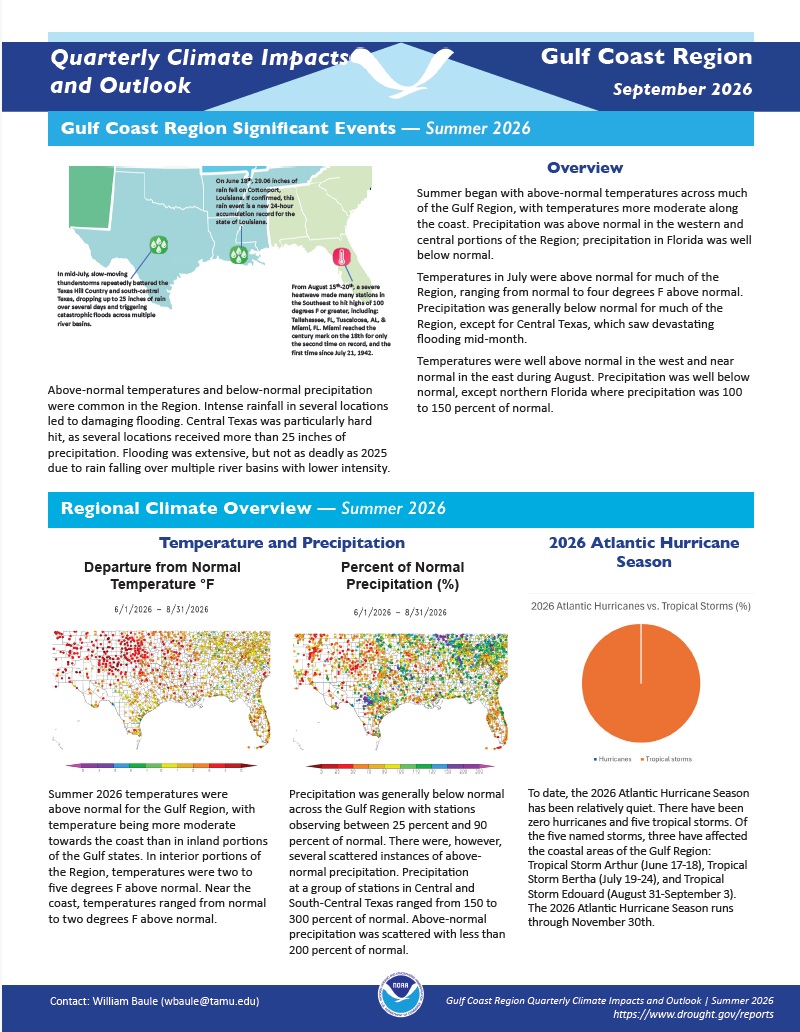
Quarterly Climate Impacts and Outlook for the Gulf Coast Region for June–August 2026. Dated September 2026.
Summer temperatures were above normal for the Gulf Region, with temperature being more moderate towards the coast than in inland portions of the Gulf states. Precipitation was generally below normal across the Gulf Region with stations observing between 25 percent and 90 percent of normal. There were, however, several scattered instances of above normal precipitation.
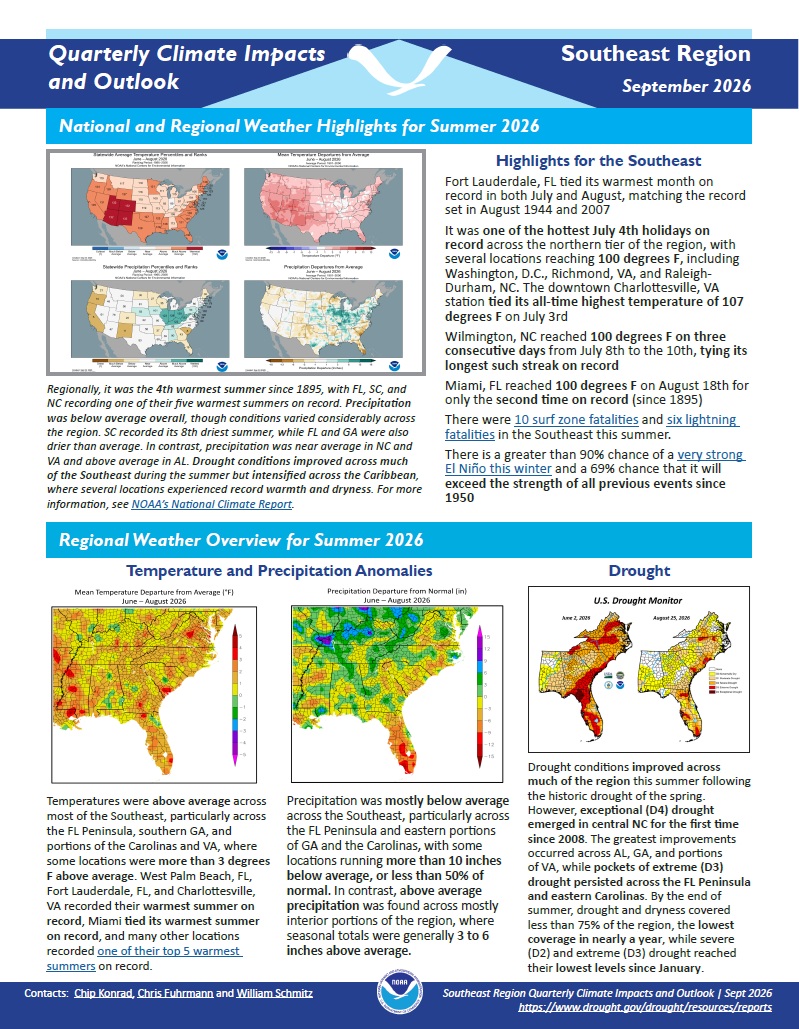
Quarterly Climate Impacts and Outlook for the Southeast and Caribbean Region for June–August 2026. Dated September 2026. (Updated to add Spanish translation of Caribbean information.)
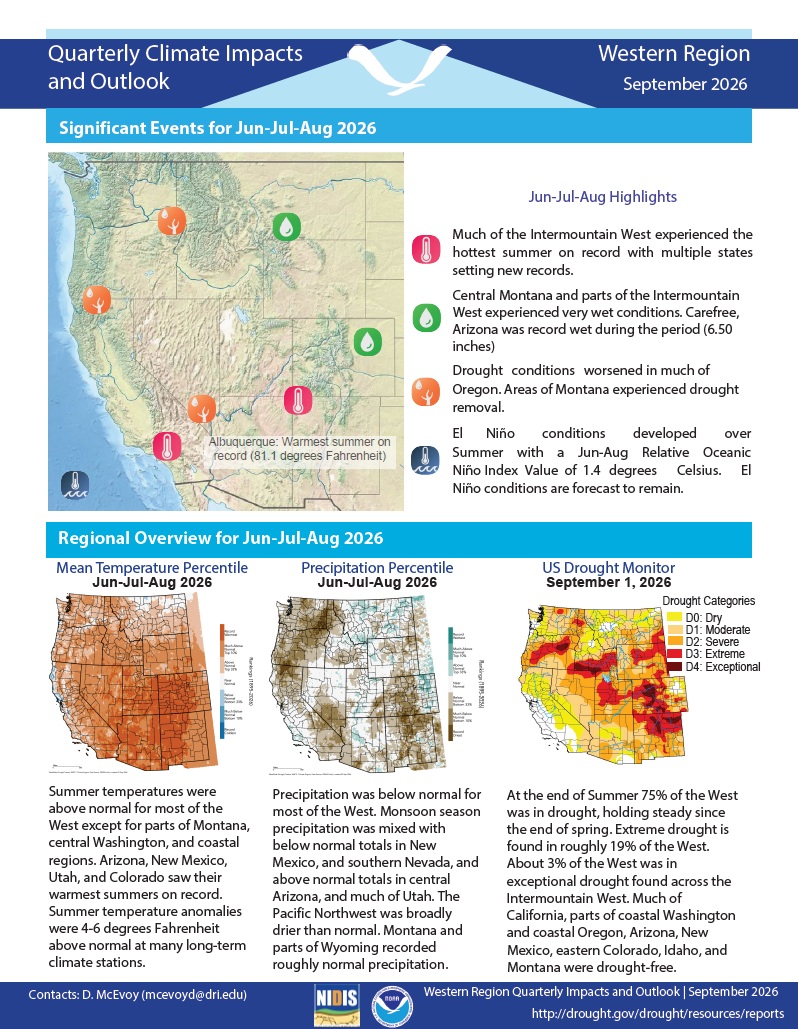
Quarterly Climate Impacts and Outlook for the Western Region for June–August 2026. Dated September 2026.
Summer temperatures were above normal for most of the West except for parts of Montana, central Washington, and coastal regions. Arizona, New Mexico, Utah, and Colorado saw their warmest summers on record. Precipitation was below normal for most of the West. Monsoon season precipitation was mixed with below normal totals in New Mexico, and southern Nevada, and above normal totals in central Arizona, and much of Utah. The Pacific Northwest was broadly drier than normal.
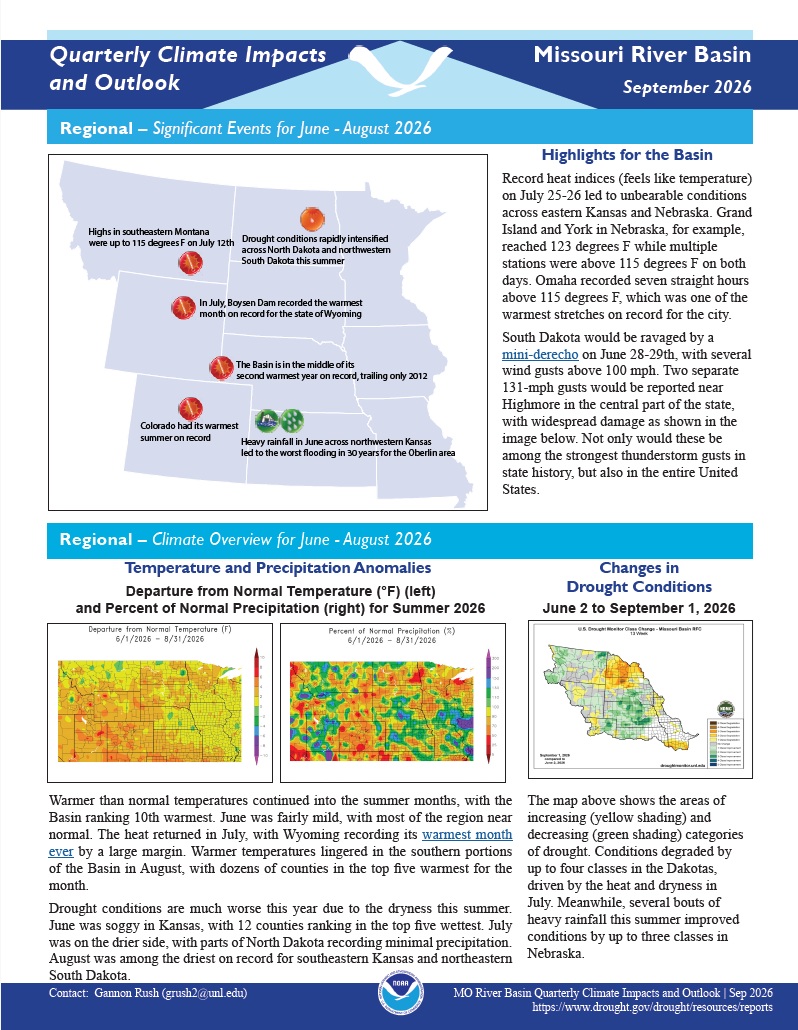
Quarterly Climate Impacts and Outlook for the Missouri River Basin for June–August 2026. Dated September 2026.
Warmer than normal temperatures continued into the summer months, with the Basin ranking 10th warmest. Drought conditions are much worse this year due to the dryness this summer.