Enhancing Tribal Drought Monitoring Through Expansion and Application of Climate Engine Tools

This project expands and enhances the functionality of the Drought Severity Evaluation Tool (DSET) to support additional Tribal Nations, including the Chickasaw and Choctaw Nations, in collaboration with the Oka’ Institute at East Central University. In many Tribal regions, limited access to consistent environmental data makes it difficult to monitor drought and manage water and other natural resources. Tools like DSET and Climate Engine help fill these gaps by combining climate and satellite data into one easy-to-use online platform.
The original DSET project—which was developed to improve drought reporting and management for the Navajo Nation—demonstrated how co-developing technology with Tribal partners can build trust and create tools that meet community needs. Community members and decision-makers from the Navajo Nation use this tool to stay informed about changing drought and climate conditions. Building on this success, the research team will expand DSET’s capabilities within the Climate Engine interface to support additional Tribal partners (the Chickasaw and Choctaw Nations) and improve access to drought information.
The Climate Engine App, developed with support from NOAA’s National Integrated Drought Information System (NIDIS), enables users to visualize and analyze climate and satellite data directly in a web browser. By extending DSET through Climate Engine tools, this project strengthens drought monitoring, builds technical capacity, and increases resilience to future droughts across multiple Tribal Nations. The outcomes will provide a foundation and scalable model for other Tribal Nations to access and use climate data in their decision-making.
For more information, please contact Crystal Stiles (crystal.stiles@noaa.gov).
Research Snapshot
Kristen O’Shea, Desert Research Institute, University of Nevada, Reno
Justin Huntington, Desert Research Institute, Western Regional Climate Center, University of Nevada, Reno; Britta Daudert, Desert Research Institute, University of Nevada, Reno
What to expect from this research
- Enhanced Climate Engine functionality to support on-demand drought information for Tribal partners, modeled from the DSET tool. This includes pulling data from Climate Engine to integrate into other software and reporting.
- Automated drought reports for custom land areas that summarize key datasets into maps and figures to inform management and decision-making.
- Capacity building training for Tribal partners on various tools, including the Climate Engine Application Programming Interface (API), to meet interest in building custom workflows and tools.
- Training materials on tool enhancements and functionalities for broad user support.
Related Data & Maps
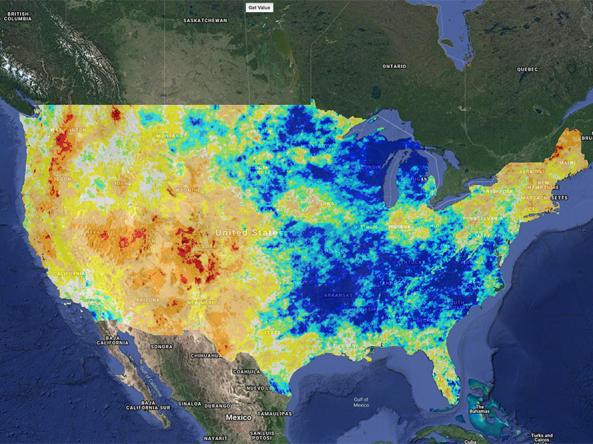
Climate Engine allows users to analyze and interact with climate and earth observations for decision support related to drought, water use, agricultural, wildfire, and ecology.