



The National Coordinated Soil Moisture Monitoring Network (NCSMMN) is hosting a quarterly online seminar series to regularly share innovative soil moisture research activities.
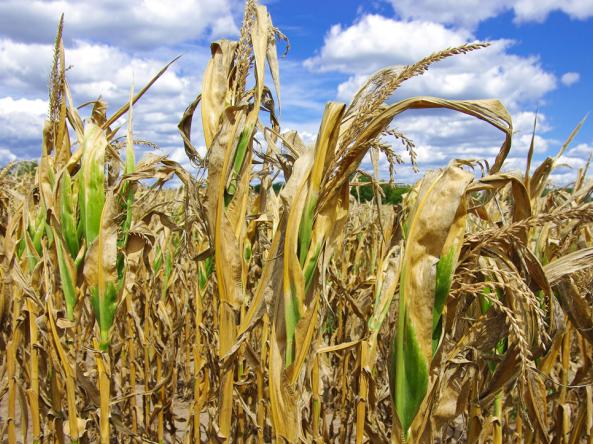
In May 2022, NOAA's Climate Prediction Center (CPC) began issuing an experimental Rapid Onset Drought risk product within CPC’s Day 8-14 (“Week-2”) U.S. Hazards Outlook. This product highlights areas where rapid drought development (sometimes known as “flash drought”) may occur in the coming 2–4 weeks as depicted by the U.S. Drought Monitor.
The National Coordinated Soil Moisture Monitoring Network is hosting a quarterly seminar series to regularly share innovative soil moisture research activities. This seminar, held on November 16, 2022, focused on opportunities for applying soil moisture information to inform fire danger rating systems.
NOAA’s National Integrated Drought Information System (NIDIS) and National Integrated Heat Health Information System (NIHHIS) co-hosted two webinars in collaboration with their federal, tribal, state, and local partners, focused on drought and heat in the West and the Southern Plains. The second webinar, held from 2 p.m. to 3:45 p.m. CT on July 21, focused on the Southern Plains (Kansas, New Mexico, Oklahoma, and Texas).
NOAA’s National Integrated Drought Information System (NIDIS) and National Integrated Heat Health Information System (NIHHIS) co-hosted two webinars in collaboration with their federal, tribal, state, and local partners, focused on drought and heat in the West and the Southern Plains. The first webinar, held from 10 a.m. to 12 p.m. MT on July 21, focused on the Western U.S. (Southwest, California, Pacific Northwest, Missouri River Basin, and Alaska).
The National Coordinated Soil Moisture Monitoring Network is initiating a quarterly seminar series to regularly share innovative soil moisture research activities. This first seminar provided an overview of the SMAP Satellite Validation Experiment 2019–2022: a field experiment to provide calibration and validation of the NASA Soil Moisture Active Passive (SMAP) satellite.
The 2022 National Soil Moisture Workshop returned to an in-person format after a 2-year hiatus (with a limited virtual option), hosted by the Ohio State University, in Columbus, OH on August 9–10, 2022.
This workshop provided a unique opportunity for leaders in soil moisture research and development to come together in an interactive format to exchange ideas and develop collaborations across their research areas and with the user community. This was the 13th consecutive year for the workshop, which was started by the researchers who created the Marena, Oklahoma, In Situ Sensor Testbed (MOISST). It has now grown to be a premier event for sharing new soil moisture research.
The National Integrated Drought Information System (NIDIS) and the National Weather Service (NWS) hosted two webinars on soil moisture data and applications. These webinars were intended to help NWS operational forecasters and other weather & climate service providers better understand soil moisture monitoring and its practical applications.
The North Central Climate Adaptation Science Center (CASC) is hosting this workshop as part of its Climate Solutions Days to facilitate a discussion of basic concepts related to ecological drought; relate processes and drivers of drought to specific metrics (e.g., soil moisture, evaporative demand) and indices (e.g., SPEI, FDSI, EDDI); and demonstrate select online tools to visualize and quantify drought events in the historical period and under future climate scenarios.