



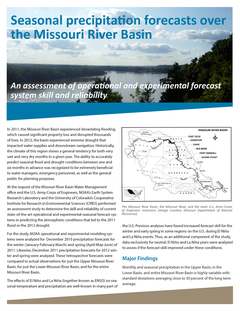
An summary of an assessment of operational and experimental forecast system skill and reliability in the Missouri River Basin.
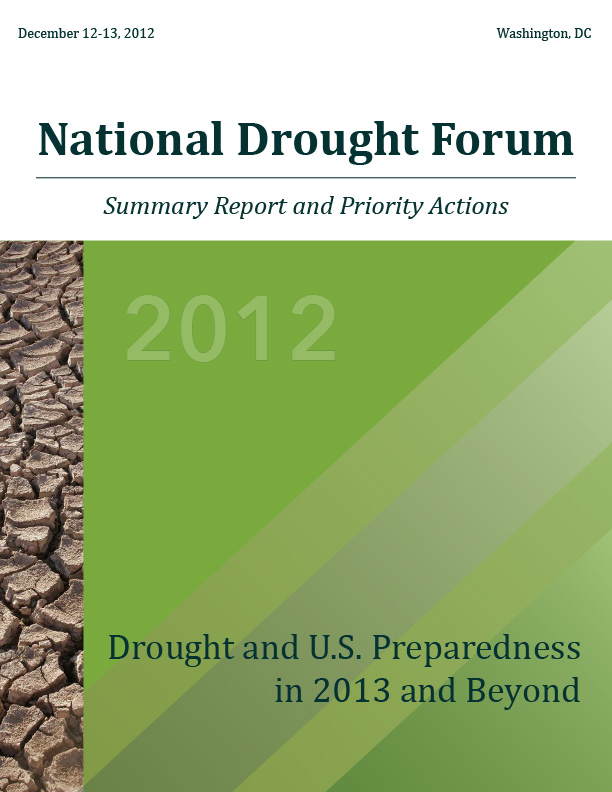
On December 12-13, 2012, the National Drought Forum was held at the Hall of States in Washington, D.C. The Forum was planned and coordinated by the National Integrated Drought Information System (NIDIS) Program Office, a part of the National Oceanic and Atmospheric Administration. The Forum was co-sponsored by the following agencies and organizations:
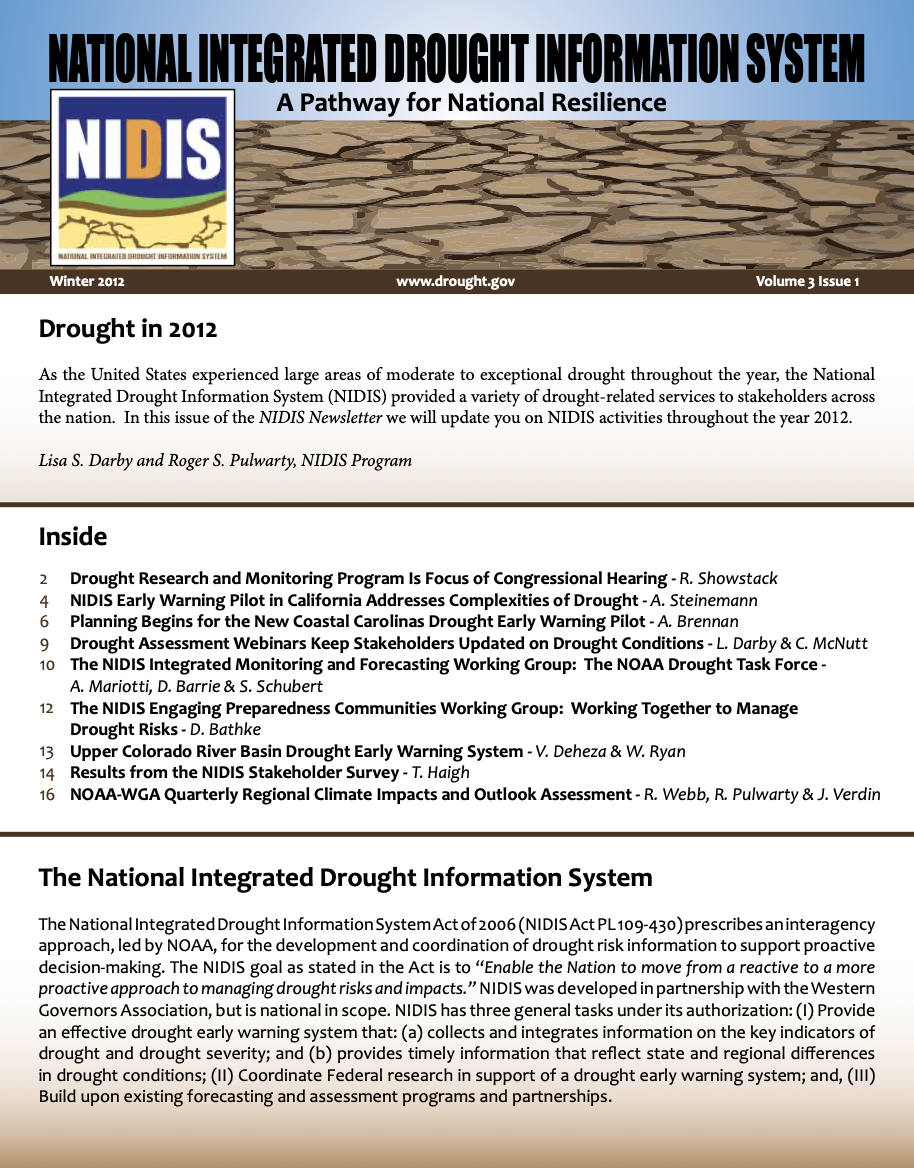
Dry Times Volume 3 Issue 1
Prior to becoming a bi-weekly email newsletter, “Dry Times,” the NIDIS newsletter, appeared twice a year in the spring and fall.
Weekly drought update for 2012 drought conditions. Drought conditions, forecasts, outlooks, impacts, and the impact of climate change.
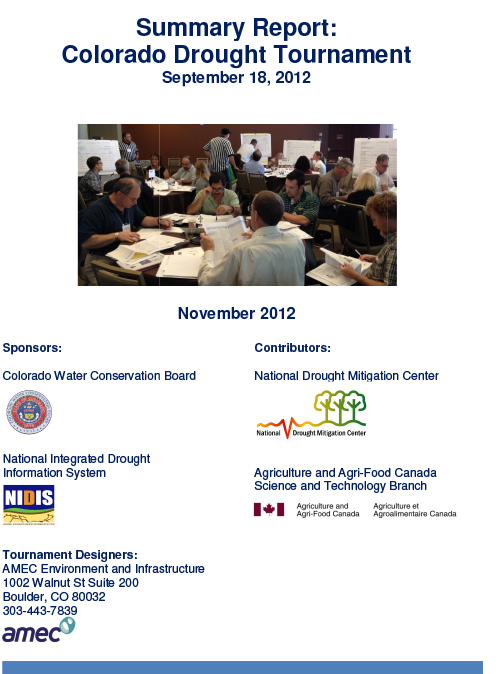
Summary of tournament’s background, design, development and delivery, with feedback on the activity’s strengths, areas for improvement and possible future applications.
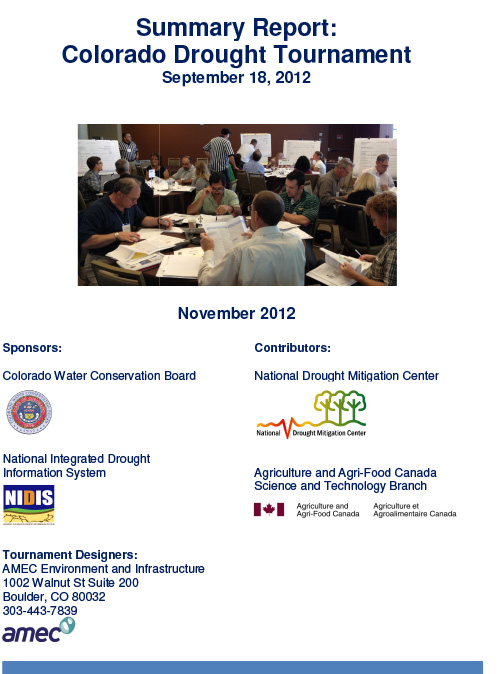
Overview of the Colorado Water Conservation Board (CWCB) and National Integrated Drought Information System (NIDIS) held on September 18, 2012. Includes description of the event, feedback, and recommendations for the future.
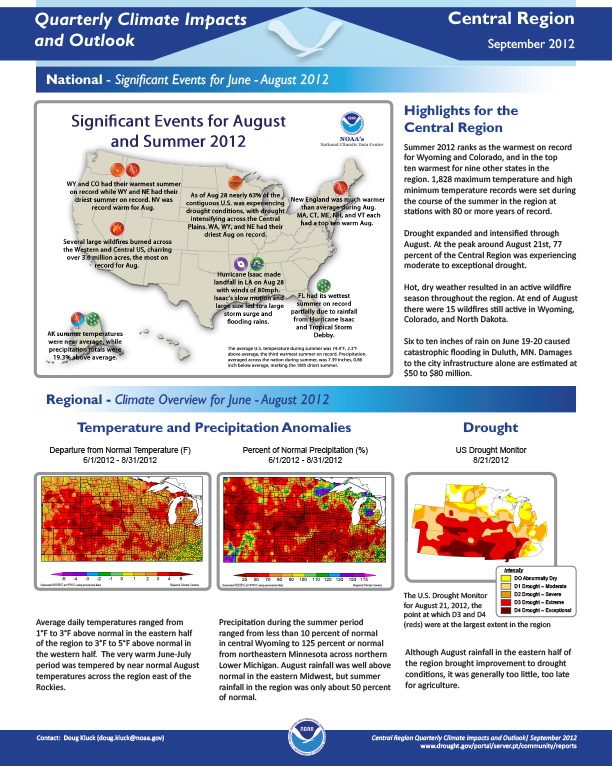
Quarterly Climate Impacts and Outlook for the Central Region, September 2012.
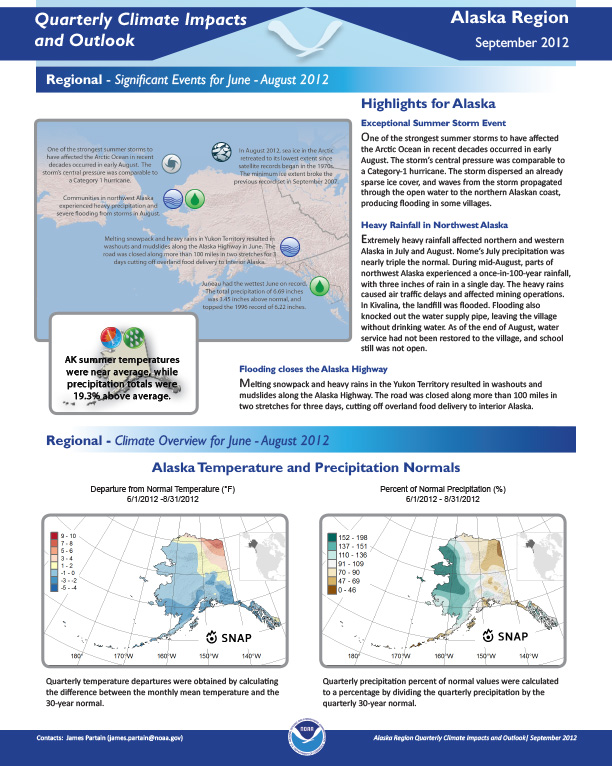
Quarterly Climate Impacts and Outlook for the Alaska Region, September 2012.
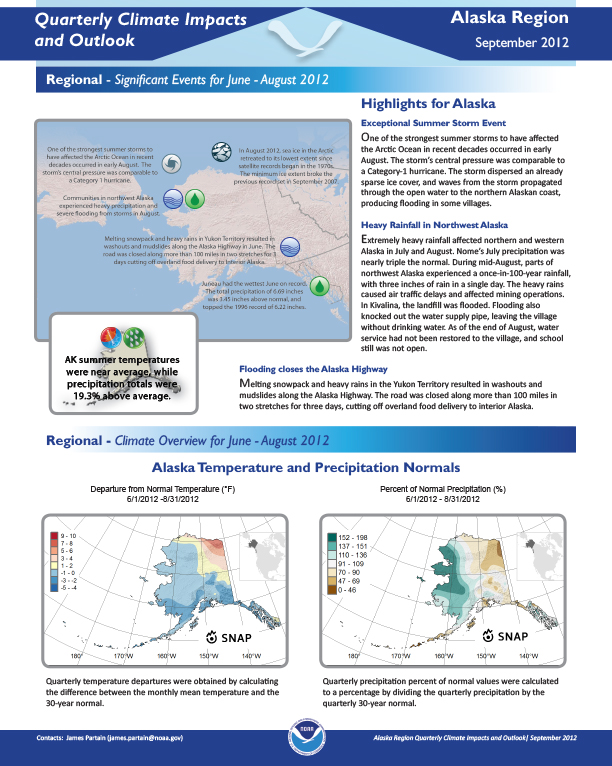
Quarterly Climate Impacts and Outlooks Alaska September 2012. Covers quarter three, June July and August of 2012 and was developed and published in September 2012. Alaska climate and drought.
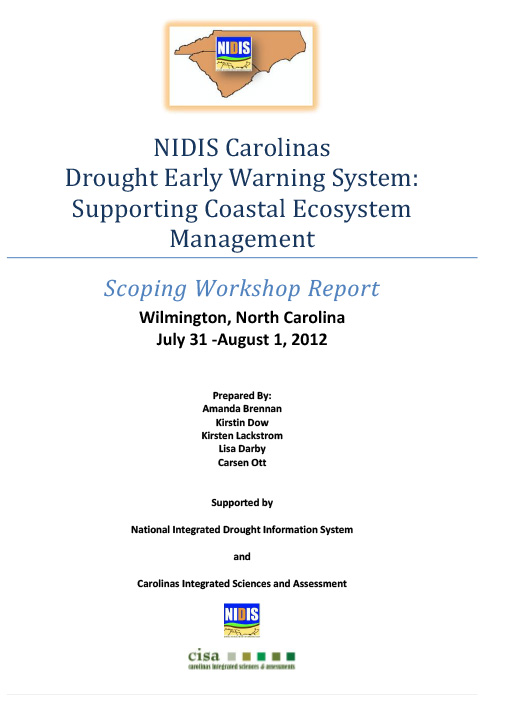
The NIDIS Carolinas Drought Early Warning System Scoping Workshop was held on July 31 – August 1, 2012, in Wilmington, North Carolina. Participants represented a diverse group of organizations and interests. The objectives of this workshop were to identify important issues of concern for the coastal region and to establish and refine priorities for a pilot project.