



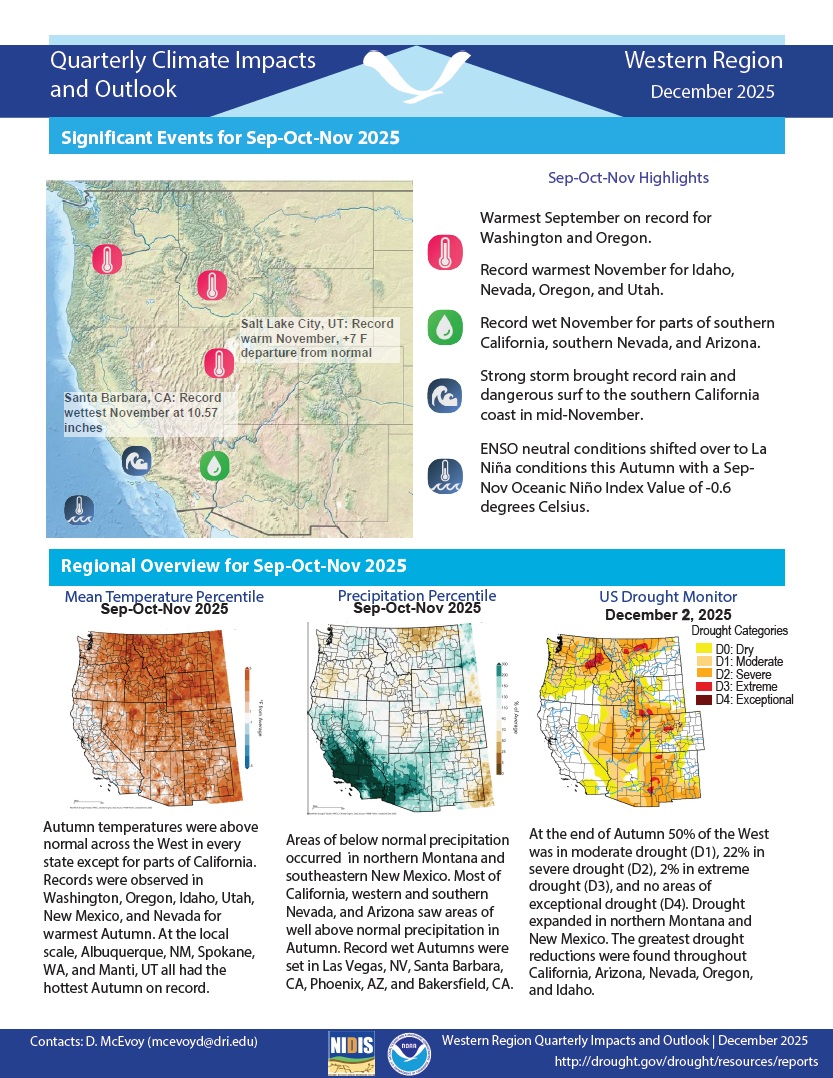
Quarterly Climate Impacts and Outlook for the Western Region for September–November 2025. Dated December 2025.
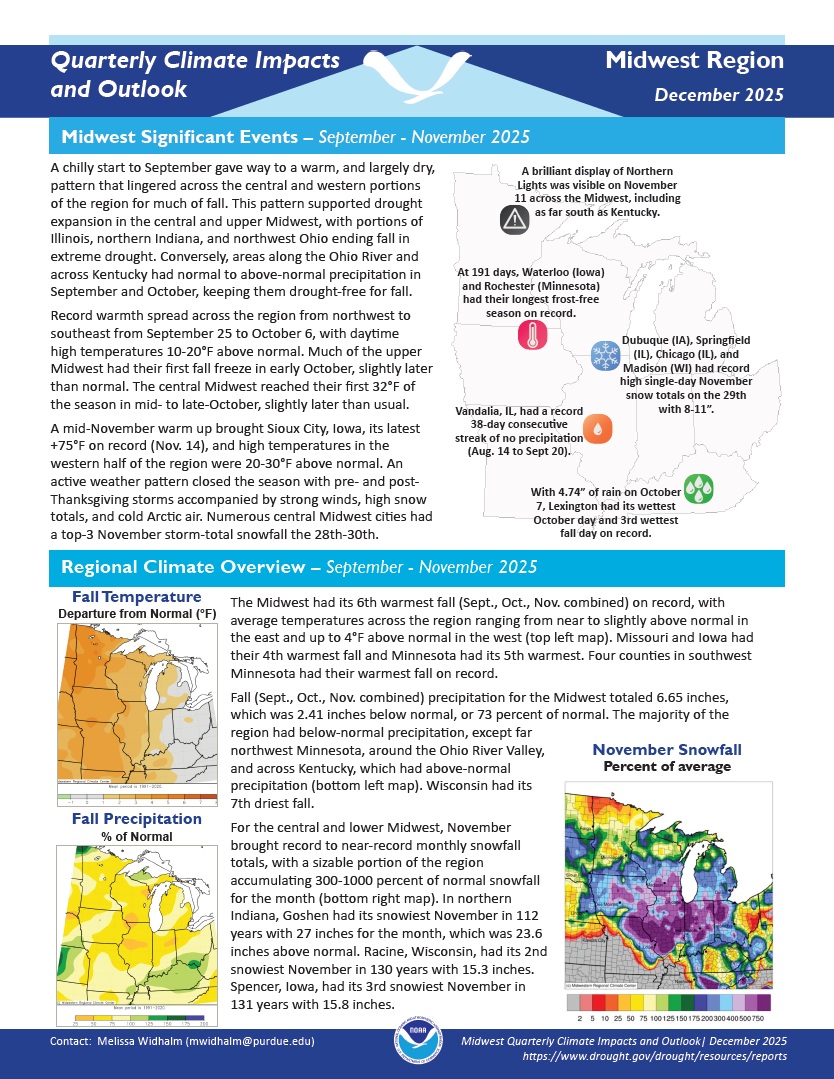
Quarterly Climate Impacts and Outlook for the Midwest Region for September–November 2025. Dated December 2025.
The Midwest had its 6th warmest fall on record, with average temperatures across the region ranging from near to slightly above normal in the east and up to 4°F above normal in the west. Fall precipitation for the Midwest totaled 6.65 inches, which was 2.41 inches below normal, or 73 percent of normal.
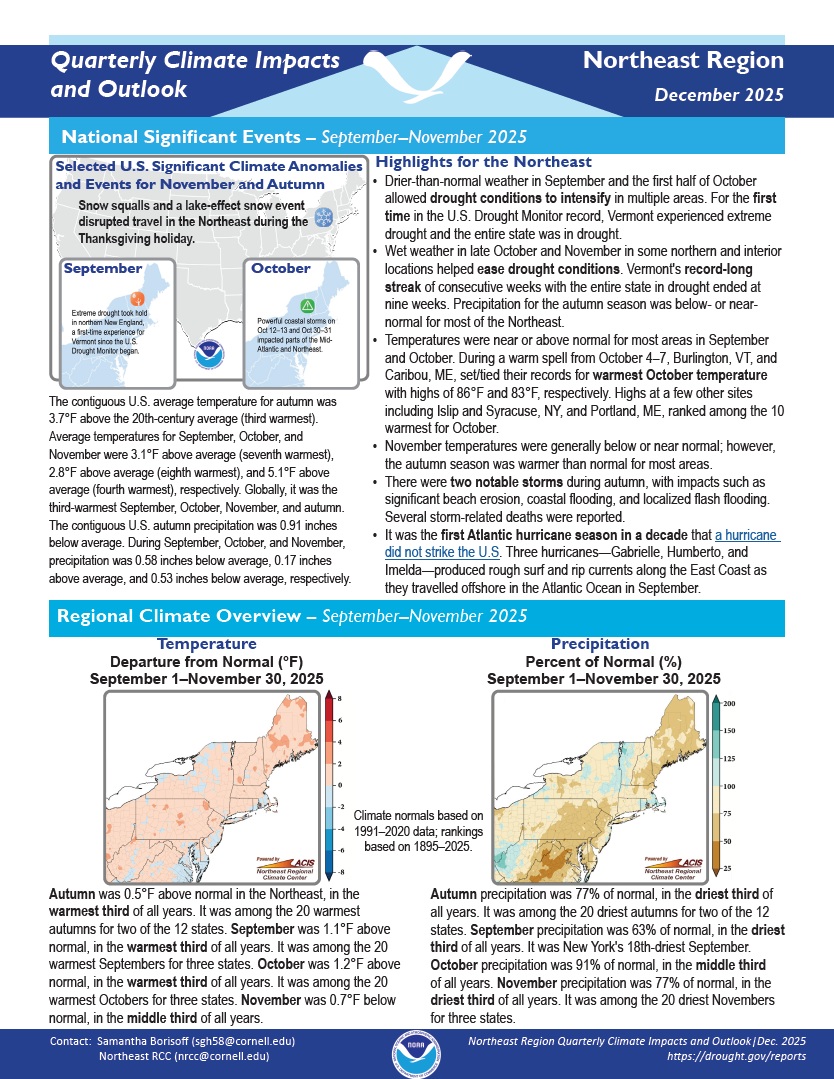
Quarterly Climate Impacts and Outlook for the Northeast Region for September–November 2025. Dated December 2025.
Autumn was 0.5°F above normal in the Northeast, in the warmest third of all years. It was among the 20 warmest autumns for two of the 12 states. Autumn precipitation was 77% of normal, in the driest third of all years. It was among the 20 driest autumns for two of the 12 states.
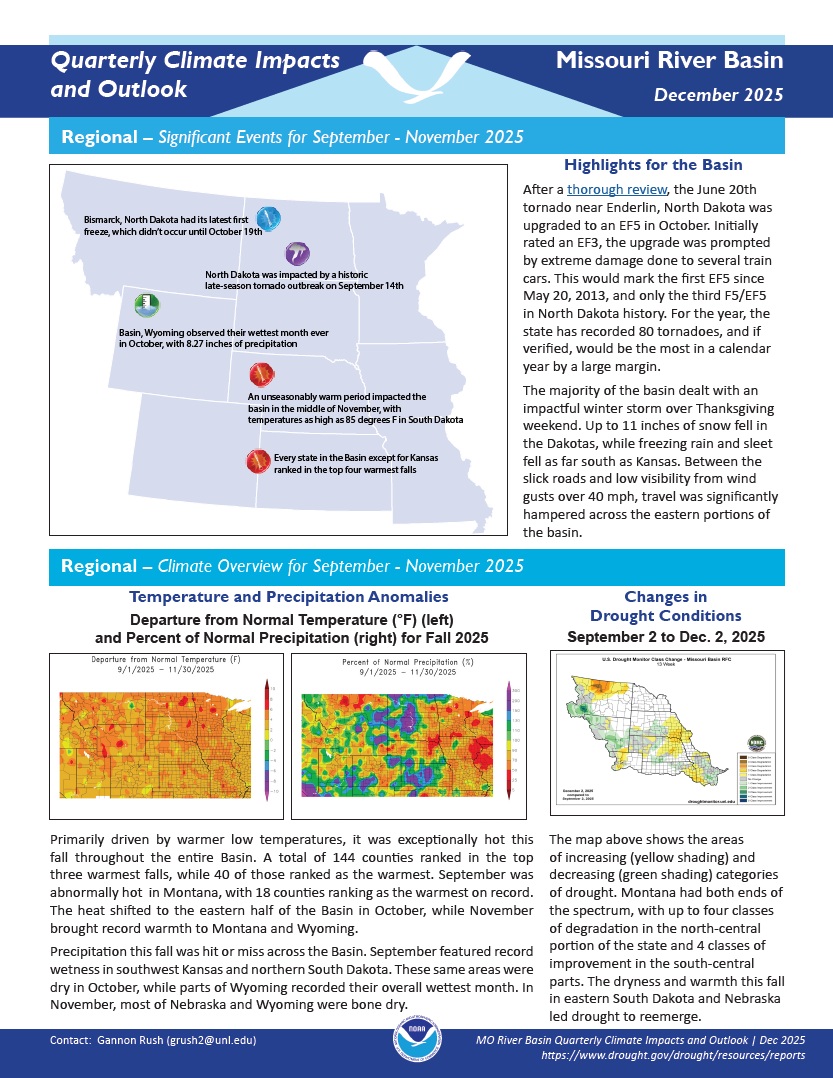
Quarterly Climate Impacts and Outlook for the Missouri River Basin for September–November 2025. Dated December 2025.
Primarily driven by warmer low temperatures, it was exceptionally hot this fall throughout the entire Basin. A total of 144 counties ranked in the top three warmest falls, while 40 of those ranked as the warmest. Precipitation this fall was hit or miss across the Basin.
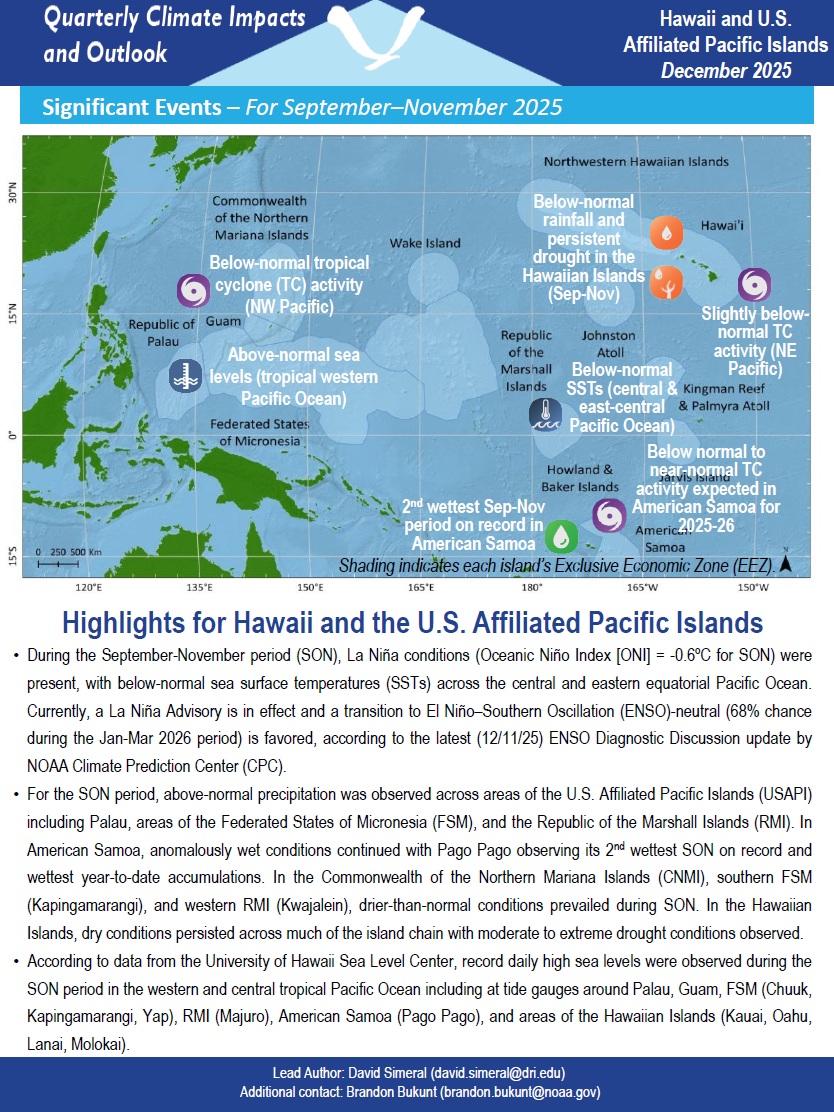
Quarterly Climate Impacts and Outlook for the Pacific Region for September–November 2025. Dated December 2025.
In March 2020, Moderate to Severe Drought (D1-D2) intensified rapidly to Exceptional Drought (D4) along the lower Rio Grande in Texas, according to the U.S. Drought Monitor. Over the next five years, drought severity waxed and waned across the Southern Plains, shifting location and extent but never leaving the region. Drought touched the lives of nearly every resident of the Southern Plains states (Texas, Oklahoma, and Kansas).
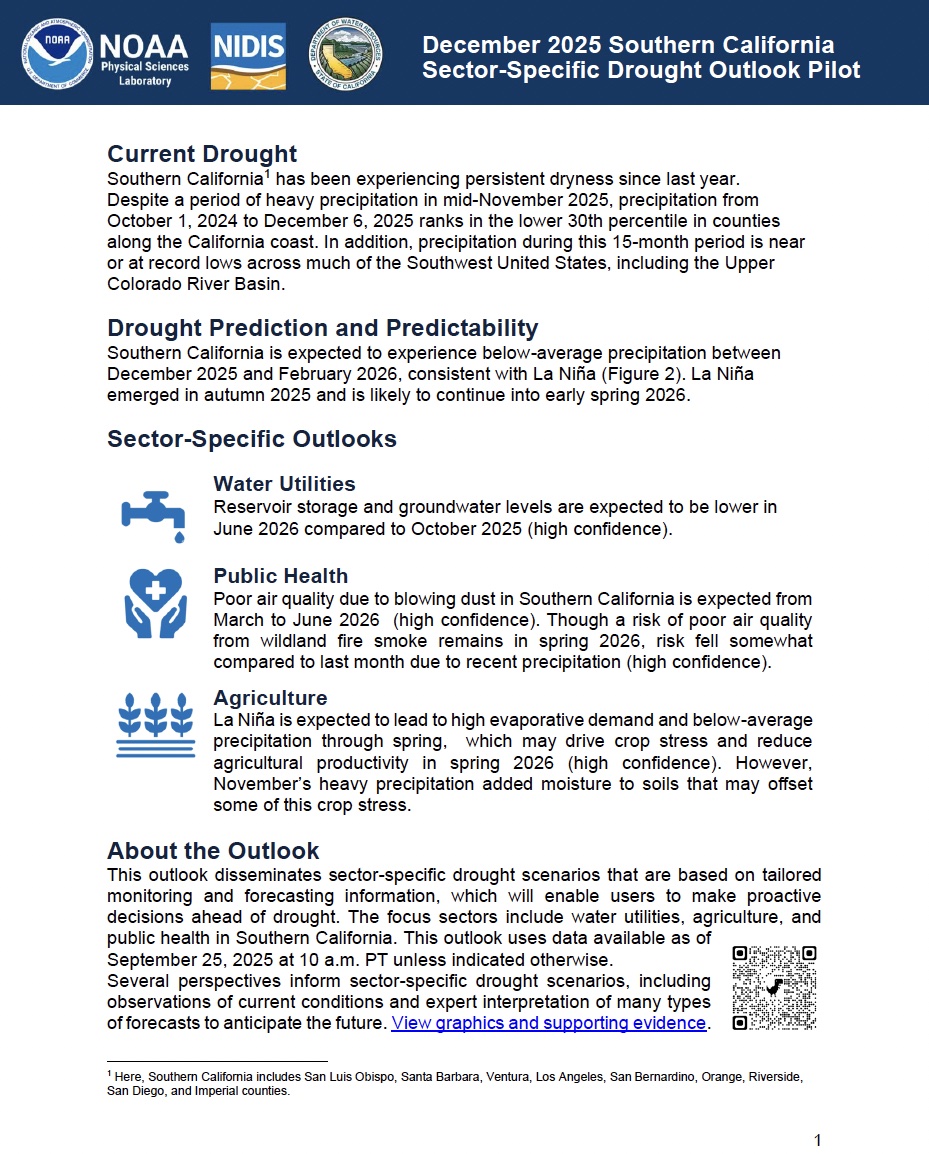
NOAA’s National Integrated Drought Information System (NIDIS) and Physical Sciences Laboratory are partnering with the California State Climatologist/California Department of Water Resources, NOAA’s National Weather Service and National Centers for Environmental Information, and the California-Nevada Adaptation Program (a NOAA CAP team) on the Sector-Specific Drought Early Warning Outlook – Southern California Pilot.
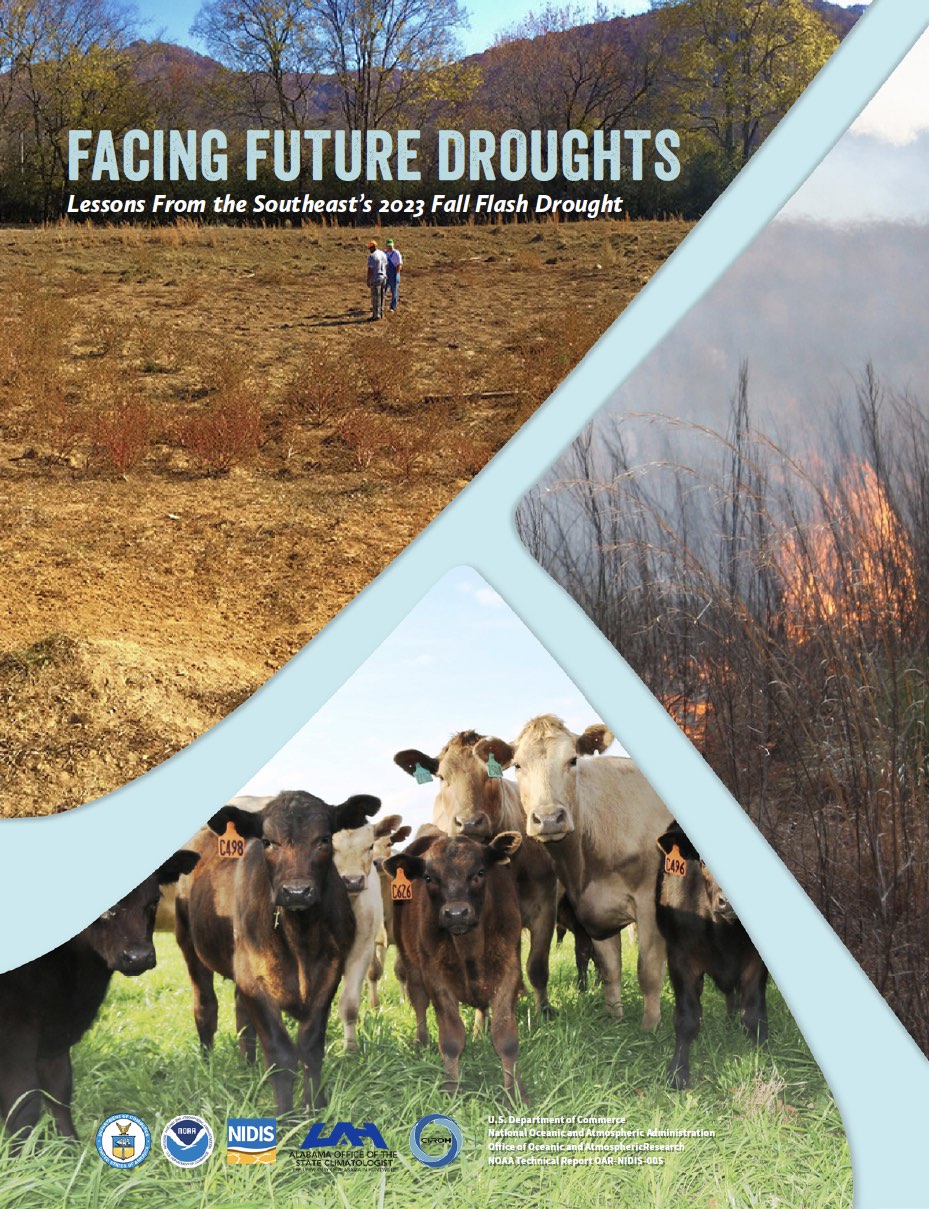
This report, Facing Future Droughts: Lessons from the Southeast’s 2023 Fall Flash Drought, was developed to improve the monitoring, communication, and response to drought in the Southeastern United States, with a specific focus on flash drought. The 2019 flash drought exposed critical gaps in early warning and monitoring systems, sparking conversations that continued during the 2022 Southeast Drought Early Warning System (DEWS) Regional Meeting.
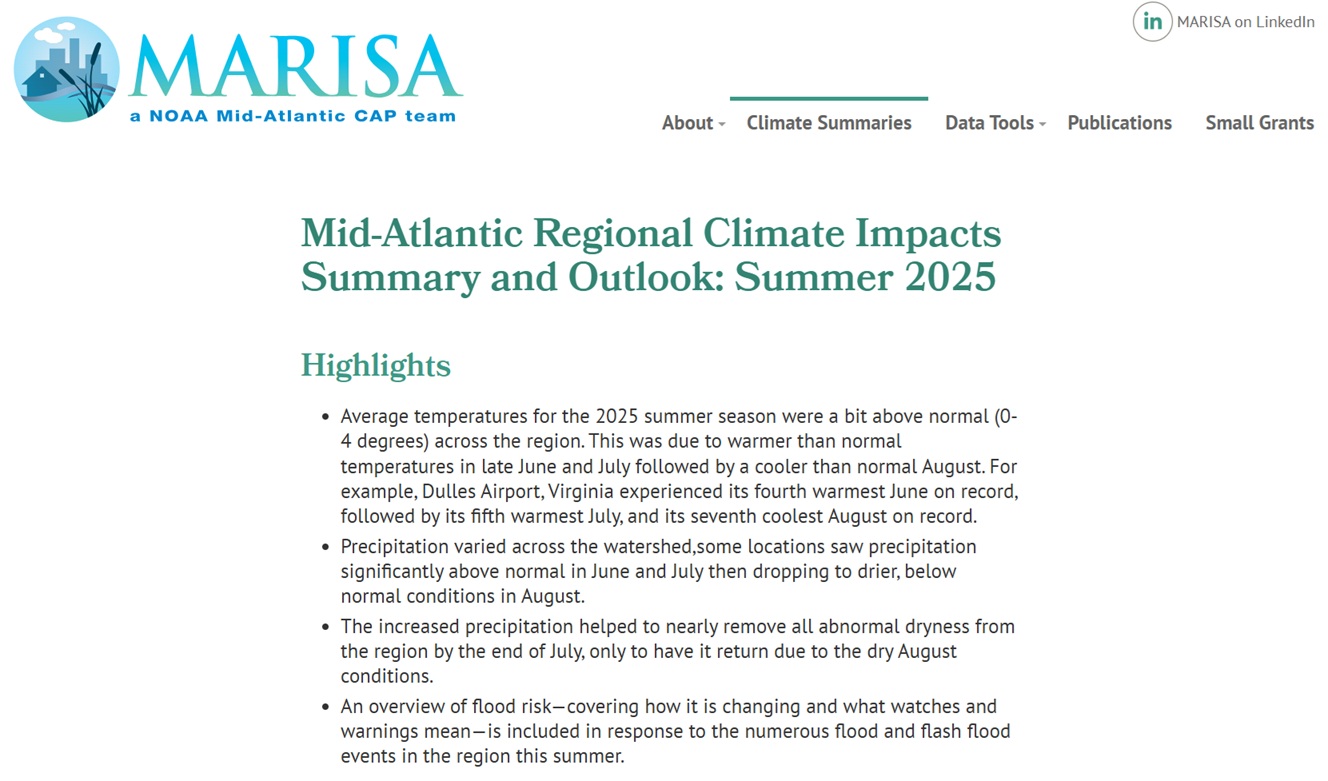
Quarterly Climate Impacts and Outlook for the Mid-Atlantic Region for June–August 2025. Dated September 2025.
Average temperatures for the 2025 summer season were a bit above normal (0-4 degrees) across the region. This was due to warmer than normal temperatures in late June and July followed by a cooler than normal August. Precipitation varied across the watershed,some locations saw precipitation significantly above normal in June and July then dropping to drier, below normal conditions in August.
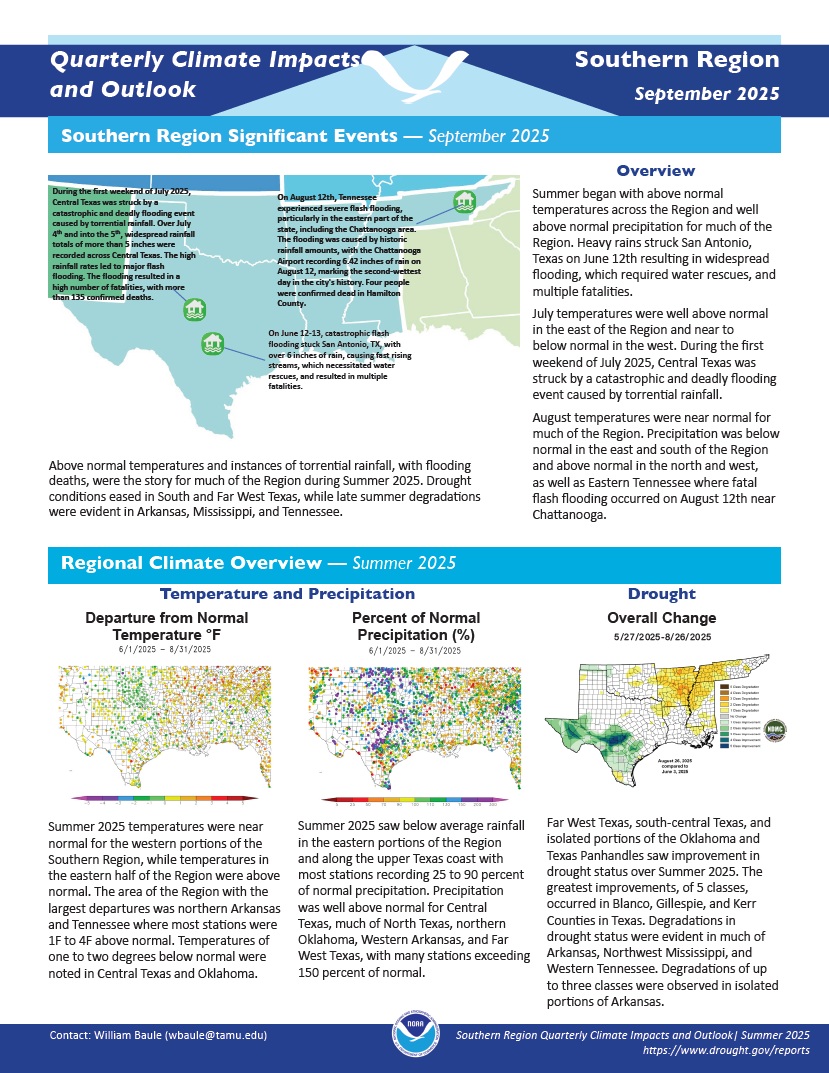
Quarterly Climate Impacts and Outlook for the Southern Region for June–August 2025. Dated September 2025.
Summer 2025 temperatures were near normal for the western portions of the Southern Region, while temperatures in the eastern half of the Region were above normal. Summer 2025 saw below average rainfall in the eastern portions of the Region and along the upper Texas coast. Precipitation was well above normal for Central Texas, much of North Texas, northern Oklahoma, Western Arkansas, and Far West Texas.