


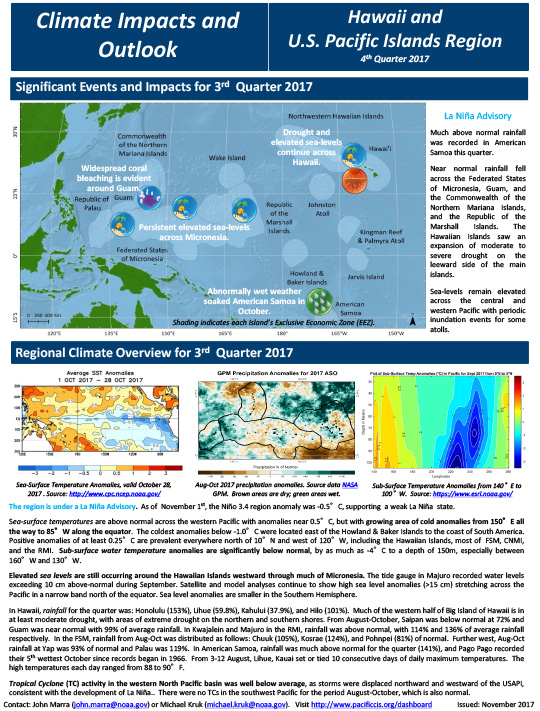
Quarterly Climate Impacts and Outlook for the Hawaii and the U.S. Pacific Islands Region for August – October 2017. Dated November 2017.
Includes significant events and impacts for Q3 2017; regional climate overview; sectoral impacts, and regional outlook for November 2017 through January 2018.
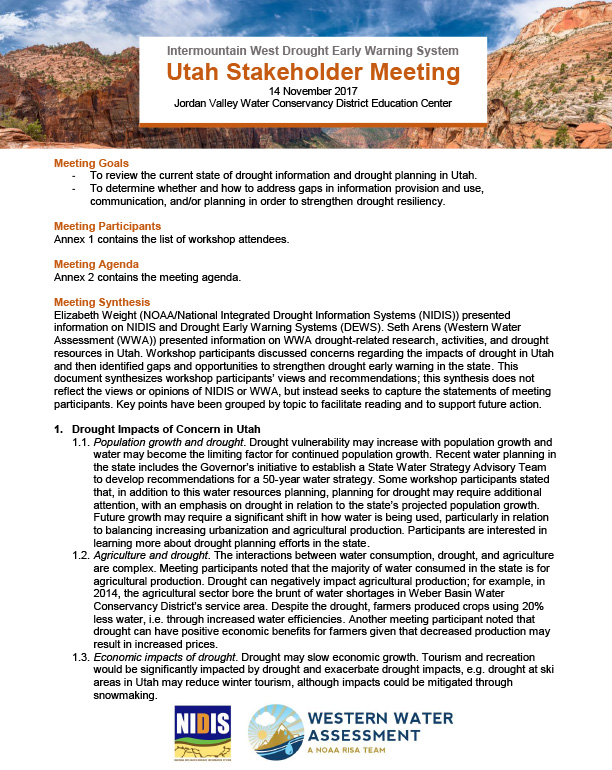
Summary of the Intermountain West Drought Early Warning System Utah Stakeholder Meeting that took place on November 14, 2017 at the Jordan Valley Water Conservancy District Education Center in West Jordan, Utah. The meeting goals were to review the current state of drought information and drought planning in Utah and determine how to address gaps in information provision and use, communication, and/or planning in order to strengthen drought resiliency.
Pacific Northwest DEWS Climate Outlook October 2017 including 2 week outlook, ENSO update, and long range outlook.
Presented during the Pacific Northwest Drought & Climate Outlook Webinar on October 23. This presentation provides an overview of Oregon’s Place Based Water Planning Program including place based planning principles, planning steps, roles, program coordination, financial and technical assistance.
Presented at the Pacific Northwest Drought & Climate Outlook Webinar on October 23.
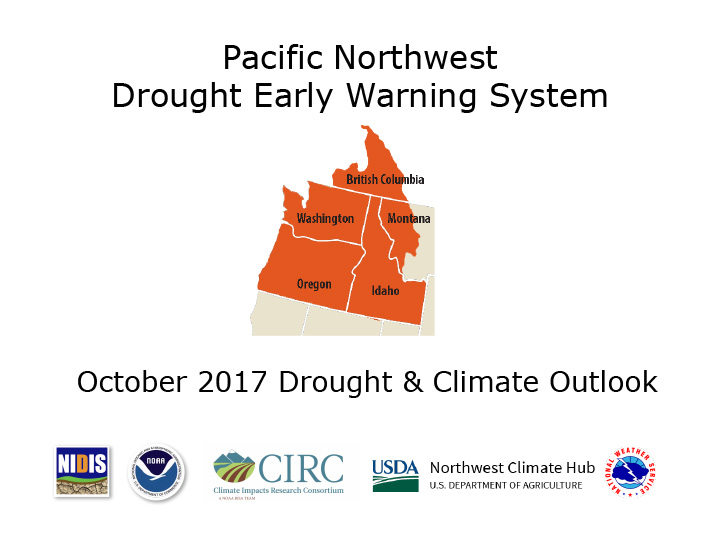
Introduction to webinar with agenda; information about drought early warning, the Pacific Northwest DEWS and NIDIS; and Climate Recap Covering Last Year's Water Year.
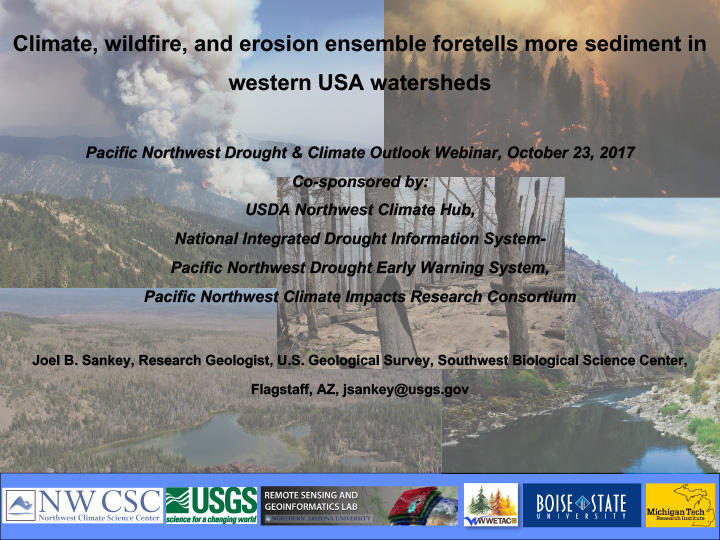
Presented at the Pacific Northwest Drought & Climate Outlook Webinar on October 23.
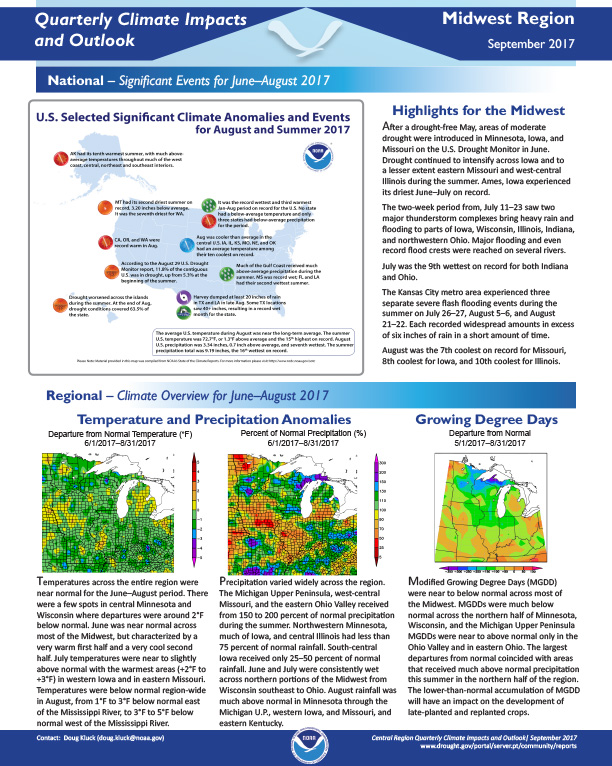
Quarterly Climate Impacts and Outlook for the Midwest Region for June – August 2017. Dated September 2017.
After a drought-free May, areas of moderate drought were introduced in Minnesota, Iowa, and Missouri on the U.S. Drought Monitor in June. Drought continued to intensify across Iowa and to a lesser extent eastern Missouri and west-central Illinois during the summer. Ames, Iowa experienced its driest June–July on record.
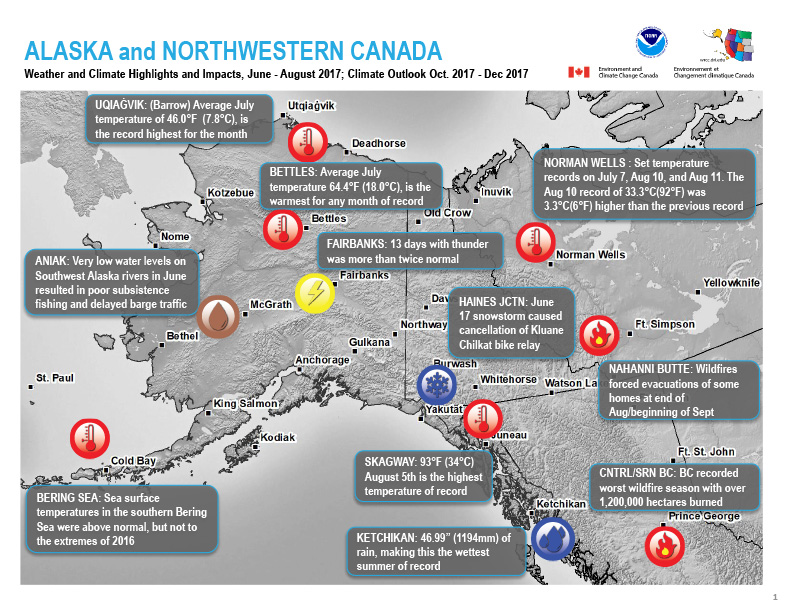
Quarterly Climate Impacts and Outlook for Alaska and Northwestern Canada for June – August 2017; outlook for October – December 2017. Dated September 2017.
Summer 2017 was significantly warmer than normal over most of the region, though Southeast Alaska and northern British Columbia were, overall, closer to normal. Precipitation, as is often the case in summer, was quite variable. Southern and northern coastal areas were wetter than average. Most inland areas and western Alaska had near normal rainfall but with small dry pockets.
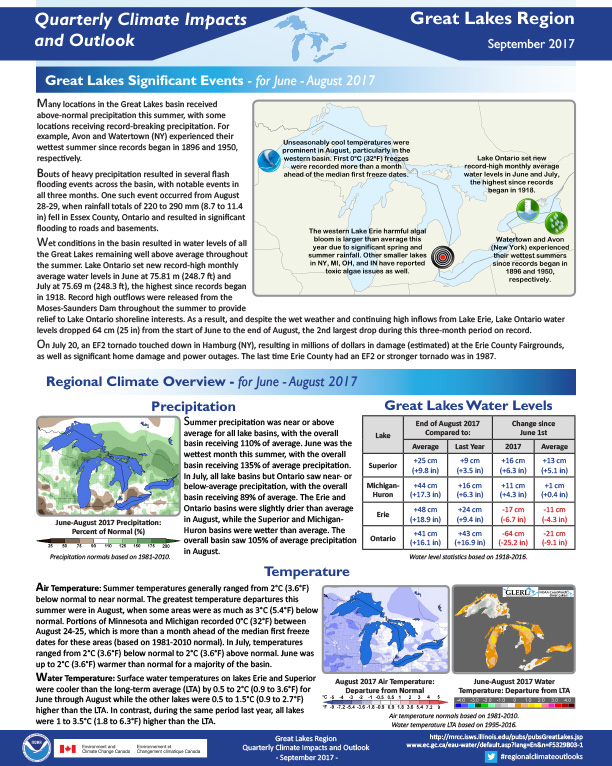
Quarterly Climate Impacts and Outlook for the Great Lakes Region for June – August 2017. Dated September 2017.