




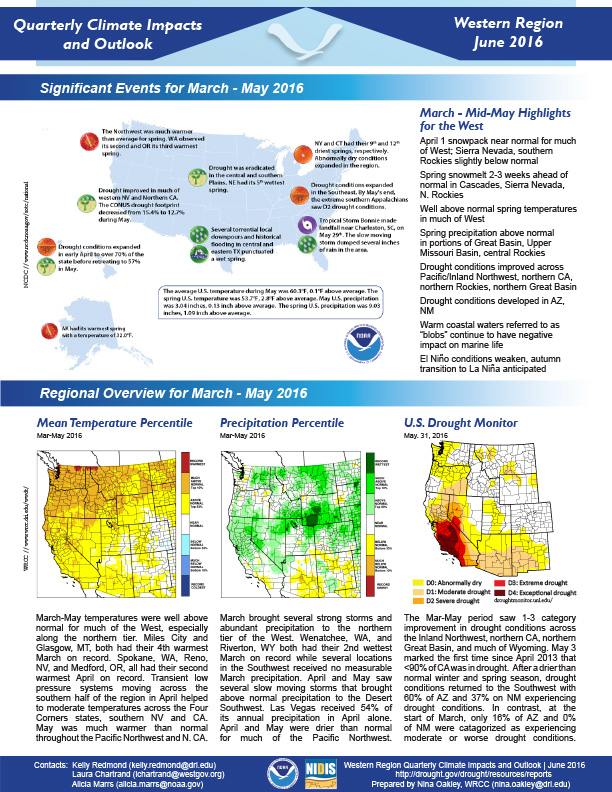
Quarterly Climate Impacts and Outlooks for the Pacific Region for March – May 2016. Dated June 2016.
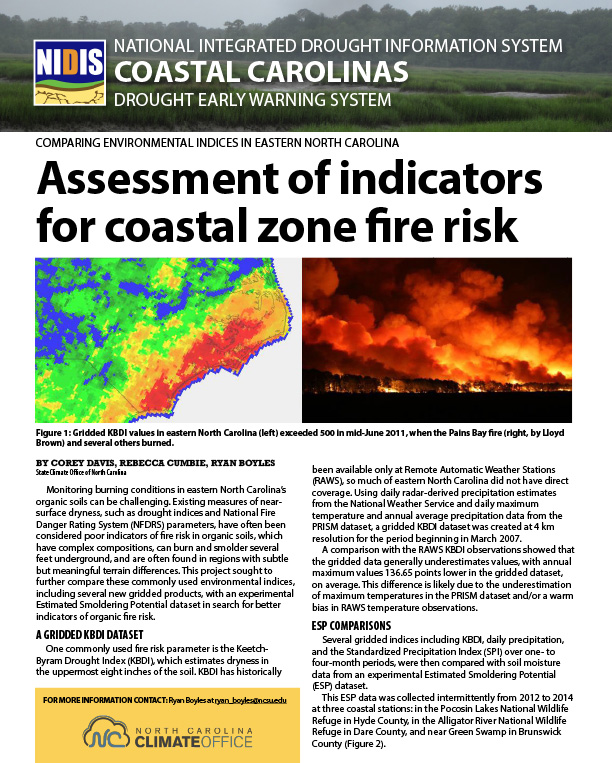
Monitoring burning conditions in eastern North Carolina’s organic soils can be challenging. Existing measures of near-surface dryness, such as drought indices and National Fire Danger Rating System (NFDRS) parameters, have often been considered poor indicators of fire risk in organic soils, which have complex compositions, can burn and smolder several feet underground, and are often found in regions with subtle but meaningful terrain differences.
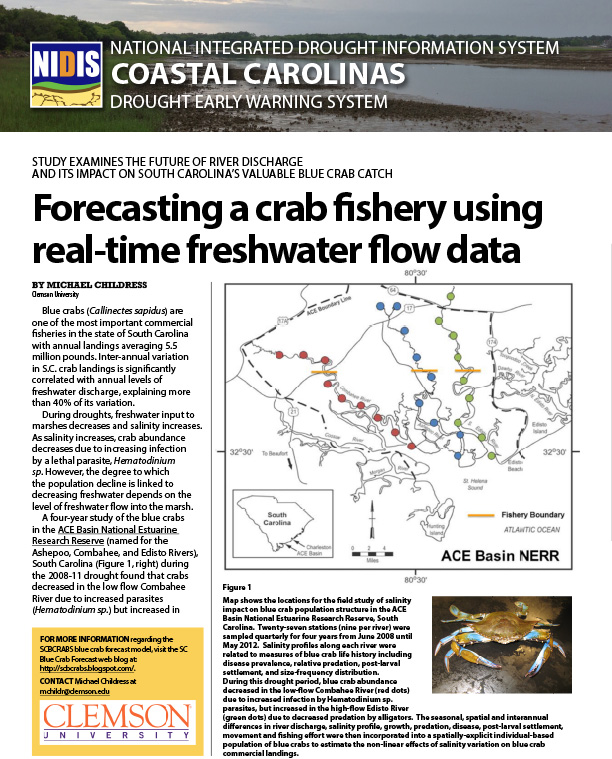
A four-year study of the blue crabs in the ACE Basin National Estuarine Research Reserve in South Carolina during the 2008-11 drought found that crabs decreased in the low flow Combahee River due to increased parasites (Hematodinium sp.) but increased in the high flow Edisto River due to decreased predation by freshwater predators (alligators).
Since drought can have both positive and negative effects on blue crabs, there is considerable interest in understanding how future variation in river discharge will impact commercial blue crab landings.
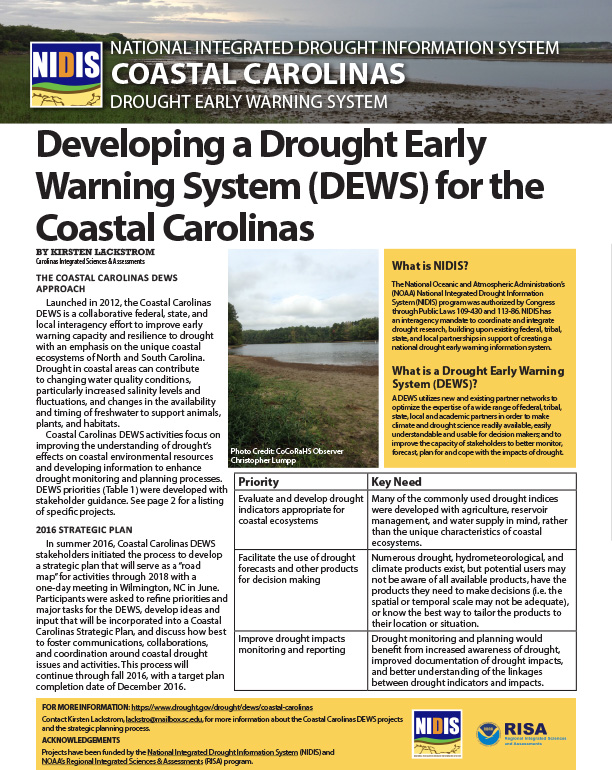
Launched in 2012, the Coastal Carolinas Drought Early Warning System (DEWS) is a collaborative federal, state, and local interagency effort to improve early warning capacity and resilience to drought with an emphasis on the unique coastal ecosystems of North and South Carolina. Drought in coastal areas can contribute to changing water quality conditions, particularly increased salinity levels and fluctuations, and changes in the availability and timing of freshwater to support animals, plants, and habitats.
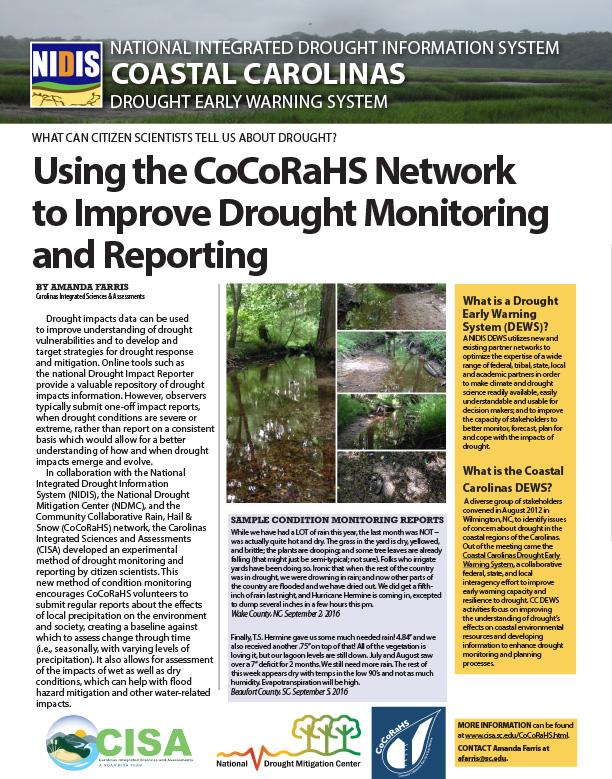
The Carolinas Integrated Sciences and Assessments (CISA) developed an experimental method of drought monitoring and reporting by citizen scientists. This method of condition monitoring encourages CoCoRaHS volunteers to submit regular reports about the effects of local precipitation on the environment and society, creating a baseline against which to assess change through time (i.e., seasonally, with varying levels of precipitation).
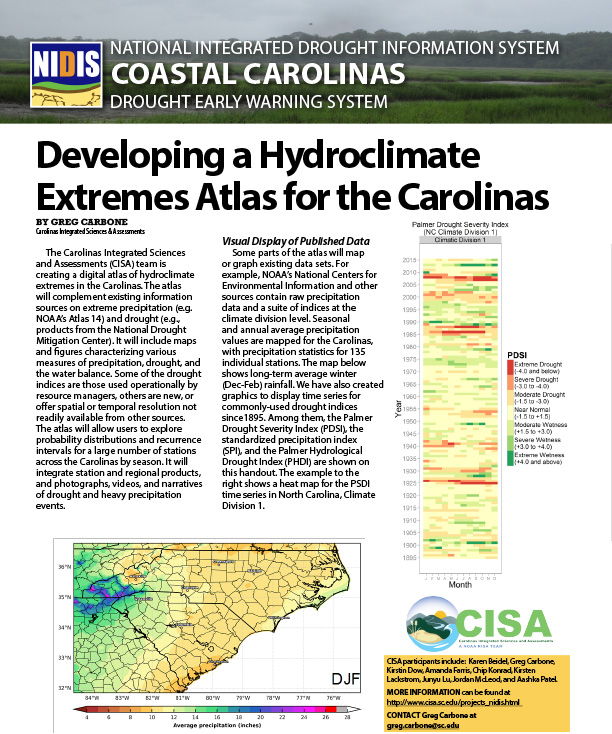
The Carolinas Integrated Sciences and Assessments (CISA) team is creating a digital atlas of hydroclimate extremes in the Carolinas. The atlas will complement existing information sources on extreme precipitation (e.g. NOAA’s Atlas 14) and drought (e.g., products from the National Drought Mitigation Center). It will include maps and figures characterizing various measures of precipitation, drought, and the water balance.
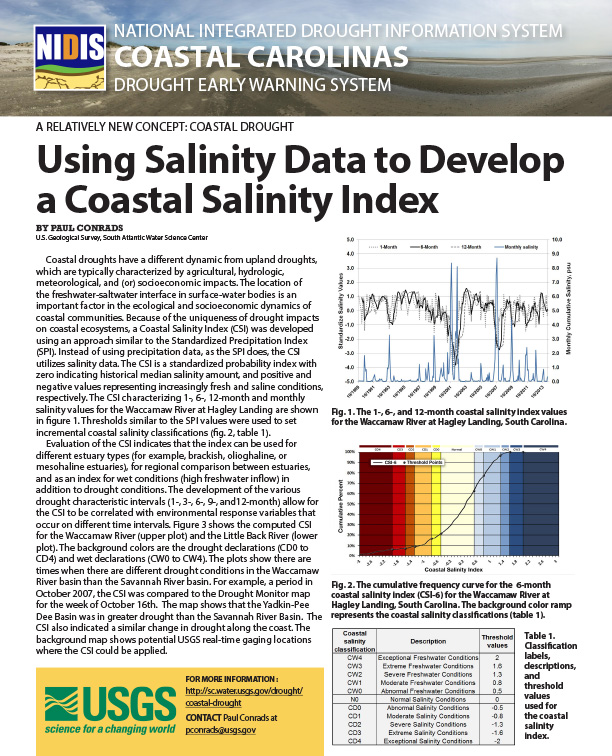
Coastal droughts have a different dynamic from upland droughts, which are typically characterized by agricultural, hydrologic, meteorological, and (or) socioeconomic impacts. The location of the freshwater-saltwater interface in surface-water bodies is an important factor in the ecological and socioeconomic dynamics of coastal communities. Because of the uniqueness of drought impacts on coastal ecosystems, a Coastal Salinity Index (CSI) was developed using an approach similar to the Standardized Precipitation Index (SPI).
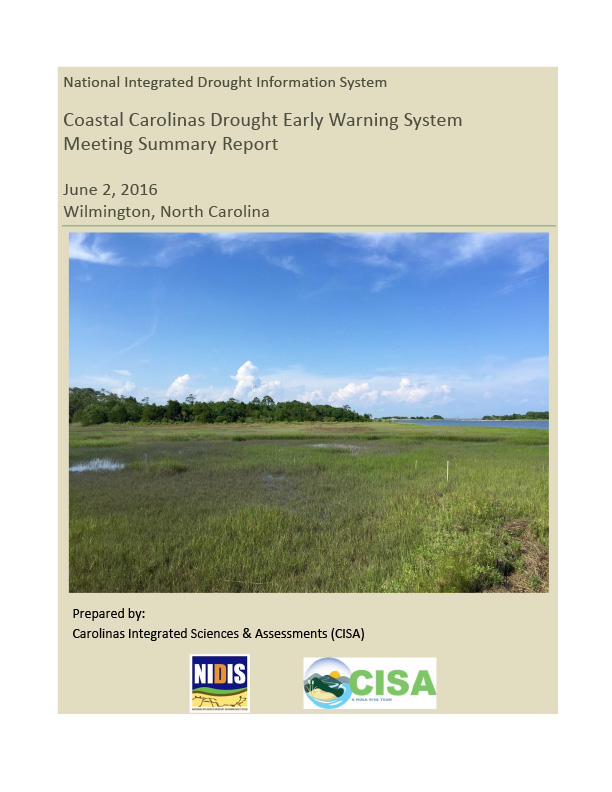
NIDIS sponsored a planning meeting on June 2, 2016, in Wilmington, North Carolina to gather stakeholder input on the development of a Coastal Carolinas DEWS Strategic Plan. The meeting convened partners to:
How soil moisture monitoring can give insight into human health issues.
How soil moisture could assist in river forecasting.