




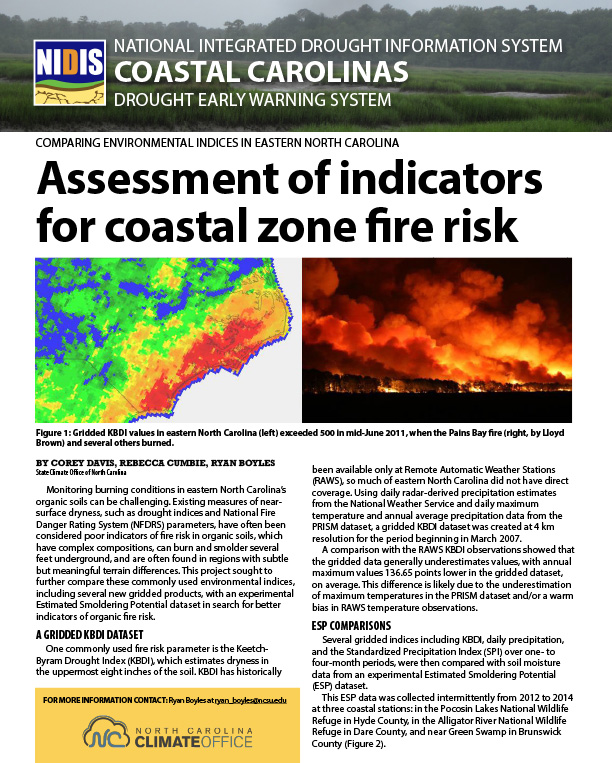
Monitoring burning conditions in eastern North Carolina’s organic soils can be challenging. Existing measures of near-surface dryness, such as drought indices and National Fire Danger Rating System (NFDRS) parameters, have often been considered poor indicators of fire risk in organic soils, which have complex compositions, can burn and smolder several feet underground, and are often found in regions with subtle but meaningful terrain differences.
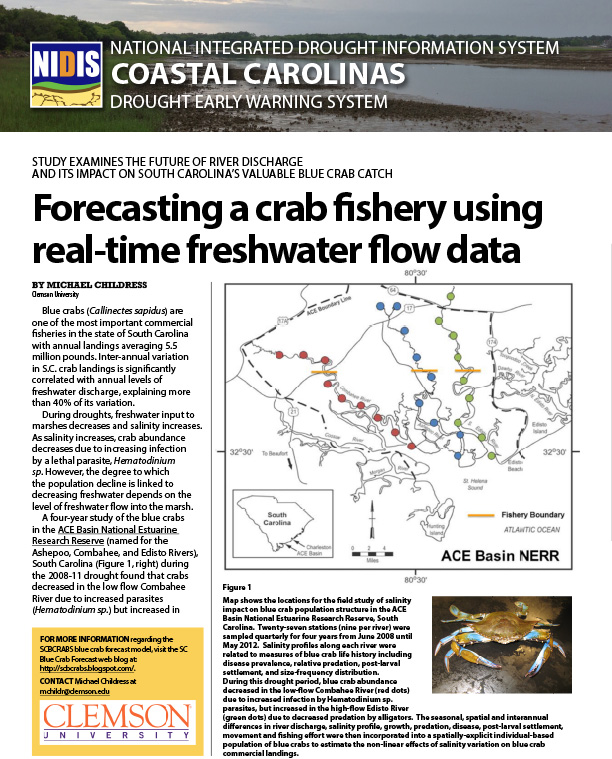
A four-year study of the blue crabs in the ACE Basin National Estuarine Research Reserve in South Carolina during the 2008-11 drought found that crabs decreased in the low flow Combahee River due to increased parasites (Hematodinium sp.) but increased in the high flow Edisto River due to decreased predation by freshwater predators (alligators).
Since drought can have both positive and negative effects on blue crabs, there is considerable interest in understanding how future variation in river discharge will impact commercial blue crab landings.
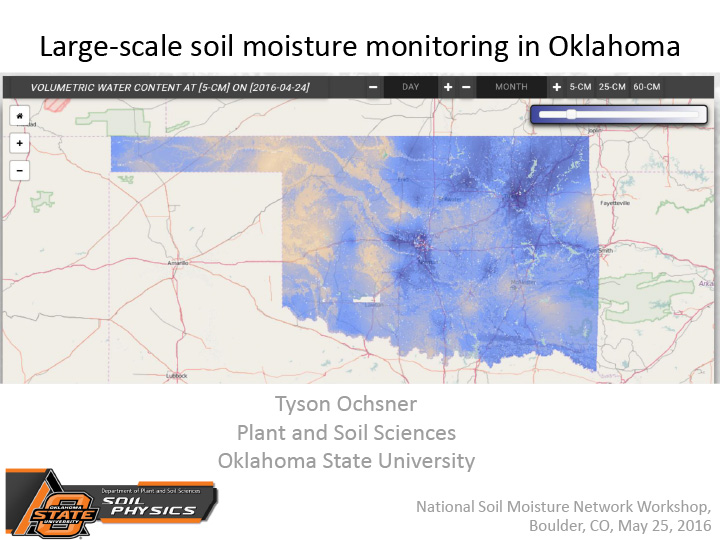
Overview of soil moisture monitoring in Oklahoma, primarily through Oklahoma Mesonet.
How US Drought Monitor authors use soil moisture monitoring data.
Climate Change and Environmental Justice Communities; USDA Environmental Strategic Goals for Communities at Risk.
Overview of the North American Soil Moisture Database.
Soil taxonomy; how soil moisture is inventoried in Soil Survey; interpretations of data; research; how the data is used.
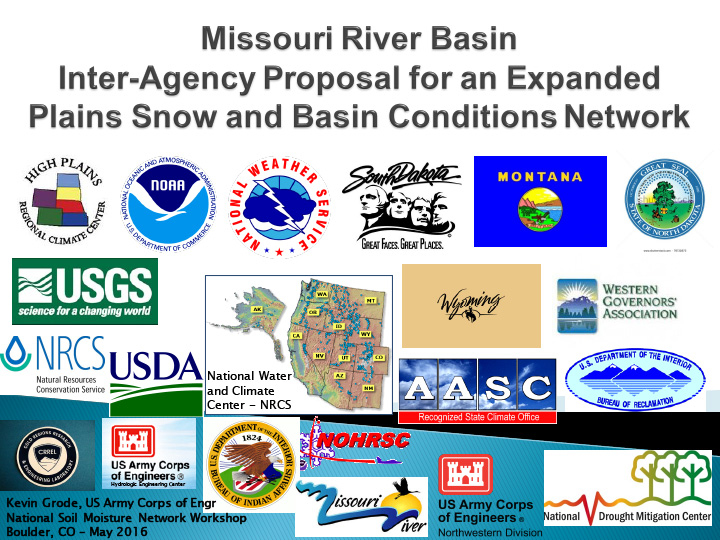
Soil moisture monitoring in the Missouri River Basin and how it can be used to develop better understanding of basin responses; the kinds of information the USACE is looking for.
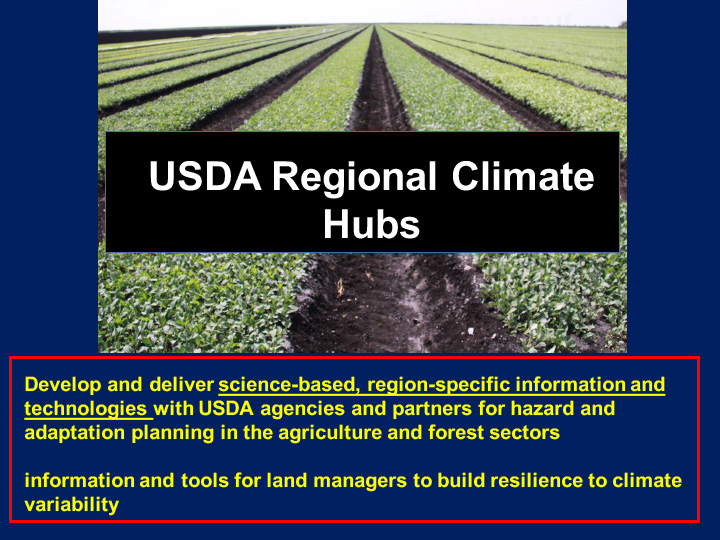
Mission, issues and goals of USDA Climate Hubs.
How soil moisture monitoring can give insight into human health issues.