



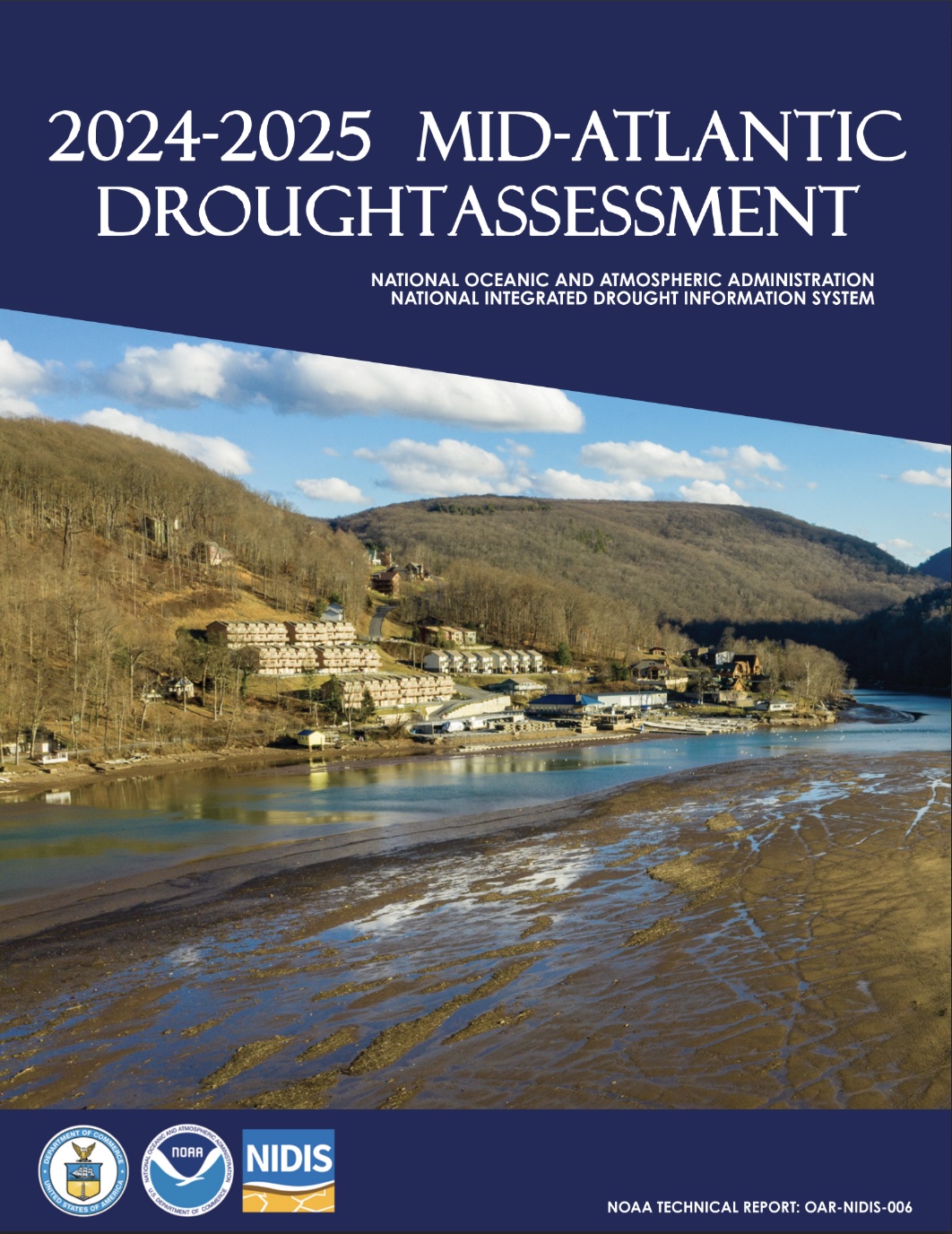
Drought has occurred frequently in the Mid-Atlantic states over the past century. Major droughts occurred in the 1930s, 1940s, 1960s, and 1980s, with several lasting for more than a year. In 2024, heat and a lack of rainfall led to widespread drought across Delaware, Maryland, New Jersey, Pennsylvania, Virginia, West Virginia, and the District of Columbia. For some locations, the 2024 drought was the worst the region had experienced in more than two decades.
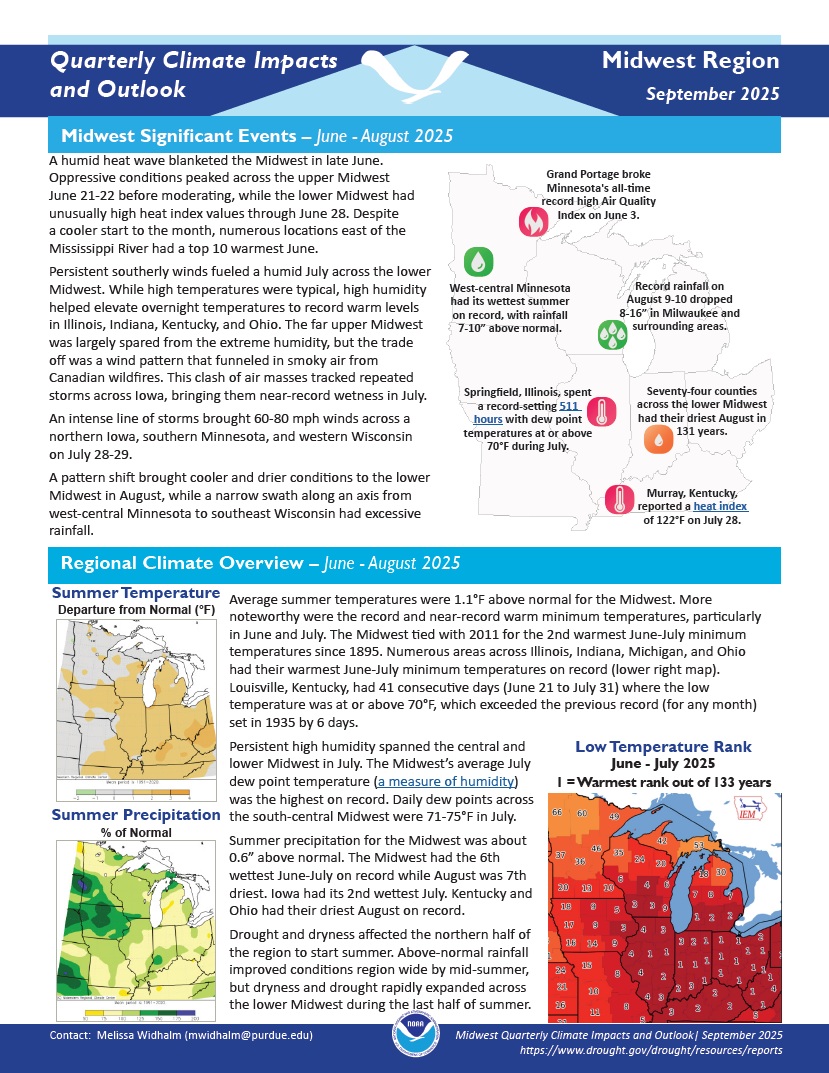
Quarterly Climate Impacts and Outlook for the Midwest Region for June–August 2025. Dated September 2025.
Average summer temperatures were 1.1°F above normal for the Midwest. More noteworthy were the record and near-record warm minimum temperatures, particularly in June and July. Drought and dryness affected the northern half of the region to start summer. Above-normal rainfall improved conditions region-wide by mid-summer, but dryness and drought rapidly expanded across the lower Midwest during the last half of summer.
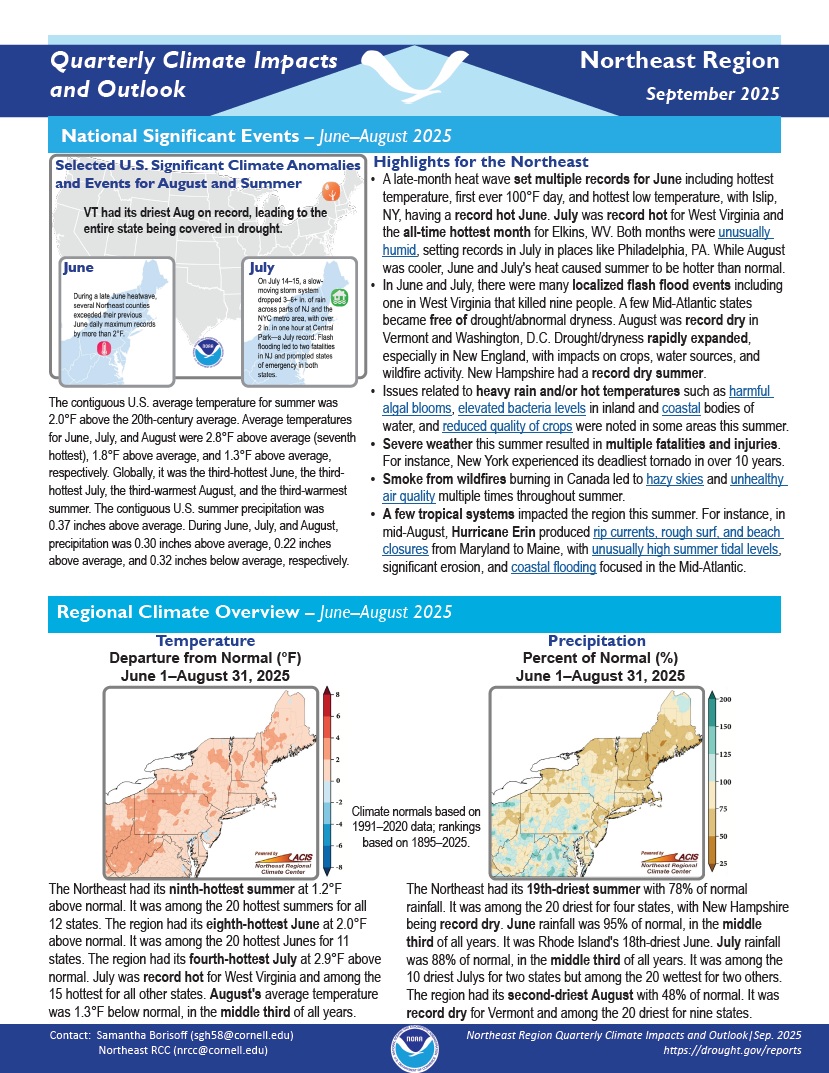
Quarterly Climate Impacts and Outlook for the Northeast Region for June–August 2025. Dated September 2025.
The Northeast had its ninth-hottest summer at 1.2°F above normal. The Northeast had its 19th-driest summer with 78% of normal rainfall. It was among the 20 driest for four states, with New Hampshire being record dry.
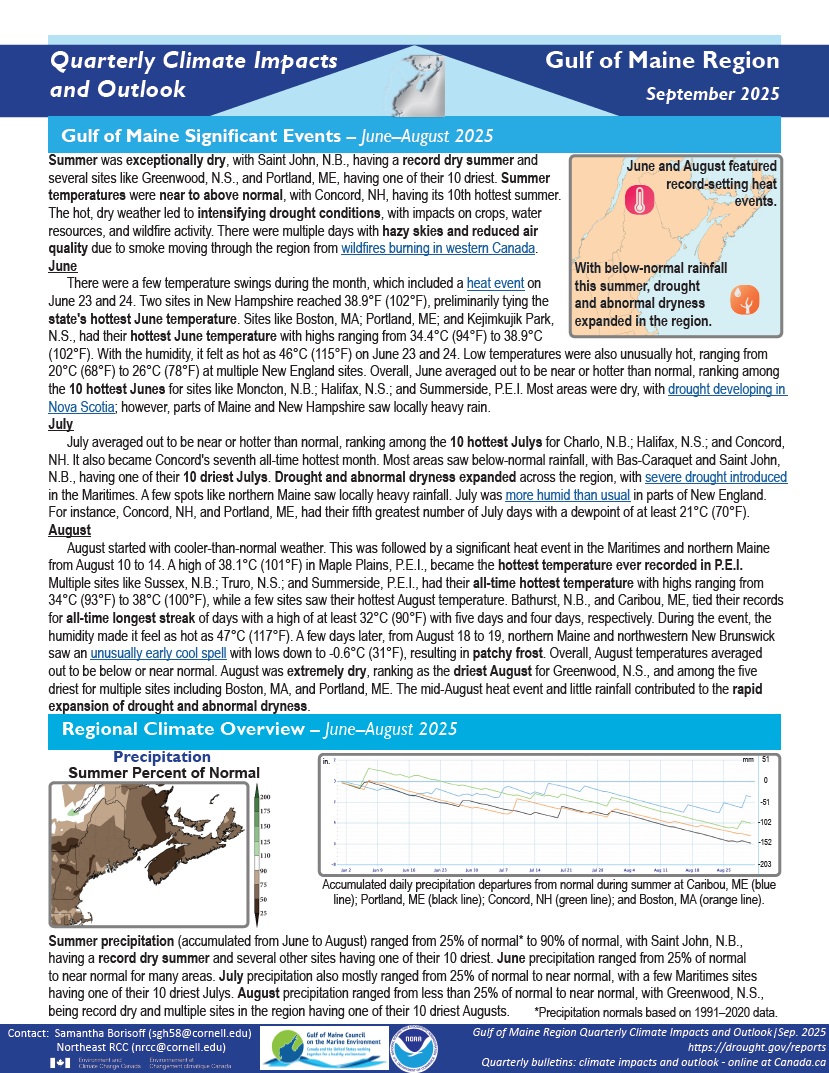
Quarterly Climate Impacts and Outlook for the Gulf of Maine Region for June–August 2025. Dated September 2025.
Summer temperatures ranged from near normal to 3°C (5°F) above normal for most areas, with Concord, New Hampshire, having its 10th hottest summer. Summer precipitation ranged from 25% of normal to 90% of normal, with Saint John, N.B., having a record dry summer and several other sites having one of their 10 driest.
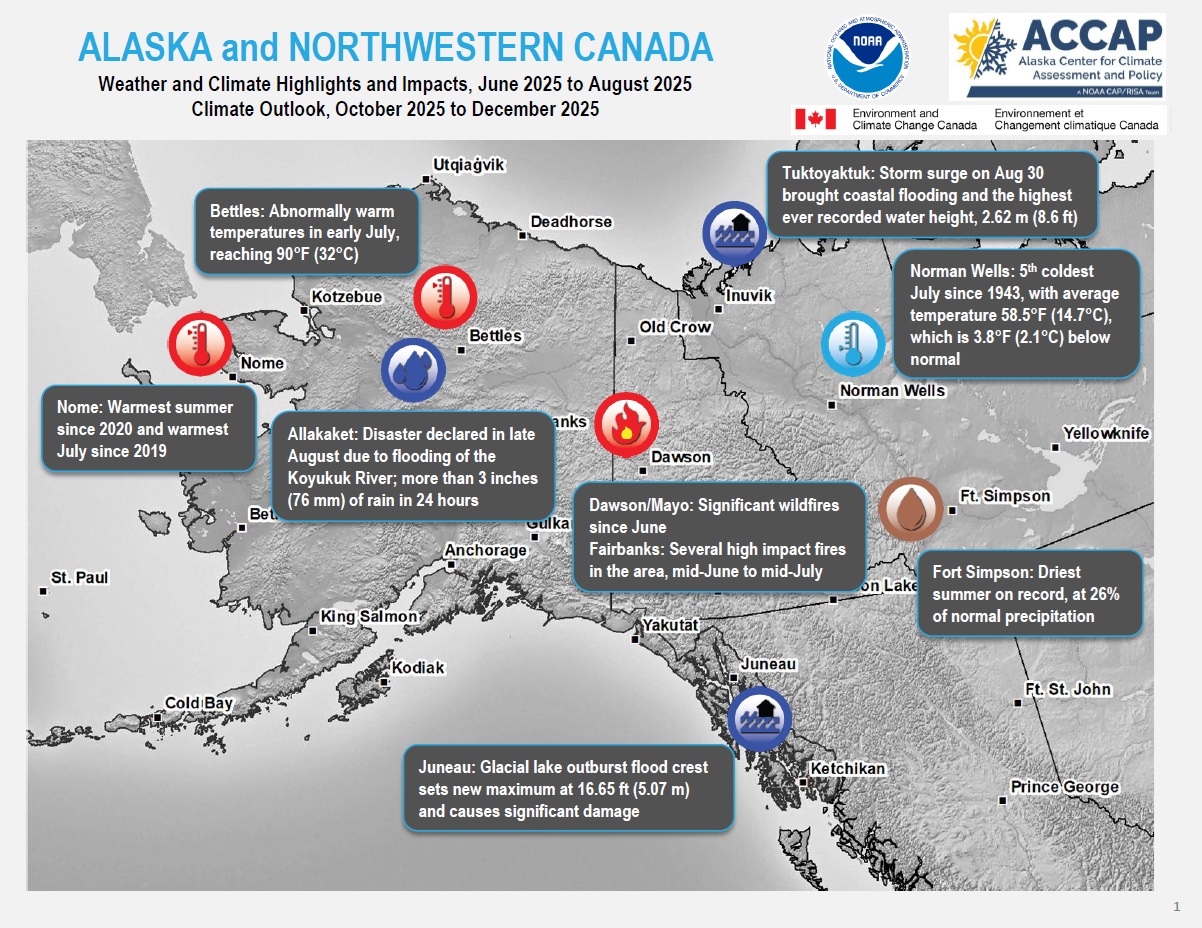
Quarterly Climate Impacts and Outlook for Alaska and Northwestern Canada for June–August 2025, with an outlook for October–December 2025. Dated September 2025.
ECCC, NOAA, and partners created these outlooks to inform the public about recent impacts within their respective regions. Each regional report contains easy-to-understand language, and anyone can access them through the U.S. Drought Portal.
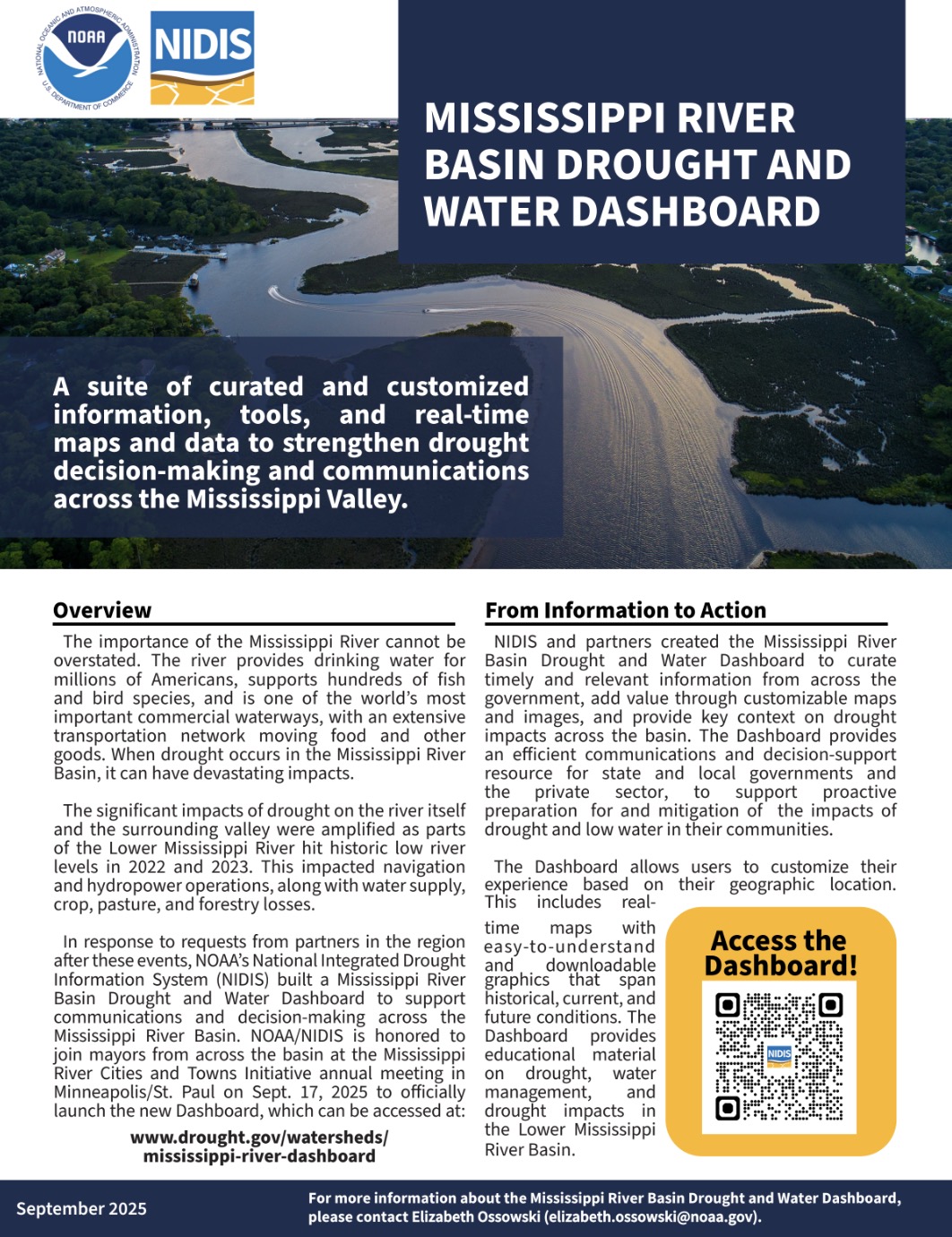
This 2-page summary provides an overview of the Mississippi River Drought and Water Dashboard on drought.gov.
The Mississippi River provides drinking water for millions of Americans, supports hundreds of fish and bird species, and is one of the world’s most important commercial waterways, with an extensive transportation network moving food and other goods.
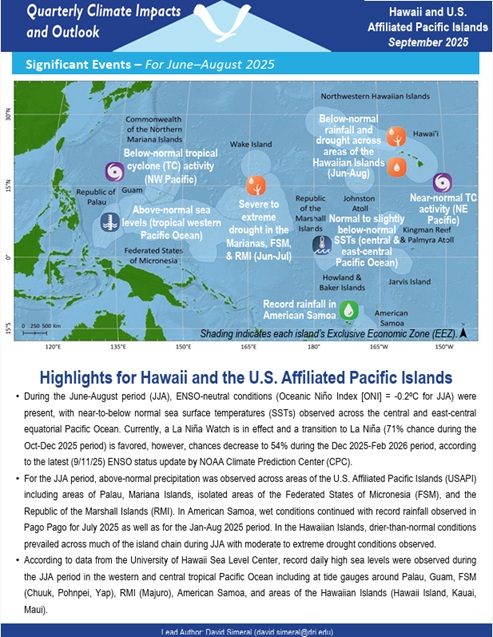
Quarterly Climate Impacts and Outlook for the Pacific Region for June–August 2025. Dated September 2025.
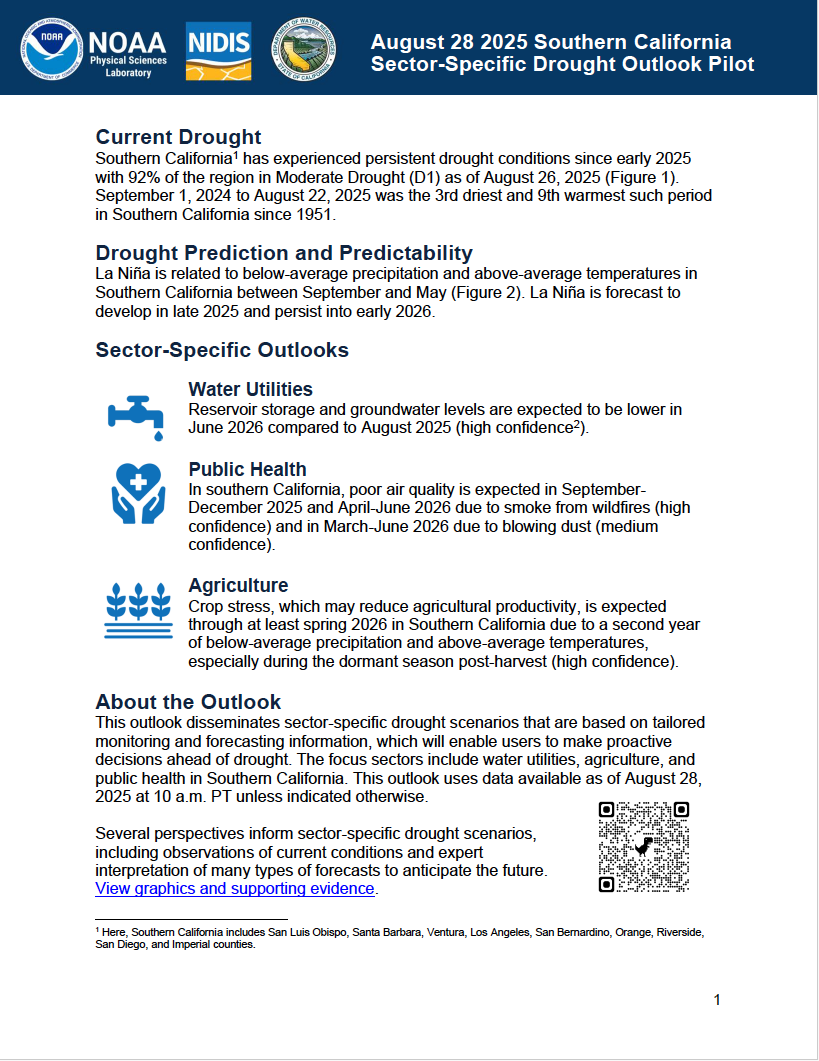
NOAA’s National Integrated Drought Information System (NIDIS) and Physical Sciences Laboratory are partnering with the California State Climatologist/California Department of Water Resources, NOAA’s National Weather Service and National Centers for Environmental Information, and the California-Nevada Adaptation Program (a NOAA CAP team) on the Sector-Specific Drought Early Warning Outlook – Southern California Pilot.
The National Integrated Drought Information System (NIDIS) is pleased to share our 2024 Annual Report to provide insight into the many accomplishments of the program over the previous year and the opportunities that lie ahead.
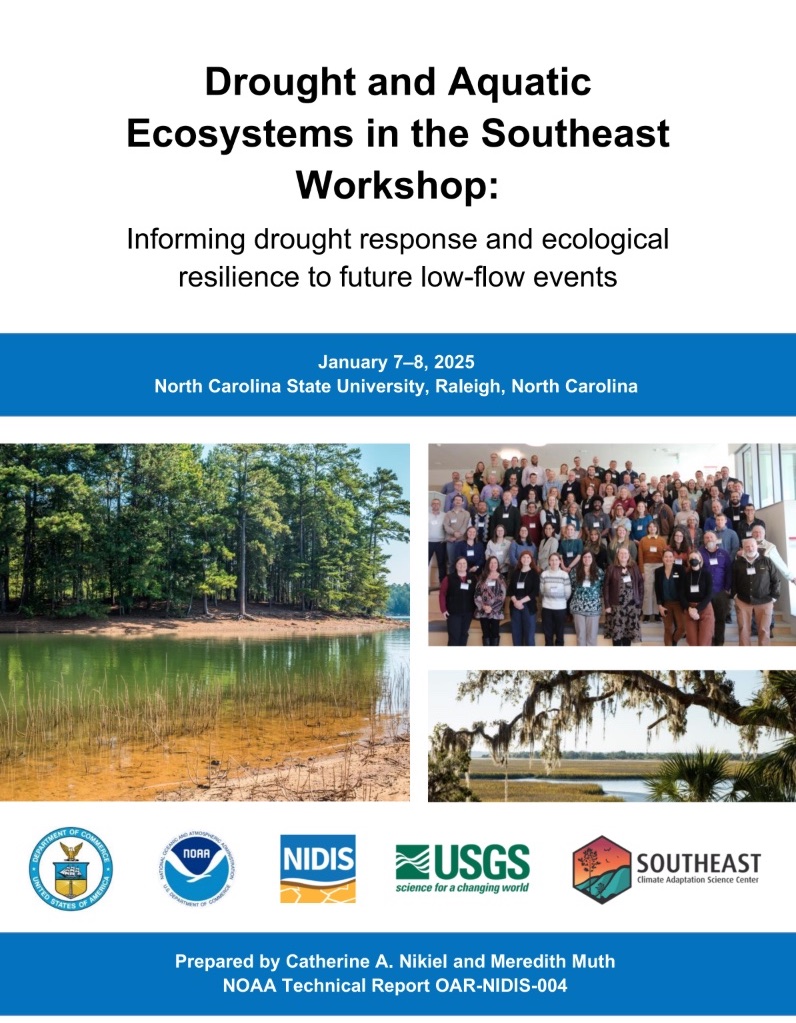
Given the broad interest and need to better understand and plan for ecological drought in the Southeast, the U.S. Geological Survey's Southeast Climate Adaptation Science Center and the National Oceanic and Atmospheric Administration's National Integrated Drought Information System (NIDIS), in support of the Southeast Drought Early Warning System, convened a 2-day workshop in January 2025. This workshop brought together scientists and managers from diverse fields, to address drought and low-flow in the Southeast and its impacts to aquatic systems across the region.