U.S. flag

An official website of the United States government

NEWS ARCHIVE

Browse news articles

Published Date Between
Search Results(178)
Published on

The 2019 Biennial U.S. Drought Monitor Forum in Bowling Green, KY, initially scheduled for March 19–21, 2019, will be postponed until later this year. With the uncertainty of another federal government shutdown after February 15, the backlog of work that must be completed from the recent shutdown, and several USDM authors that could not now attend the Forum in mid-March, all 11 USDM authors voted for postponement.

Published on

In order to help communities understand and prepare for the various hazards that could impact their people, infrastructure, and economies, FEMA has developed a risk assessment process to identify and determine their level of vulnerability to these risks. FEMA’s Threat and Hazard Identification and Risk Assessment (THIRA) is a three-step risk assessment process that helps states, tribes, territories, and local communities answer the following questions: What threats and hazards can affect our community? If they occurred, what impacts would those threats and hazards have on our community? Based on those impacts, what capabilities should our community have?

Published on

According to news reports, the United States has been experiencing a nationwide Christmas tree shortage, along with price hikes as a result of low supplies. The U.S. Christmas tree industry is a $2 billion a year industry, according to annual reports from the National Christmas Tree Association.

Published on

It is well-known within the weather forecasting community that the United States experiences the most extreme weather events in the world. Tornado outbreaks can shatter communities in the central and southeastern parts of the country. Historical flooding can flip flop with crippling drought. Blizzards can paralyze the entire Northeast. As Americans, we see it all, and the emotional and financial impacts can be staggering. Economic losses from extreme weather events are measured in the billions of dollars annually and it is tough to put a price on a life taken too quickly or a way of life completely disrupted.

Published on

As of November 15, 2018, the snow drought page is live for the 2018–2019 winter season. Regular updates will be posted every month in November and December, and every two weeks through spring and early summer. The snow drought page features an overview of current conditions across the country as well as a number of snow drought monitoring tools that can help decision makers and resource managers monitor, plan for, and cope with snow drought and its impacts.

Published on

The Evaporative Demand Drought Index, also known as EDDI, is an experimental drought monitoring and early warning tool that looks for drought using atmospheric evaporative demand (also known as the “thirst of the atmosphere”). So far, EDDI maps and data have been made available for near-real-time and historical monitoring; now, with the help of the NOAA NCEI, EDDI and evaporative demand probability forecast maps are now available via NCEI’s Drought Termination and Amelioration tool.

Published on

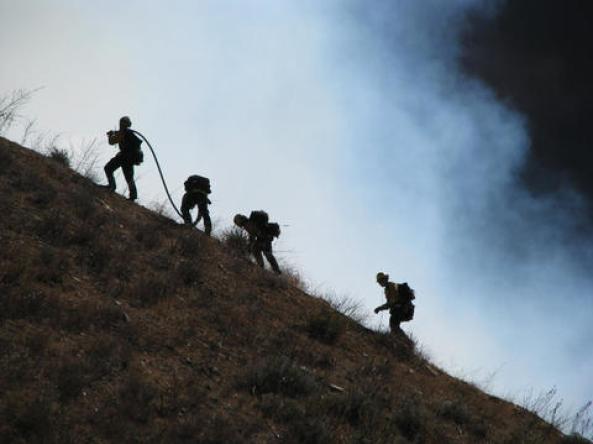
The NIDIS Drought and Wildland Fire Nexus (NDAWN) is a strategic, decision-support information network that responds to the needs and challenges of fire managers for effectively utilizing drought information. Through a partnership with the Western Regional Climate Center and the Desert Research Institute, and in consultation with the fire management community, NIDIS recently co-produced a four-year NDAWN Strategic Plan. This plan outlines the complicated relationship between drought and wildland fire behavior, how this relationship affects wildland fire response and management, and the gaps in research and operations that would improve the wildland fire community’s use and understanding of drought information in fire management to improve firefighter and public safety.

Published on

NIDIS, in partnership with the Mississippi River Cities and Towns Initiative, the USDA Office of the Chief Economist, NOAA’s Office of the Chief Economist, the cross-agency National Drought Resilience Partnership, and other governmental and sectoral partners, are joining forces to study and quantify drought impacts to the trade footprint along the Mississippi River Corridor in the following industries: agricultural production; commercial river navigation and transportation; manufacturing, including off-farm manufacturing; and recreation and tourism.

Published on

The Midwest Regional Climate Center’s Midwest Climate Watch Drought page provides evapotranspiration (ET) maps for 1-day, 7-day, 14-day, 30-day, and 60-day totals. Water balance maps are provided for 7-day, 14-day, 30-day, and 60-day totals. The maps are available only in the freeze-free season (generally May–October).

Published on

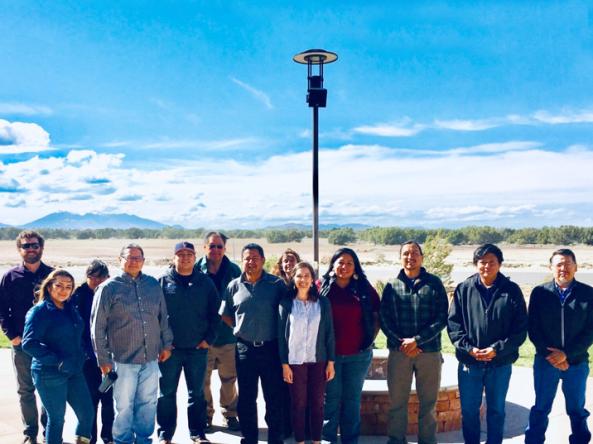
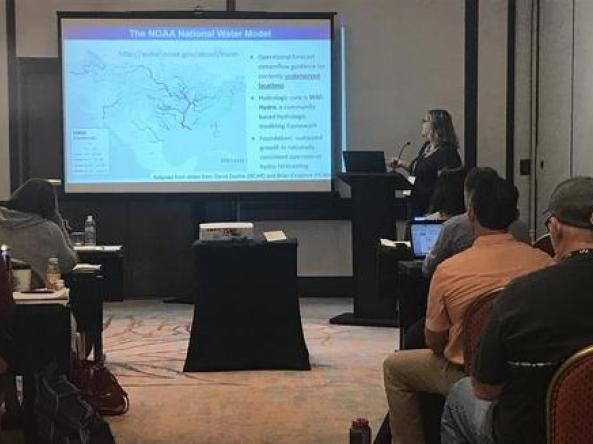
On September 11th and 12th, NIDIS and NOAA’s NCEI held the 3rd annual Drought Amelioration Workshop in Phoenix, Arizona: “The Burning Desert: A Workshop on Drought Recovery Tools and Perspectives.” Representatives from Arizona, Colorado, Nevada, New Mexico, and Utah met in Phoenix to discuss the challenges of drought and water management in the West, and to evaluate selected resources available to help decision makers plan for and respond to drought.