



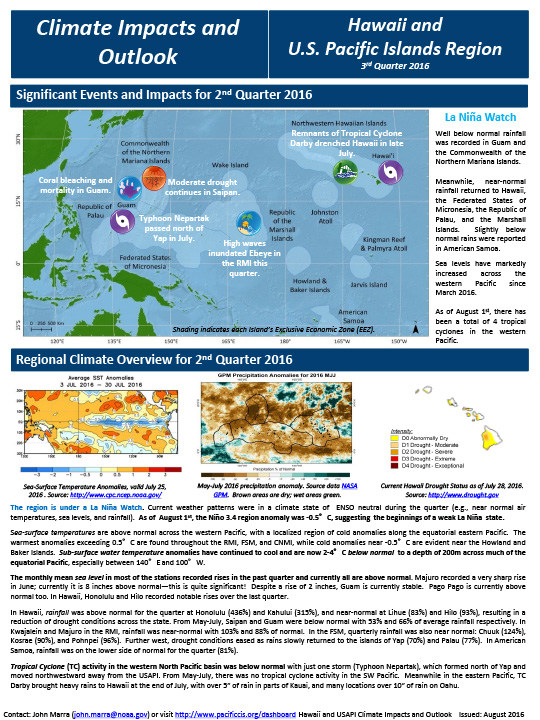
Quarterly Climate Impacts and Outlooks for the Pacific Region for May – July 2016. Dated August 2016.
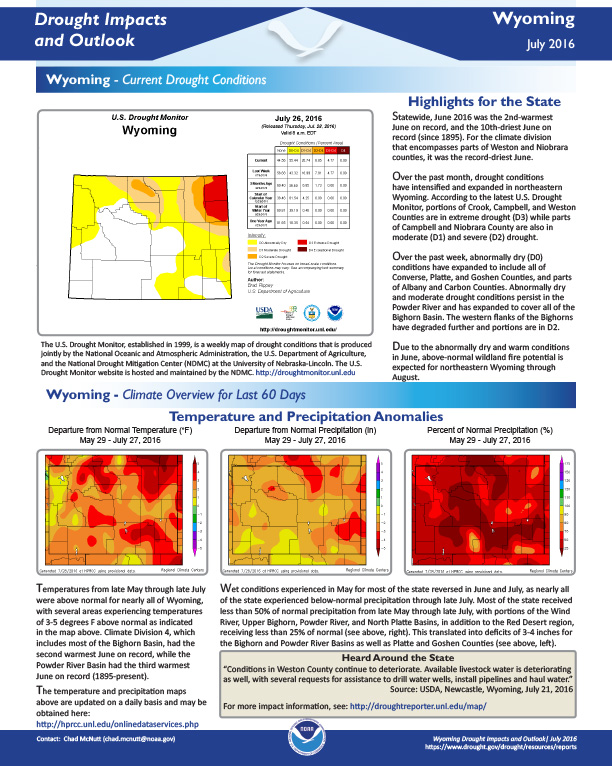
Drought conditions, temperature and precipitation anomalies, evaporative demand, weather/climate/wildfire outlooks for Wyoming at the end of July 2016.
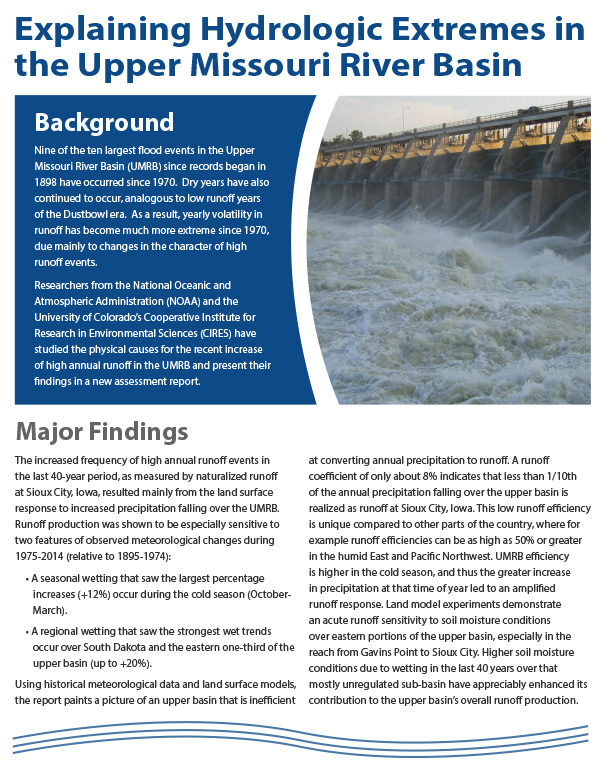
Two-page summary of the Climate Assessment Report: Causes for Hydrologic Extremes in the Upper Missouri River Basin. The report demonstrates a strong physical connection between the increased frequency of high annual runoff events in the UMRB and the increase in precipitation falling over the upper basin.
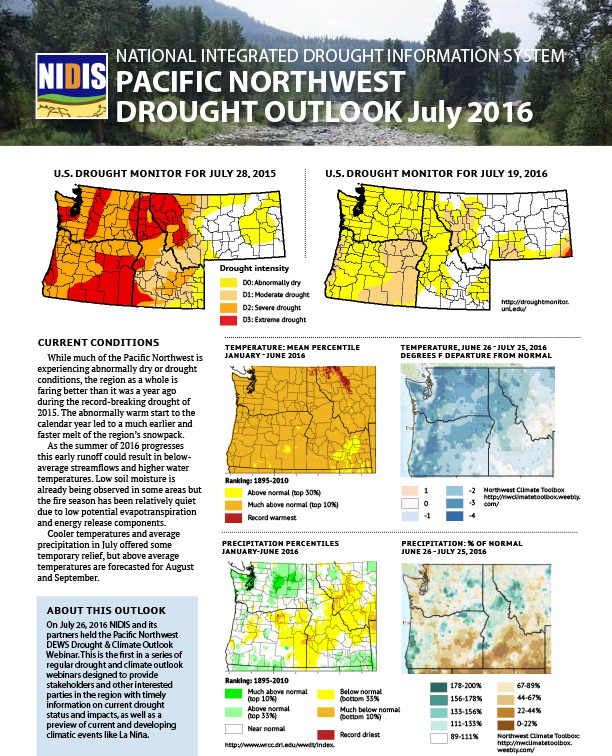
Summary of July 26, 2016 webinar: current conditions and impacts, outlook, information on La Niña.
Agenda of webinar, definition of NIDIS, definition of Drought Early Warning System, details about launch of Pacific Northwest Drought Early Warning System.
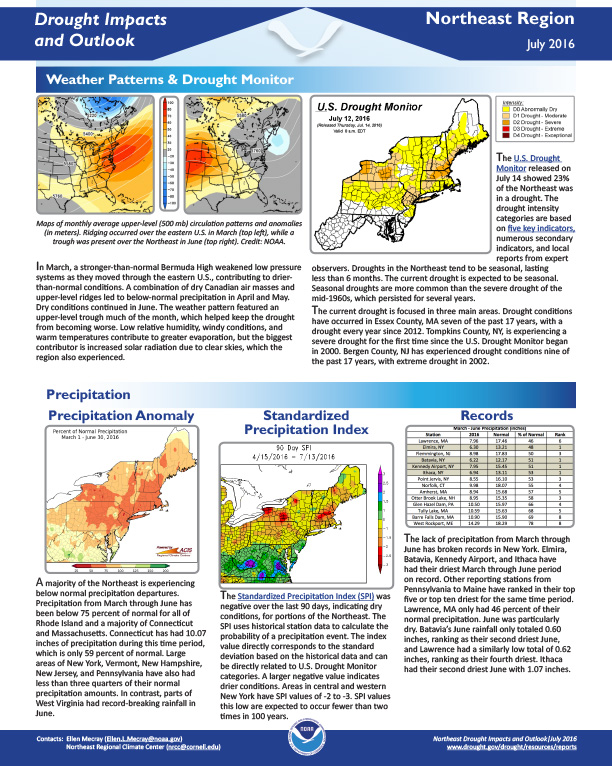
Drought Impacts and Outlook for the Northeast Region for March - June 2016. Dated July 2016.
While much of the Pacific Northwest is experiencing abnormally dry or drought conditions, the region as a whole is faring better than it was a year ago during the record-breaking drought of 2015. The abnormally warm start to the calendar year led to a much earlier and faster melt of the region’s snowpack. As the summer of 2016 progresses this early runoff could result in below-average streamflows and higher water temperatures.
Slides with maps show:
Despite some relief in early July when substantial precipitation fell in some basins, precipitation overall has been well below average through July along the Rocky Mountain Front and Upper Yellowstone for the second year in a row. Above-average temperatures coupled with diminished snowpack also led to early runoff. Low soil moisture levels depicted by NASA GRACE models illustrate the lack of June precipitation which impacted shallow groundwater and root zone moisture particularly along the Rocky Mountain Front and Upper and Lower Yellowstone.
As last year’s El Niño continues to deteriorate, CPC has issued a La Niña watch as conditions favorable to the development of an (albeit weak) La Niña are expected to continue during August-October. CPC is predicting a 55-60% chance of La Niña occurring during the fall and winter of 2016-17.
Previous La Nina’s have brought cooler and wetter conditions to the Pacific Northwest during winter months.
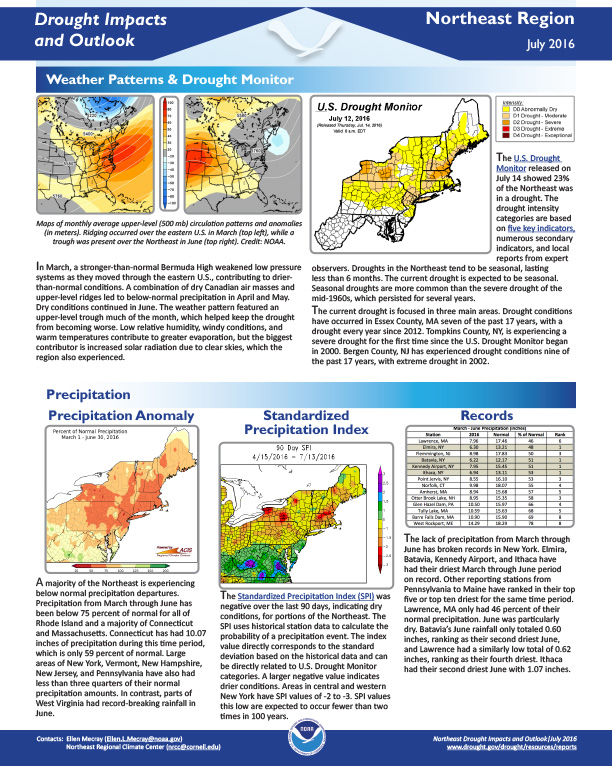
Outlook responds to worsening drought conditions in the Northeast, summer 2016, including information on weather patterns, precipitation, water resources, fire danger, drought advisories, agriculture, and what may be ahead.