



Search Results
(1171)
Document Preview
Document Date
October 3, 2016
Document Description
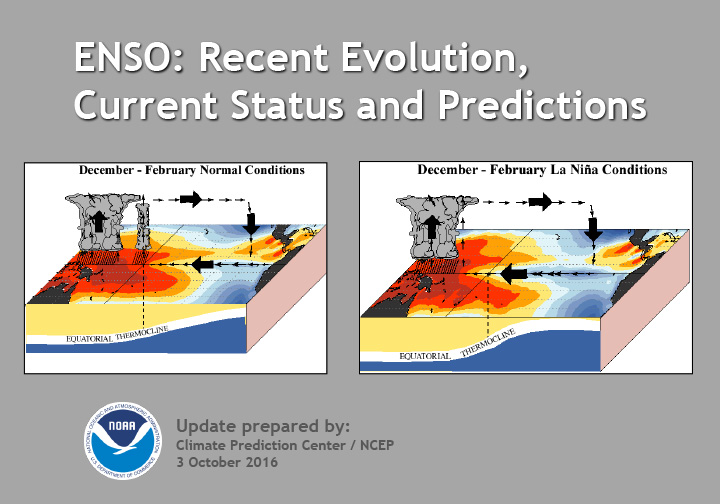
Summary: ENSO Alert System Status as of 10/6/2016: Not Active
ENSO-neutral conditions are present.* Equatorial sea surface temperatures (SST) are near or below average in the east-central and eastern Pacific Ocean. ENSO-neutral conditions are slightly favored (between 55-60%) during the upcoming Northern Hemisphere fall and winter 2016-17.* Stay tuned! The ENSO forecasts and conditions have been borderline between cool neutral and weak La Niña.Document Preview
Document Date
September 26, 2016
Document Description
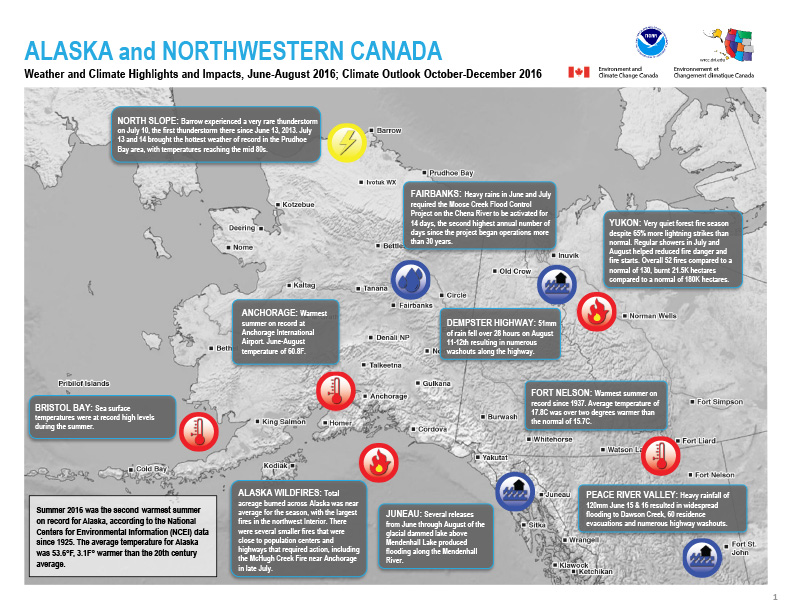
Quarterly Climate Impacts and Outlook for Alaska and Northwestern Canada for June – August 2016. Dated September 2016.
Document Preview
Document Preview
Document Date
September 26, 2016
Document Description
Document Preview
Document Date
September 26, 2016
Document Description
Document Preview
Document Preview
Document Date
September 26, 2016
Document Description
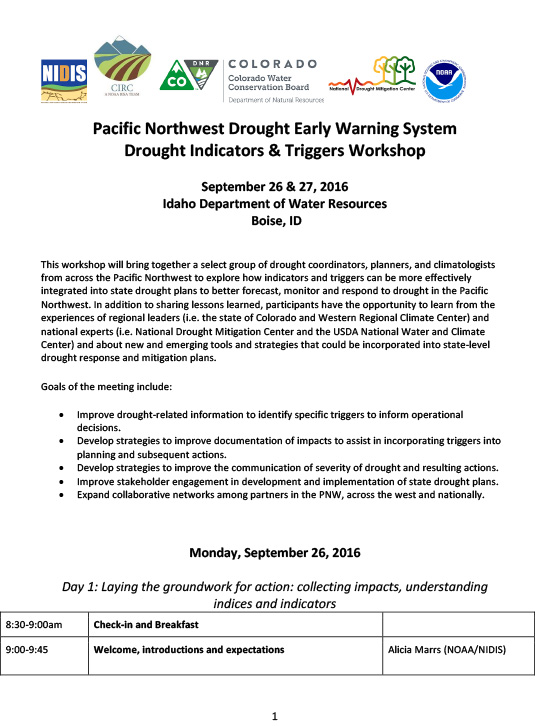
Pacific Northwest Drought Early Warning System Drought Indicators & Triggers Workshop agenda from Sept. 26-27, 2016, in Boise Idaho.
Document Preview
Document Date
September 22, 2016
Document Description
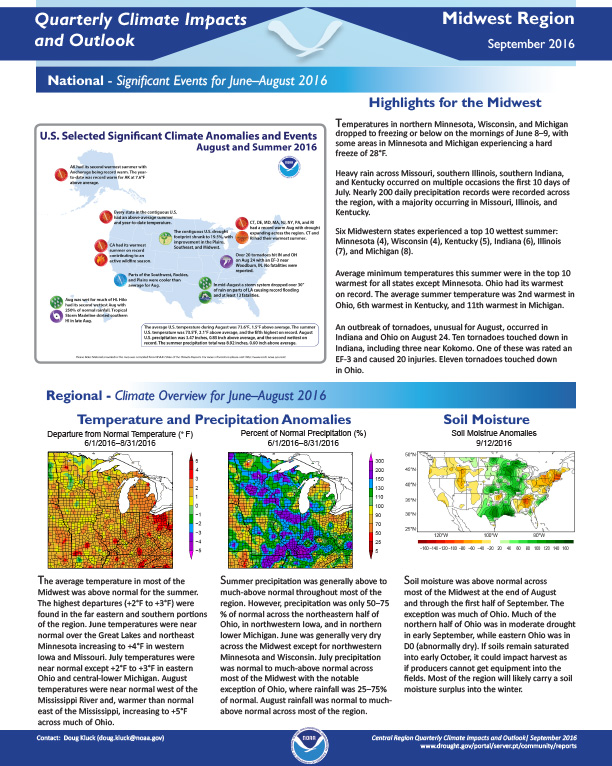
Quarterly Climate Impacts and Outlook for the Midwest Region for June – August 2016. Dated September 2016.
Document Preview
Document Date
September 22, 2016
Document Description
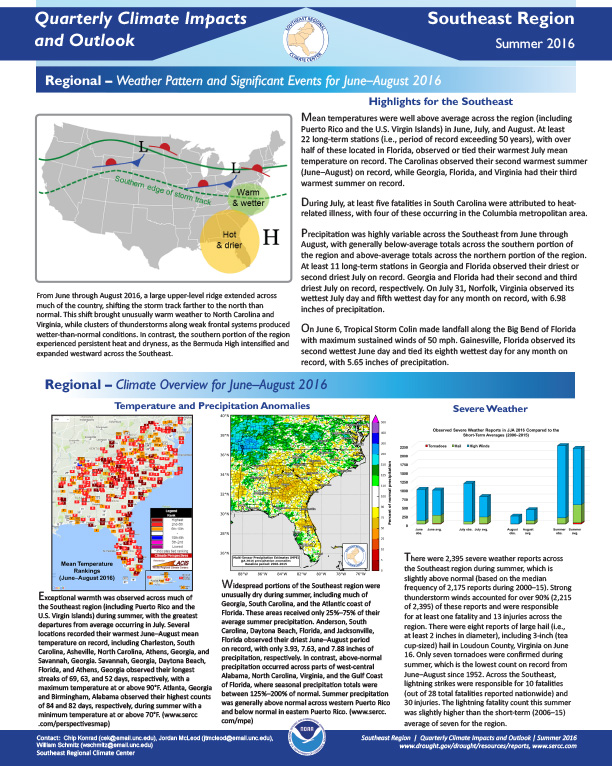
Quarterly Climate Impacts and Outlook for the Southeast Region for June – August 2016. Dated September 2016.
Document Preview
Document Date
September 21, 2016
Document Description
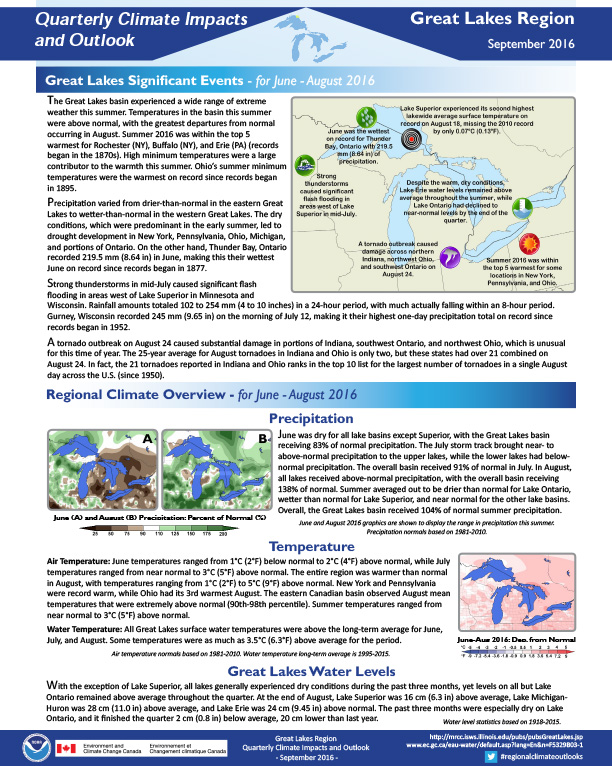
Quarterly Climate Impacts and Outlook for the Great Lakes Region for June – August 2016. Dated September 2016.