U.S. flag

An official website of the United States government

NEWS ARCHIVE

Browse news articles

Published Date Between
Search Results(178)
Published on

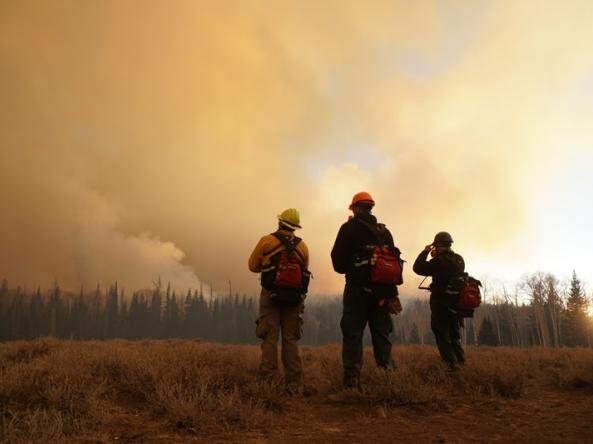
With most of the Western United States experiencing drought or dryness, this summer has the potential to be an especially challenging wildland fire year. Bryan Henry, Meteorologist with the National Interagency Fire Center (NIFC), recently provided the 2020 U.S. Fire Season Outlook in a presentation for the May NIDIS CA/NV DEWS Drought & Climate Outlook Webinar. Henry will also provide another update during the June 22 NIDIS Pacific Northwest DEWS webinar. 

Published on

A Red Flag Warning (RFW) is a term that has been used since the 1960s by the National Oceanic and Atmospheric Administration (NOAA) National Weather Service (NWS) fire weather forecasters to alert forecast users to an ongoing or imminent critical fire weather pattern. 

Published on

The Alliance for Water Efficiency has released a new research study on municipal drought response and water demand. The report, Use and Effectiveness of Municipal Irrigation Restrictions During Drought, explores how drought response measures have been implemented and how water demand reductions have been achieved across different water suppliers in different states.

Published on

NOAA’s National Centers for Environmental Information (NCEI) tracks U.S. weather and climate events that have great economic and societal impacts. Since 1980, the U.S. has sustained 258 weather and climate disasters where the overall damage costs reached or exceeded $1 billion (including adjustments based on the Consumer Price Index, as of January 2020). Among these, 26 droughts cost the nation at least $249 billion, with an average cost of more than $9.6 billion incurred during each event. Only hurricanes were more costly. The cumulative cost for all 258 events exceeds $1.75 trillion.

Published on

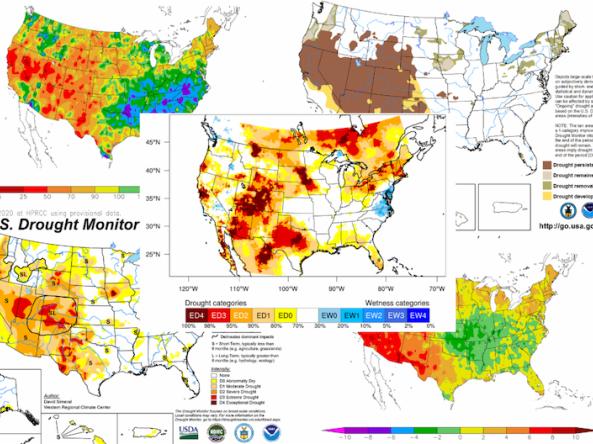
Including Weekly Maps from the U.S. Drought Monitor, the Most Intense Drought Map, the Weeks in Drought Map, the Cumulative Drought Index, the USDM 1 Year Change Map, the USDA Drought Designated Counties Map, the 12-Month SPI Map, the Annual Departure from Normal Precipitation Map, the Palmer Drought Severity Index, and the Soil Moisture Anomaly Monthly Maps.

Published on

The outdoor industry is responsible for 2.2% of national GDP; however, projected increases in the frequency and severity of drought threatens the viability of water-based recreation businesses. NIDIS, in partnership with the University of Colorado's Master of the Environment Graduate Program, hosted a seminar on November 19 to explore the effects of uncertain snowpack levels, streamflows, and warming temperatures on outdoor recreation businesses with a focus on snow- and water-based activities (skiing, fishing, rafting, etc.).

Published on

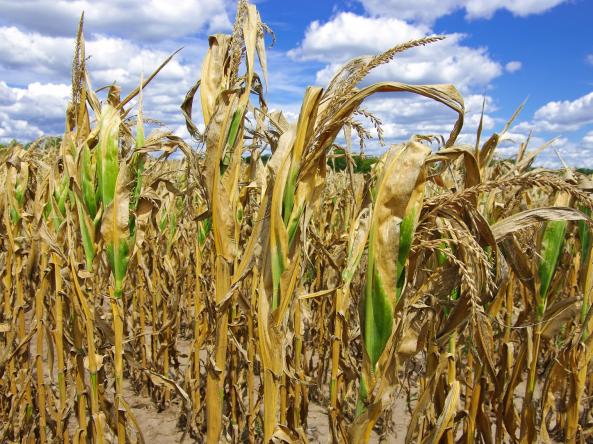
Flash drought can quickly deplete soil moisture and dramatically increase evaporative stress on the environment, leading to significant impacts on agriculture. A recently completed study, led by researchers from the University of Oklahoma and published in the journal Environmental Research Communications, performed a regional analysis across the United States to explore geographic differences of flash droughts.

Published on

The Bureau of Reclamation's FY 2020/2021 WaterSMART Drought Response Program: Drought Contingency Planning Grants Funding Opportunity Announcement (FOA) is now available on grants.gov.  Applications are accepted through Wednesday February 5, 2020, at 4pm MST for FY20 funding. The FOA will be updated in early 2020 with the FY21 application submission deadline.

Published on

The Southeast is currently experiencing a "Flash Drought." Drought conditions increased throughout the month of September due to extreme dryness and warmer than average temperatures for most of the region. The exceptions include the eastern Carolinas and southern Florida, which were impacted by Hurricane Dorian.

Published on

In its simplest form, flash drought is the rapid onset of drought. In contrast with conventional drought, which is mainly driven by lack of precipitation, flash drought usually includes abnormally high temperatures, winds, and/or incoming radiation that leads to abnormally high evapotranspiration (ET) rates. The prediction of flash droughts on sub-seasonal timescales is of critical importance for impact assessment, disaster mitigation, and loss prevention.