U.S. flag

An official website of the United States government

Published on

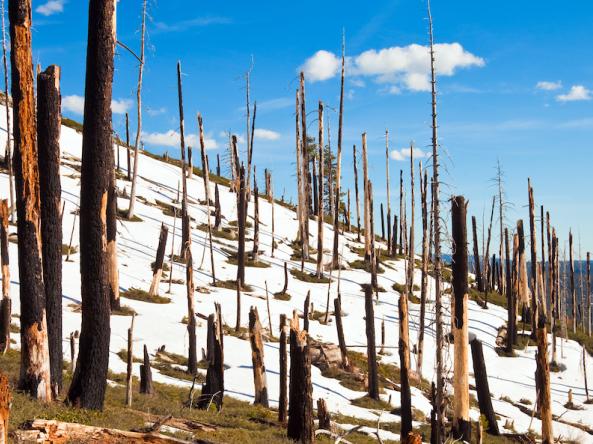
In recent years, wildfires have become more frequent, larger, and burn at higher severity across the western United States and especially in California. A recently published NIDIS-funded study led by scientists with the Desert Research Institute was motivated by an extended dry spell in the winter of 2021-2022 following multiple severe high elevation fires in California.

Published on

These ten maps provide an overview of water storage in the West and a winter snow drought outlook for Water Year 2023. The maps  show how previous La Niña winters have impacted precipitation and temperature across the U.S., the latest National Weather Service outlooks that are influenced by these past La Niña events, and water supply issues in the West, and snow drought conditions.

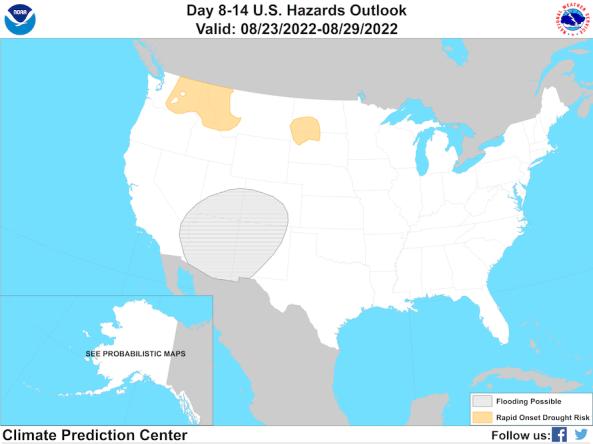
The Climate Prediction Center's Day 8–14 (Week 2) U.S. Hazards Outlook shows potential hazardous conditions related to temperature, precipitation, wind, snow, and rapid onset drought.

Event Date
July 21, 2022
2:00 pm - 3:45 pm
Location
Virtual

NOAA’s National Integrated Drought Information System (NIDIS) and National Integrated Heat Health Information System (NIHHIS) co-hosted two webinars in collaboration with their federal, tribal, state, and local partners, focused on drought and heat in the West and the Southern Plains. The second webinar, held from 2 p.m. to 3:45 p.m. CT on July 21, focused on the Southern Plains (Kansas, New Mexico, Oklahoma, and Texas).

Event Date
July 21, 2022
10:00 am - 12:00 pm
Location
Virtual

NOAA’s National Integrated Drought Information System (NIDIS) and National Integrated Heat Health Information System (NIHHIS) co-hosted two webinars in collaboration with their federal, tribal, state, and local partners, focused on drought and heat in the West and the Southern Plains. The first webinar, held from 10 a.m. to 12 p.m. MT on July 21, focused on the Western U.S. (Southwest, California, Pacific Northwest, Missouri River Basin, and Alaska).
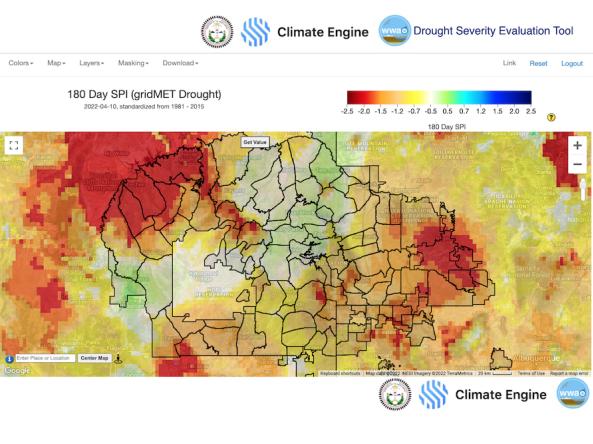
The Navajo Nation Drought Severity Evaluation Tool (DSET) is a co-developed cloud-based web application designed to meet the needs of water resource managers from the Navajo Nation, improving drought reporting and management.

Event Date
February 2, 2022

This Midwest DEWS research webinar presented results from a NIDIS-funded research study that was recently published in the Journal of Hydrometeorology.
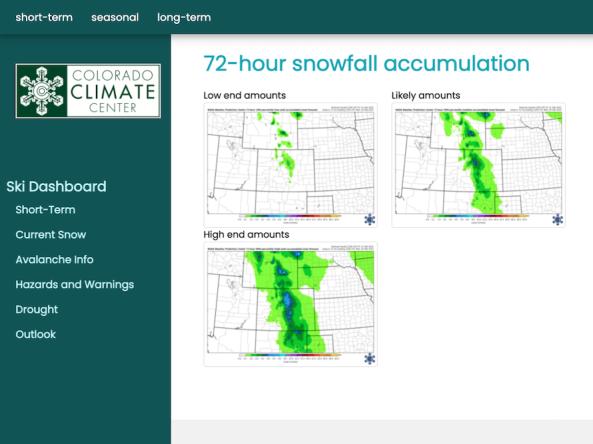
The Intermountain West Ski Dashboard was created as a resource for decision makers within the ski industry in the Intermountain West (Arizona, Colorado, New Mexico, Utah, and Wyoming). 

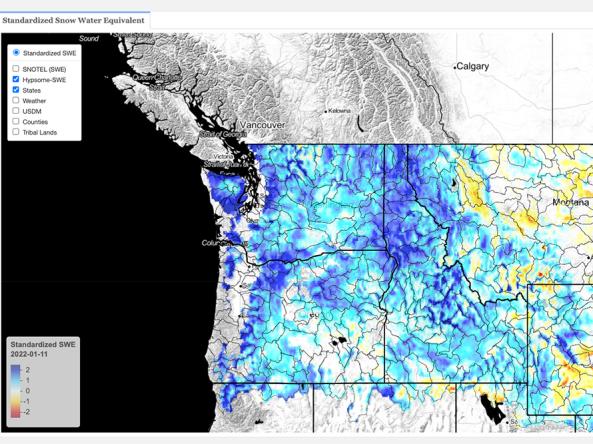
This dataset contains estimates of standardized snow pack anomalies based on the depth of snow water equivalent (SWE), from NOAA/NOHRSC's SNOw Data Assimilation System (SNODAS). Hypsome-SWE represents a method to evaluate the distribution of SWE across watersheds.

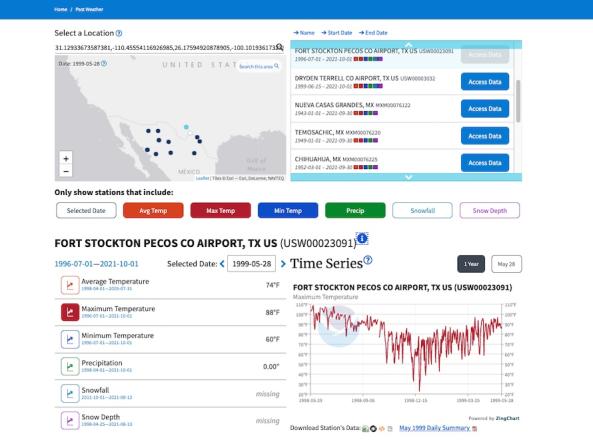
The NCEI Past Weather Tool allows users to search for historical temperature, precipitation, snowfall, and snow depth data for individual weather stations across the United States, as well as many international locations. Stations are part of the GHCN (Global Historical Climatology Network)-Daily dataset. 

Subscribe to Snow Drought