An official website of the United States government
Here’s how you know
The .gov means it’s official.
Federal government websites often end in .gov or .mil. Before sharing sensitive information, make sure you’re on a federal government site.
The site is secure.
The
https://
ensures that you are connecting to the official website and that any information you provide is encrypted and transmitted securely.

The NOAA National Weather Service River Forecast Centers each have an interactive website with a full set of real-time observations and forecasts, including snow and river conditions and water supply forecasts.
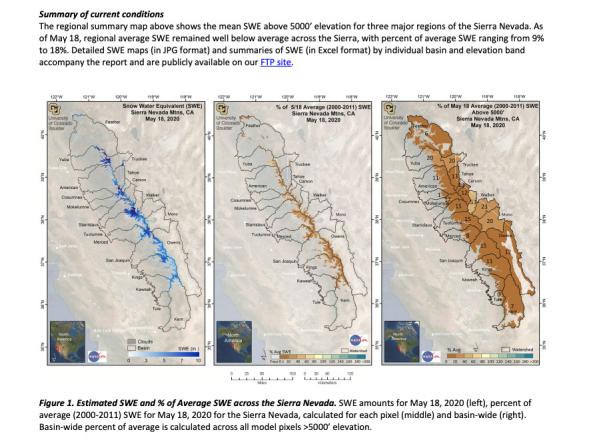
Provided by the University of Colorado Boulder and NASA's Jet Propulsion Laboratory, these reports provide near-real-time estimates of snow-water equivalent (SWE) at a spatial resolution of 500 m for the Sierra Nevada mountain range in California and the Intermountain West region (Colorado, Utah, and Wyoming) from mid-winter through the melt season.
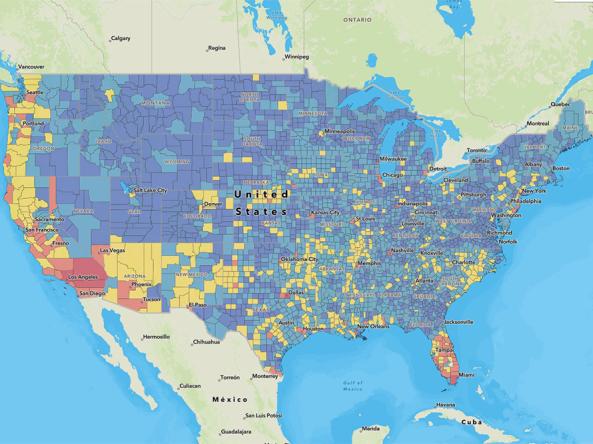
The National Risk Index is an online tool that aims to illustrate the communities most at risk of natural hazards, including drought. It strives to provide a holistic view of community-level risk nationwide by combining multiple hazards with socioeconomic and built environment factors.
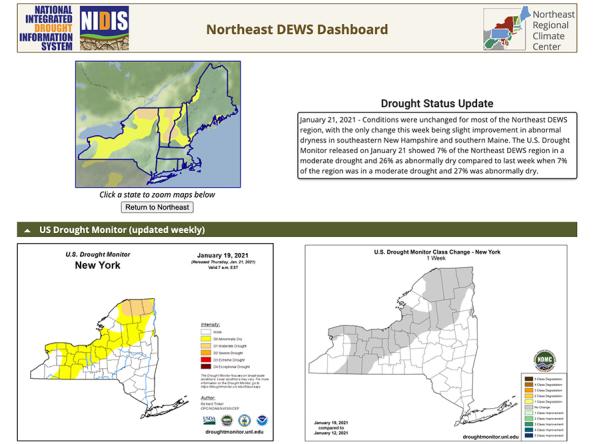
The Northeast Drought Early Warning System (DEWS) Dashboard, hosted by the Northeast Regional Climate Center, displays current drought status, impacts, and future conditions for the Northeast DEWS region.
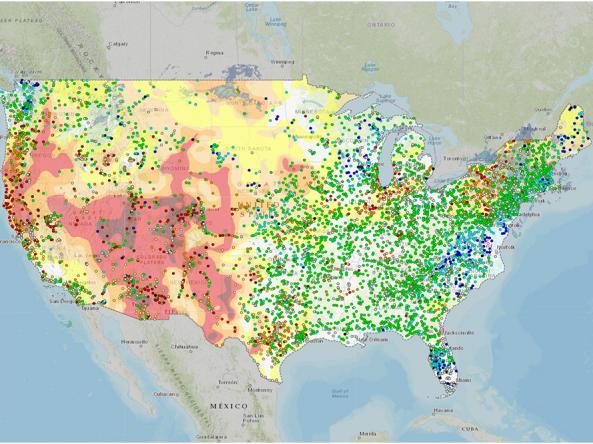
The National Water Dashboard is an interactive map viewer that shows provisional real-time water data from more than 13,000 USGS observation stations in context with weather-related data from other public sources.
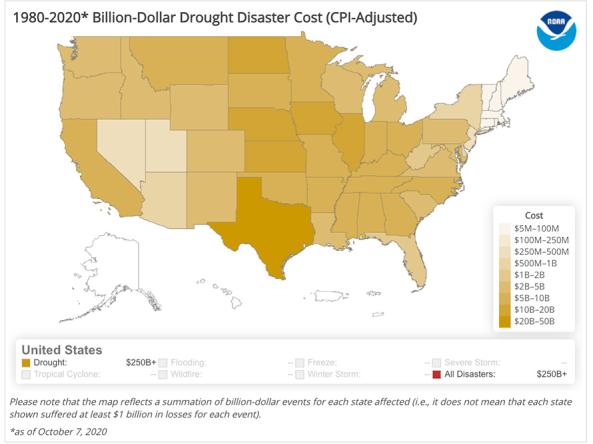
The National Centers for Environmental Information's Billion-Dollar Weather and Climate Disasters shows the weather and climate events that have had the greatest economic impact from 1980 to the present.
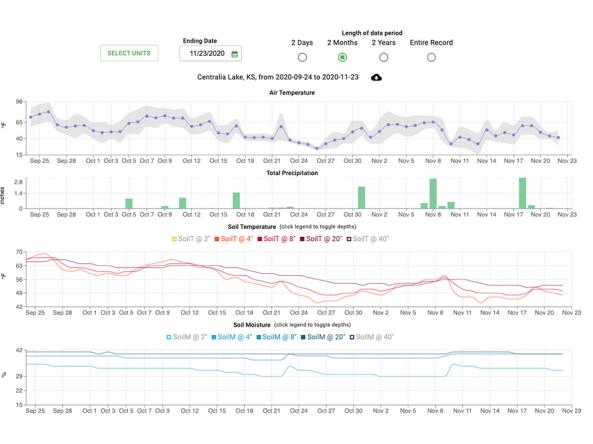
This site provides decision tools and resources using data from weather stations in the SCAN and Tribal SCAN networks. The Soil Climate Analysis Network, also known as SCAN, supports natural resource assessments and conservation activities through its network of automated climate monitoring and data collection sites.
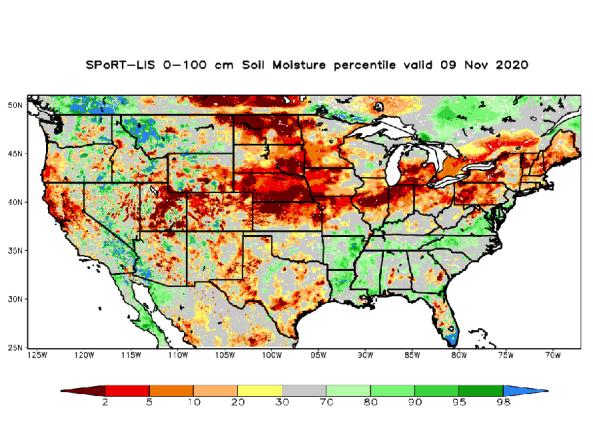
NASA’s Short-term Prediction and Transition Center – Land Information System (SPoRT-LIS) provides high-resolution (about 3-km) gridded soil moisture products in real-time to support regional and local modeling and improve situational awareness.
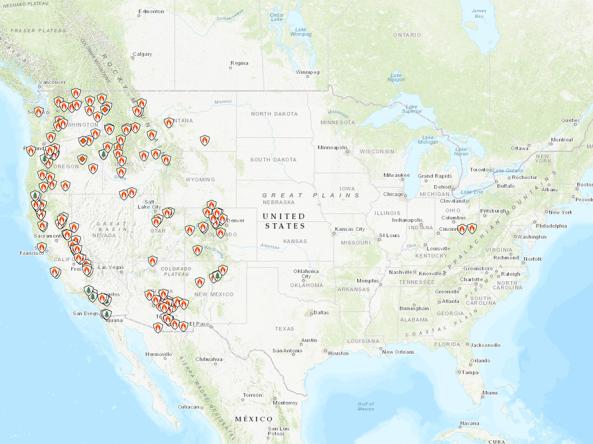
InciWeb is an interagency all-risk incident information management system. InciWeb provides the most current information about wildfires, prescribed burns, floods, hurricanes, and other incidents to the public, news media, and other interested parties.
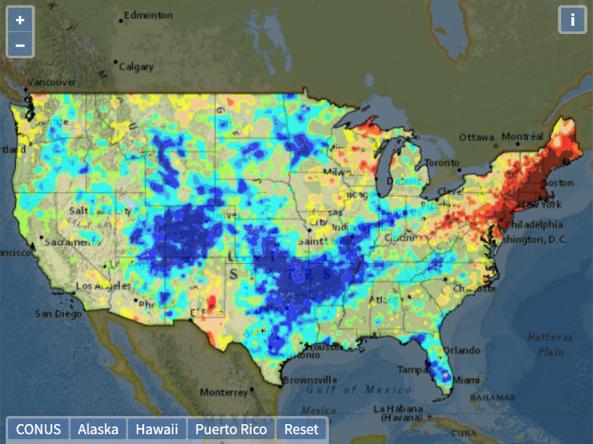
The US Gridded Standardized Precipitation Index (SPI) is derived from the nClimGrid-Monthly dataset and includes timescales of 1, 2, 3, 6, 9, 12, 24, 36, 48, 60 and 72 months.