
Evaporative Stress Can Help Detect Flash Drought in the Southeast
Flash droughts can develop quickly, often in just a few weeks, making them especially difficult to monitor in places like the southeastern United States. This creates a challenge for drought monitoring systems that are often better suited to slower-developing droughts.
In humid regions such as Alabama, drought conditions can emerge even though annual rainfall is relatively high, because hot weather, increased evaporation, and fast drying soils can rapidly reduce water available to plants.
A new study in Journal of Hydrology: Regional Studies, funded in part by NOAA’s National Integrated Drought Information System (NIDIS), evaluated whether the Evaporative Stress Index (ESI) can help identify these rapid changes. Researchers found ESI shows its strongest alignment with soil moisture in the fall and can provide an early signal of developing flash drought conditions in the Southeast. Changes in ESI often emerge alongside rapid soil moisture declines, offering a useful, persistent early warning of drought when used alongside other indicators.
ESI is derived from satellite-based estimates of evapotranspiration using the Atmosphere–Land Exchange Inverse (ALEXI) model. In simple terms, the index reflects how much water vegetation is actually using compared to how much the atmosphere demands. When plants begin to experience moisture stress, evapotranspiration drops, and ESI can turn negative.
The study used Alabama as a testbed for the broader Southeast. Researchers first tested the relationship of ESI and soil moisture by comparing weekly ESI values with in situ soil moisture observations from 18 stations across the state over a 20-year period from 2001 to 2020. Then they used a soil-moisture-based flash drought metric, the Soil Moisture Volatility Index (SMVI), to evaluate the ESI’s ability to corroborate soil moisture flash droughts.
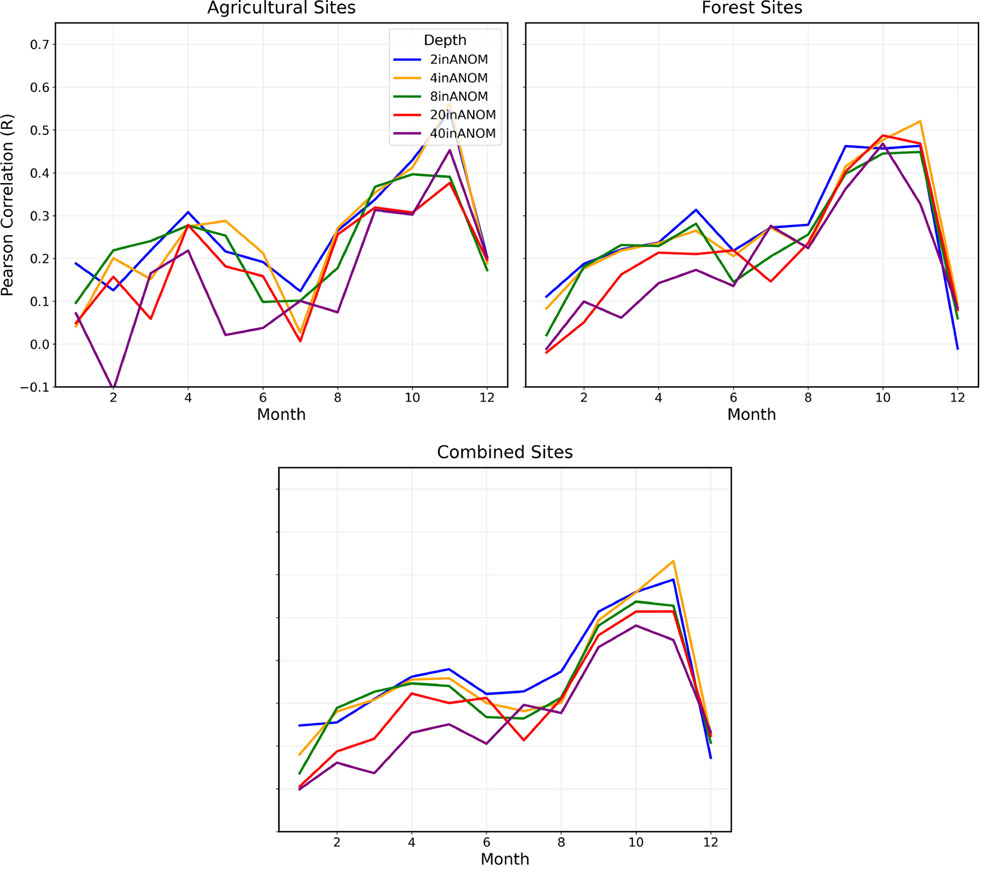
The results found a relationship between ESI and soil moisture, though it is strongly seasonal. Correlations were modest when all months were combined, but they strengthened substantially from late spring through fall and were strongest September through November. Correlations were weakest in winter, when the region doesn’t receive as much sunlight, and they also dipped in mid-summer, likely because of the effect of crop growth-stage, wetter summer conditions, and mixed land cover within each 4-km satellite pixel.
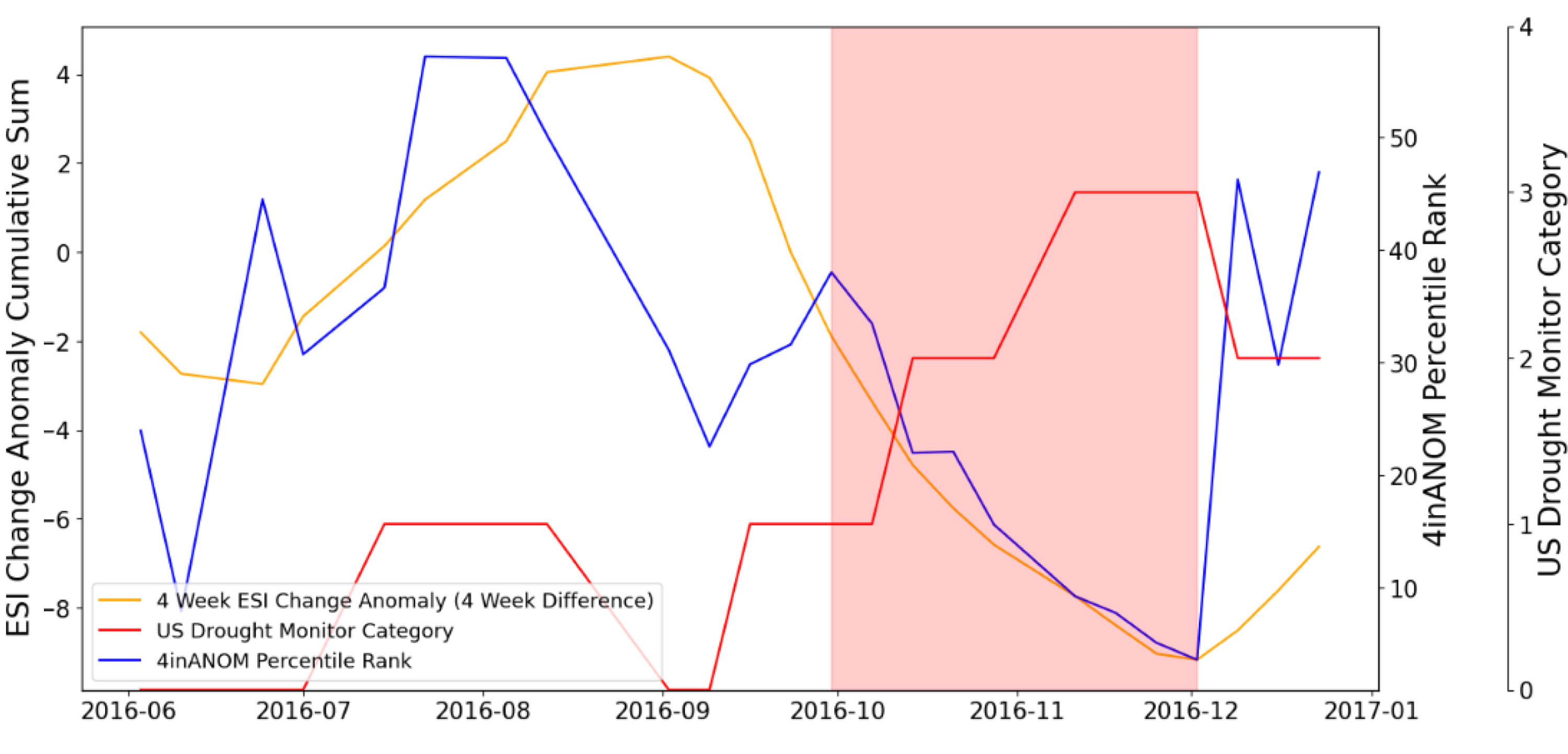
An important finding was that changes in ESI—rather than ESI alone—often provided earlier warning of flash drought onset. Across the flash drought events identified in the soil moisture record, negative ESI change anomalies frequently appeared one to two weeks before the soil moisture–defined flash drought was indicated. On average, this happened in about 60% of events, and during fall the agreement rose to as high as 90%.
The study found that ESI change anomalies calculated about two weeks before flash drought onset were most often the strongest indicators. Further, in some cases, brief rainfall can temporarily improve shallow soil moisture and delay drought classification, even as vegetation remains stressed. These periods without a change in evaporation rate appearing in ESI reflect this longer memory of plant stress, offering earlier awareness of intensifying drought conditions.
This study did not evaluate ESI as a standalone drought metric, but sought to better understand soil moisture–evapotranspiration relationships during flash drought. As with any single indicator, ESI reflects only part of the drought signal, particularly in the Southeast where interactions between the land and atmosphere interactions are complex and highly variable. However, changes in ESI often diverged alongside rapid soil moisture declines, highlighting its potential for short-lead early warning—especially in the fall—and its ability to capture lingering vegetation stress even when soils briefly recover. This new understanding will be useful to people monitoring drought, as using ESI change alongside soil moisture and precipitation indicators may provide a more complete and timely picture of flash drought development.