
Why Heavy Rain Doesn't Always End a Drought
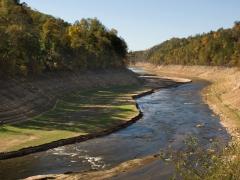
Rain is essential to end a drought. But when rain falls too fast during heavy storms, the soil cannot absorb it quickly enough. This means that even very wet weather might not actually help relieve drought conditions.
In recent decades, these more intense rainstorms are occurring more frequently. Drought managers and researchers are increasingly concerned about this phenomenon, because it makes it more difficult to recover from drought and may cause harmful drought impacts to agriculture and ecology to arrive more quickly.
A new study in Water Resources Research, funded in part by NOAA’s National Integrated Drought Information System (NIDIS), examined how soil absorbs water compared to the amount and intensity of precipitation that fell. Using data from three Illinois Climate Network stations, researchers found that how hard it rains plays a huge role in how much water percolates into the ground. They call this measure of soil moisture recharge from rainfall events "precipitation effectiveness."
Heavier Rainfall Can Lead to Less Water Being Absorbed
After hundreds of rain storms, researchers found soil moisture recharge and precipitation effectiveness ranged from under 10% to over 80% of total precipitation. Rainfall intensity and the starting soil moisture conditions explained most of this variability. Heavier rainfall and wetter soils before the storm led to less overall infiltration, no matter how much total rain fell.
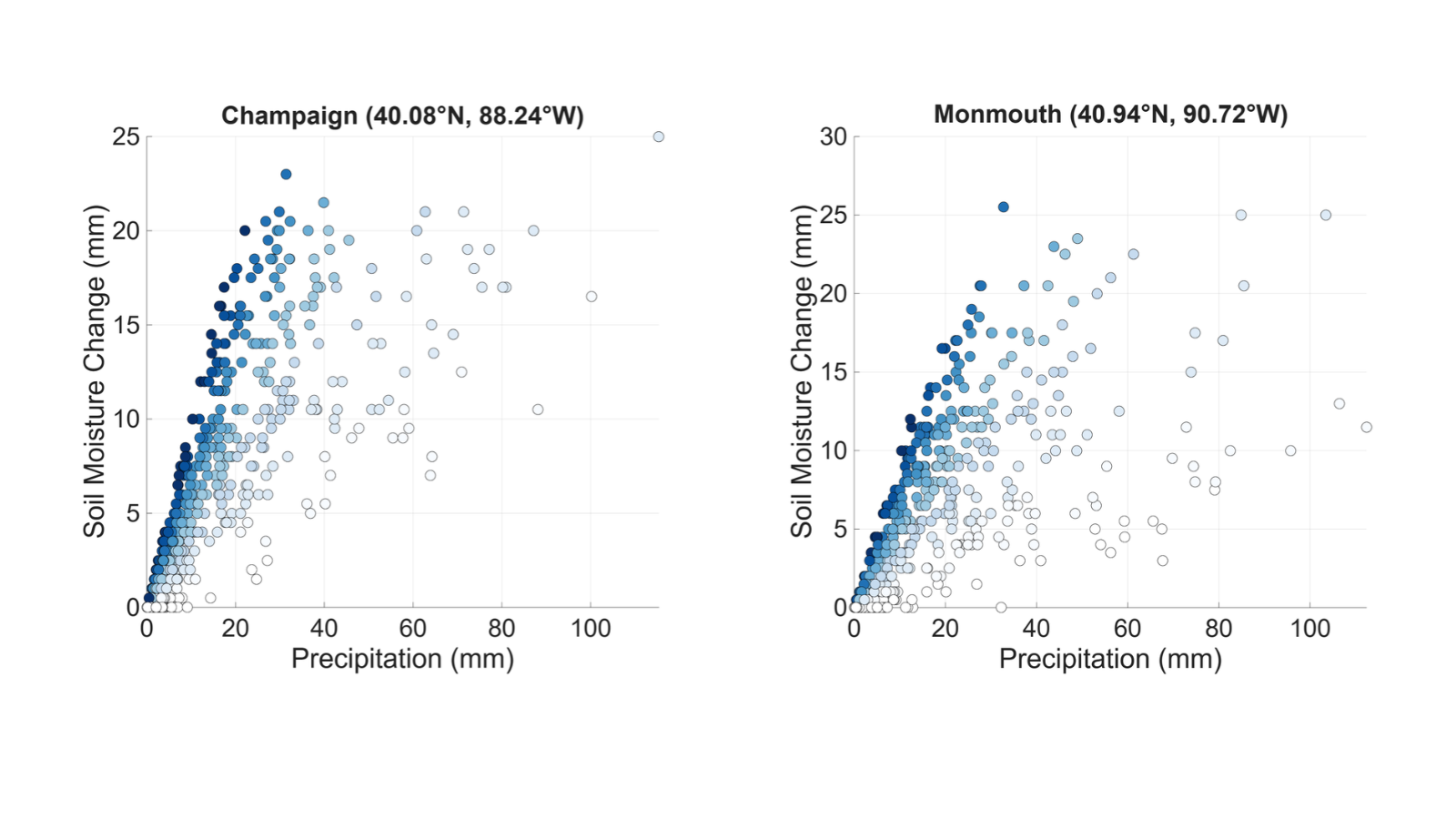
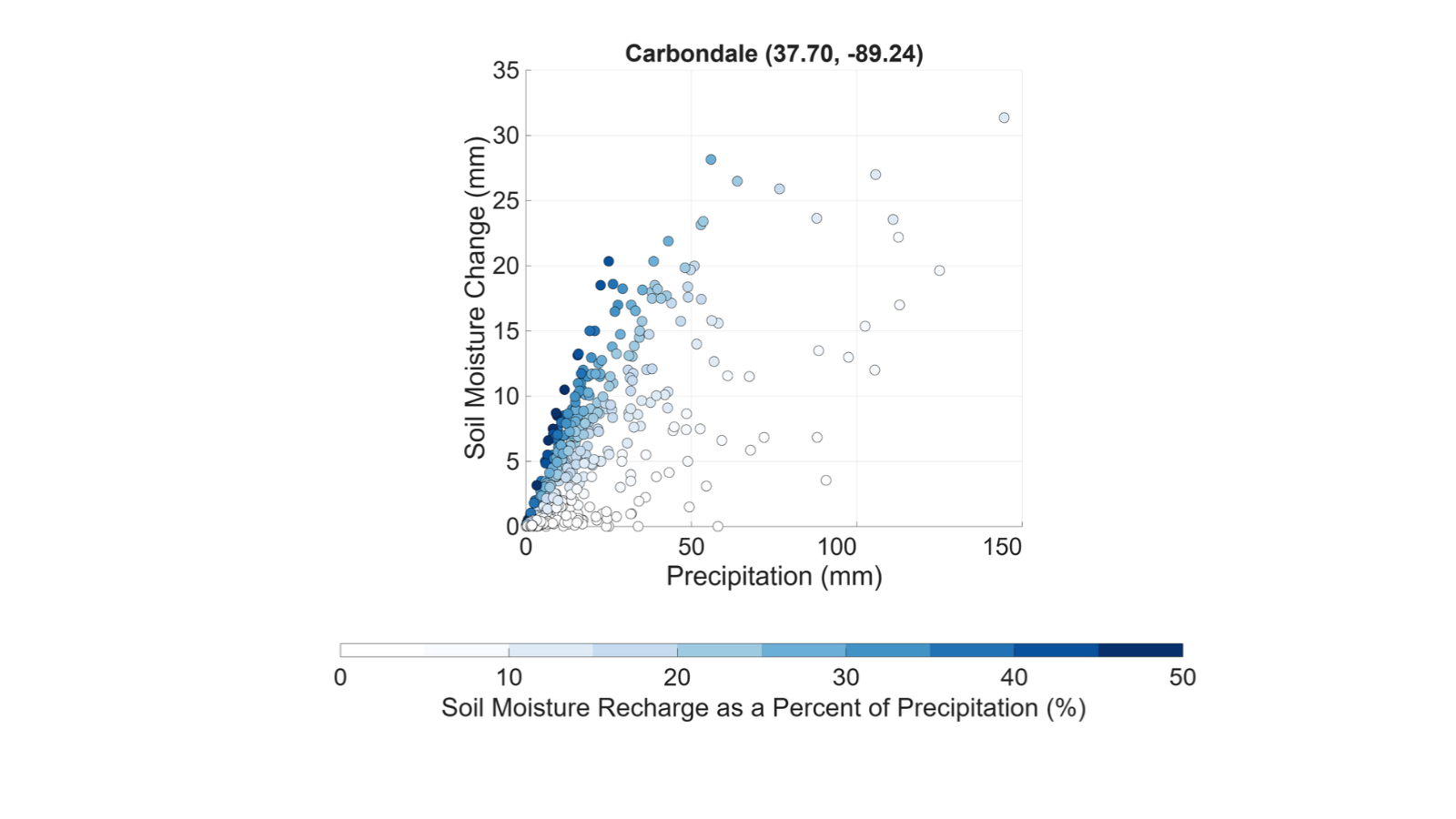
The research team found a strong connection between heavy rain, soil absorption, and growing season soil moisture in the Midwest U.S. When rain falls too fast and hard, less water is available in the soil for plants and wildlife to use.
The study used Illinois as a testbed for the broader United States. They measured water soaking into the top 3 feet of soil after storms from May to October between 2008 and 2023 to determine precipitation effectiveness. To get clear results, they gathered data from three locations with different soil types and land uses.
The researchers developed a machine learning model that accurately estimates precipitation effectiveness based on rain intensity data from local weather stations. Soil moisture recharge and precipitation effectiveness from this tool can help track and predict drought impacts, which is crucial as more intense downpours become more common.
Improving Drought Assessment
This work fills an important gap. Current drought tools mostly use precipitation-based drought monitoring tools for critical drought monitoring and assessment. While valuable, these tools may miss the effect of rain intensity on soil moisture and drought.
Precipitation effectiveness is a useful concept to better assess drought conditions and the influence of precipitation on agricultural or ecological drought, and is one of the focus areas to improve drought assessment identified in the Drought Assessment in a Changing Climate technical report.
This work, in addition to nine new NIDIS-funded research projects, seeks to improve drought assessment. The projects, funded through the Coping with Drought research competition, will improve drought indicators and assessment in order to support more informed and timely decisions, thereby leading to reduced impacts and cost as mandated by the NIDIS Public Law (P.L. 115-423, P.L. 109-430, P.L. 113-86).
These projects support NOAA’s mission by advancing our scientific understanding of drought and partnerships that help turn scientific understanding into long-term drought resilience. More accurate drought assessments will result in better decisions and reduced drought risk across sectors of the U.S. economy.