Southern California Drought Early Warning Outlook: November 5, 2026
Southern California (San Luis Obispo, Santa Barbara, Ventura, Los Angeles, San Bernardino, Orange, Riverside, San Diego, and Imperial Counties)
Current Drought Conditions
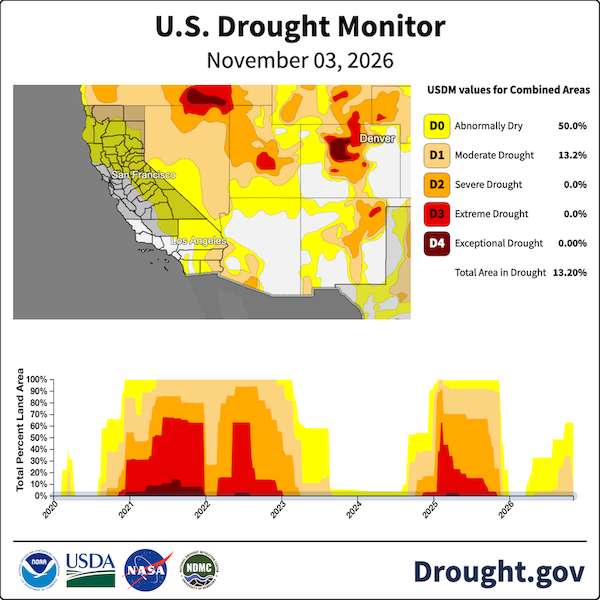
- Abnormal dryness and drought developed in interior Southern California since Spring 2026.
- Above-normal temperatures and low precipitation prevailed since January 2026. Temperatures since then were the highest on record in the Southwest U.S.
- Above-normal precipitation in Southwest U.S. during October 2026 has led to a drought removal in some areas.
Drought Outlook and Predictability
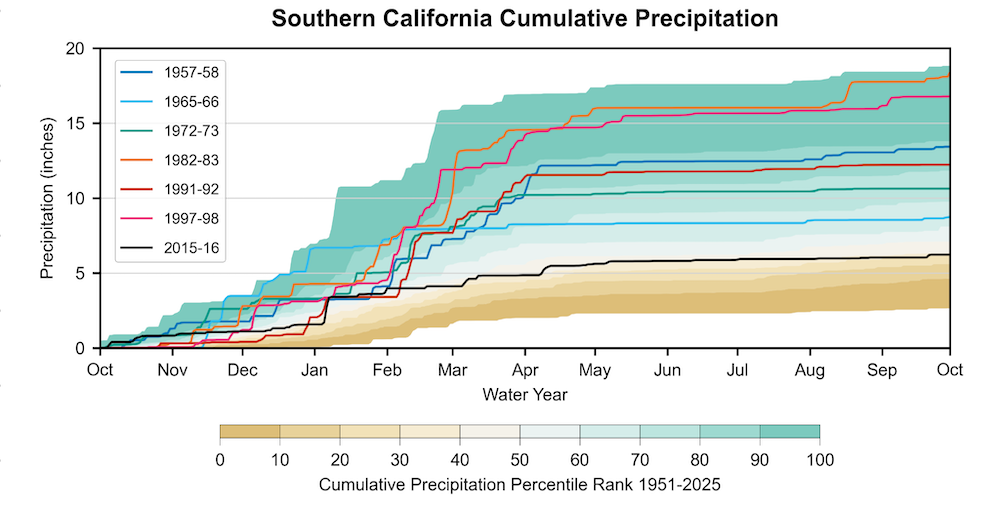
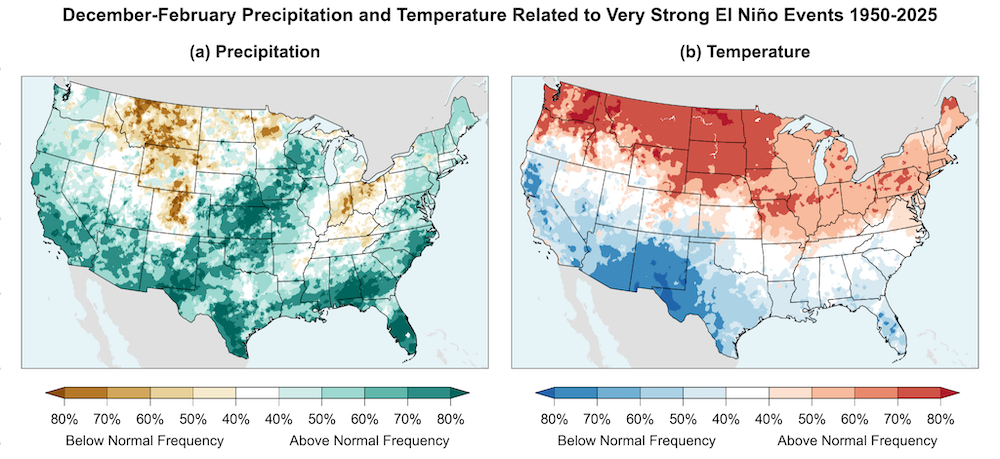
- Very strong El Niño events are related to increased chances for above-normal precipitation between October and April, suggesting the same for 2026-2027.
- Precipitation during very strong El Niño events is often delivered in large quantities in short duration, particularly in December through March.
- However, there are some exceptions. Precipitation during the 2015-2016 very strong El Niño event did not materialize as expected.
Drought Outlooks for Economic Sectors
Explore outlooks for the water utilities, public health, and agriculture sectors in Southern California.
Water Utilities Sector Outlook
- Across the Southwest, there is a significantly increased likelihood of above-normal precipitation throughout the winter wet season. High Confidence
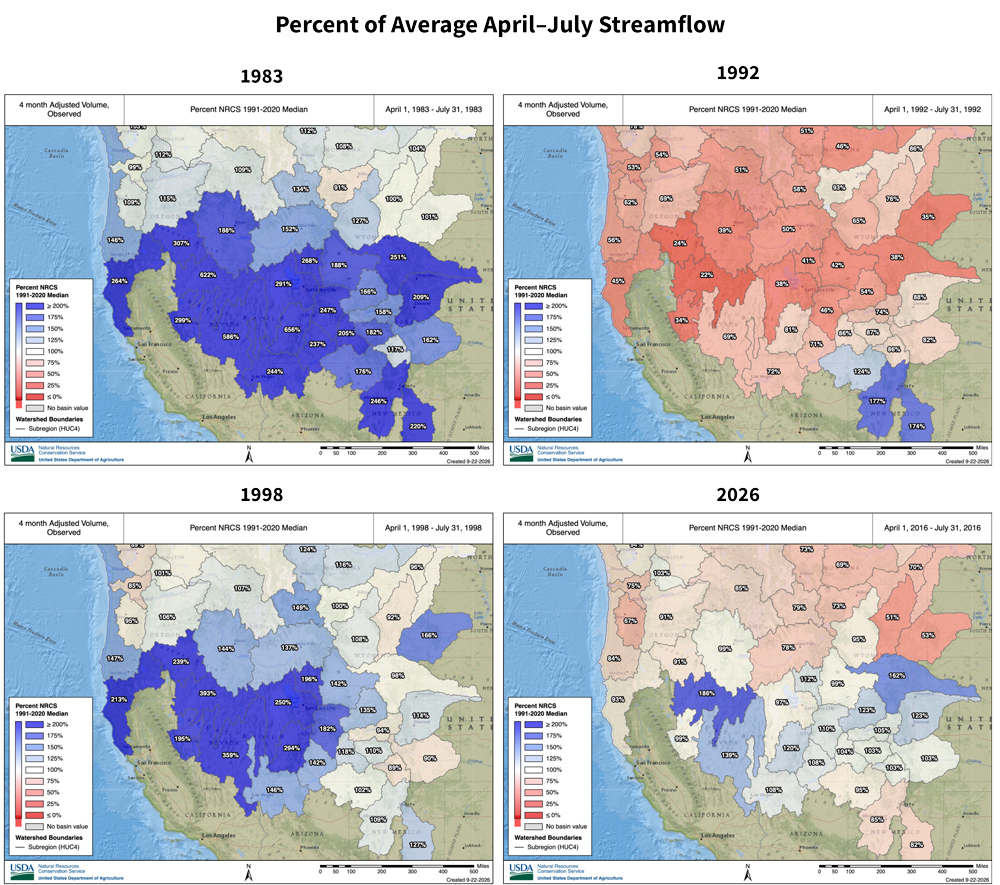
- Consequently, there is an increased chance of above-normal streamflow in 2027 compared to historical averages. High Confidence
- Due to forecast hydrological conditions, there is a much greater likelihood of higher reservoir and groundwater levels in 2027 compared to 2026 in the Southwest U.S. High Confidence
- Because major reservoirs, such as Lake Powell and Lake Mead, remain near historic lows, it’s unlikely these reservoirs will reach above-average capacity without consecutive years of above-normal precipitation. Medium Confidence
- In 2028, the Southwest U.S. has increased chances for reduced water availability compared to average. Low Confidence
- The ongoing very strong El Niño event significantly increases the likelihood of above-normal precipitation, snowpack, and streamflow in 2027.
- There are increased chances of a La Niña event in 2027 and 2028, which increases the chances for below-normal precipitation, snowpack, and streamflow in 2028.
Public Health Sector Outlook
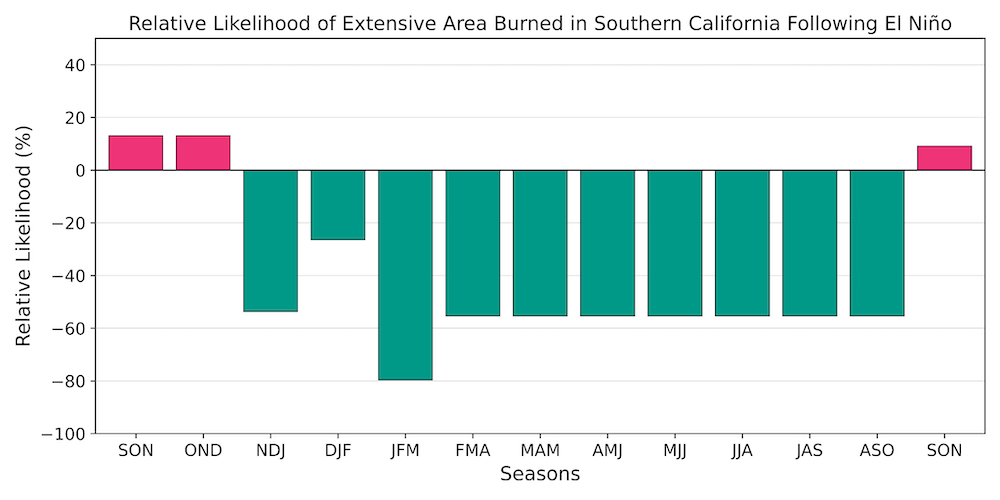
- There is a decreased risk of wildland fire and poor air quality in the Western United States during spring, summer, and autumn 2027. High Confidence
- There is a decreased risk of poor air quality due to blowing dust in Southern California between April-June. Medium Confidence
- The chances for flooding and associated impacts are much greater than normal between December and March in Southern California. High Confidence
- Very strong El Niño events significantly decrease the risk of wildland fires in the Western United States during the following spring, summer, and autumn.
- Very strong El Niño events are typically followed by below-average wind speeds between April and June, decreasing the risk of blowing dust.
- Heavy precipitation events between December and March that lead to flooding are more likely during very strong El Niño events.
Agriculture Sector Outlook
- Higher agricultural yields are likely during late 2026 and 2027. High Confidence
- However, intense rainfall over short periods could harm crops through waterlogging and localized flooding. Medium Confidence
- El Niño increases the likelihood of heavy precipitation events and above-normal seasonal rainfall in California.
About the Outlook
NOAA’s National Integrated Drought Information System (NIDIS) and Physical Sciences Laboratory are partnering with the California State Climatologist/California Department of Water Resources, NOAA’s National Weather Service (NWS) and National Centers for Environmental Information (NCEI), and the California-Nevada Adaptation Program (a NOAA CAP team) to deliver a user-oriented and evidence-based approach to drought early warning for sectors of our Nation’s economy susceptible to the hazards of too much and too little water.
This outlook disseminates sector-specific drought scenarios that are based on tailored monitoring and forecasting information, which will enable users to make proactive decisions ahead of drought. The focus sectors include water utilities, agriculture, and public health in Southern California. This outlook uses data available as of November 5, 2026 at 10 a.m. PT unless indicated otherwise. Several perspectives inform sector-specific drought scenarios, including observations of current conditions and expert interpretation of many types of forecasts to anticipate the future.