




The Southwest has experienced an on-again, off-again winter snow pattern. As we prepare for the spring snowmelt, moderate (D1) to exceptional (D4) drought persists across the region. This drought briefing focused on winter drought conditions and forecasts for spring for Arizona, Colorado, New Mexico, Nevada, and Utah. It also included a closer look at April 1 snowpack conditions along with a deeper dive into snow measurement networks and how snowpack is measured across the West.
The most recent U.S. Drought Monitor indicates that much of the Southwest is experiencing some level of drought. Following a fairly dismal November, a wet December, and a dry January, February, so far, has had a few good precipitation events. How will this winter's precipitation impact the long-term drought conditions in the Southwest? This short drought briefing focused on winter drought conditions and forecasts for Arizona, Colorado, Nevada, New Mexico, and Utah.
The most recent United States Drought Monitor indicates that nearly all of the Southwest is experiencing some level of drought. Following a fairly dismal November, December precipitation has improved but not eliminated drought conditions. This short drought briefing focused on winter drought conditions and forecasts for Arizona, Colorado, Nevada, New Mexico, and Utah.
The most recent United States Drought Monitor indicates that nearly all of the Southwest is experiencing some level of drought, but summer and early fall precipitation has improved conditions. This short drought briefing focused on winter drought conditions and forecasts for Arizona, Colorado, New Mexico, Utah, and Nevada, followed by a discussion on drought and urban horticulture.
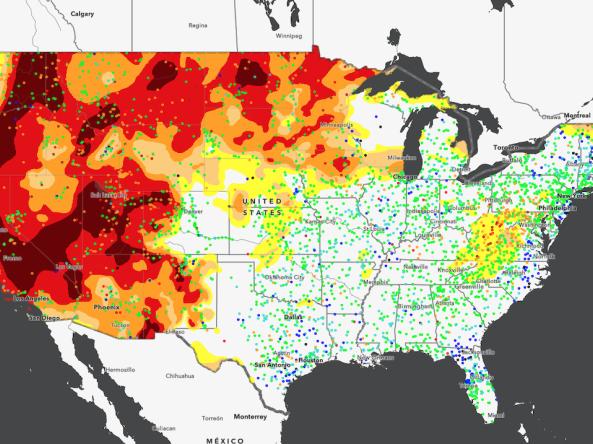
North Dakota State University Extension specialists hosted a live monthly webinar to assist ranchers as they navigate the drought. Each webinar begins with an update on drought conditions and climate outlook. Specialists then discuss upcoming drought triggers, how to assess triggers for ranches, and management strategies to consider. The goal is to help ranchers make timely decisions and enhance their ability to withstand the drought, as well as give them an opportunity to discuss drought-related concerns.
North Dakota State University Extension specialists will host a live monthly webinar to assist ranchers as they navigate the drought. Each webinar will begin with an update on drought conditions and climate outlook. Specialists will then discuss upcoming drought triggers, how to assess triggers for ranches, and management strategies to consider. The goal is to help ranchers make timely decisions and enhance their ability to withstand the drought, as well as give them an opportunity to discuss drought-related concerns.
North Dakota State University Extension specialists will host a live monthly webinar to assist ranchers as they navigate the drought. Each webinar will begin with an update on drought conditions and climate outlook. Specialists will then discuss upcoming drought triggers, how to assess triggers for ranches, and management strategies to consider. The goal is to help ranchers make timely decisions and enhance their ability to withstand the drought, as well as give them an opportunity to discuss drought-related concerns.
North Dakota State University Extension specialists will host a live monthly webinar to assist ranchers as they navigate the drought. Each webinar will begin with an update on drought conditions and climate outlook. Specialists will then discuss upcoming drought triggers, how to assess triggers for ranches, and management strategies to consider. The goal is to help ranchers make timely decisions and enhance their ability to withstand the drought, as well as give them an opportunity to discuss drought-related concerns.
North Dakota State University Extension specialists will host a live monthly webinar to assist ranchers as they navigate the drought. Each webinar will begin with an update on drought conditions and climate outlook. Specialists will then discuss upcoming drought triggers, how to assess triggers for ranches, and management strategies to consider. The goal is to help ranchers make timely decisions and enhance their ability to withstand the drought, as well as give them an opportunity to discuss drought-related concerns.