U.S. flag

An official website of the United States government

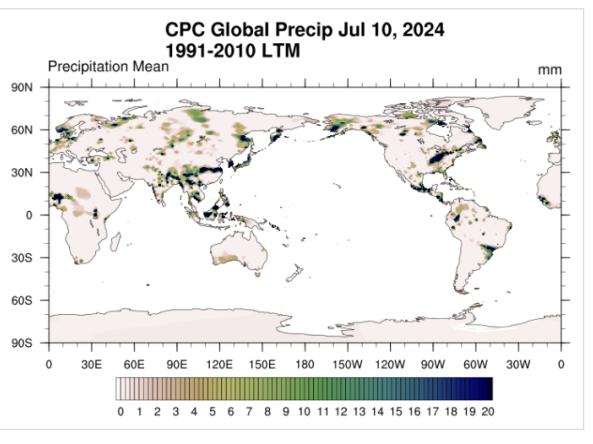
The National Weather Service's Climate Prediction Center (CPC) produces a Global Unified Daily Precipitation product from 1979-present.

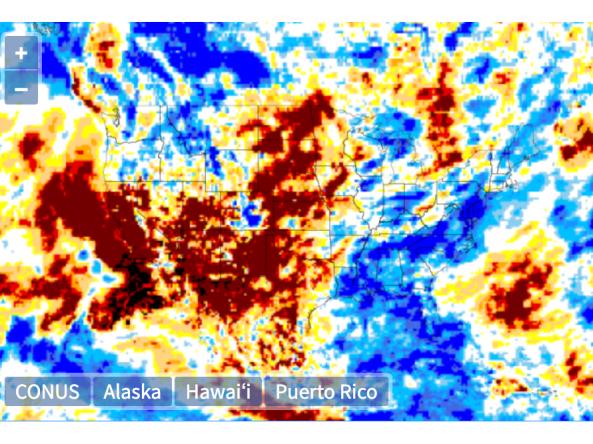
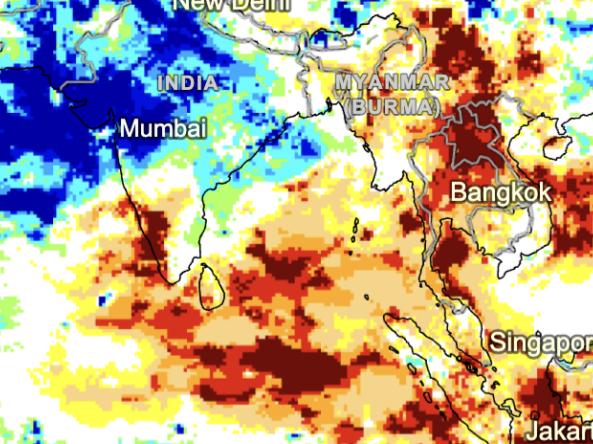
The Global Gridded Standardized Precipitation Index (SPI) is derived from the CMORPH daily dataset and includes timescales of 1, 3, 6 and 9 months.  The NOAA CMORPH precipitation dataset is a gridded dataset derived from combining numerous microwave-based estimates from low orbiter satellites. 

The Global Gridded Standardized Precipitation Index (SPI) is derived from the CMORPH daily dataset and includes timescales of 1, 3, 6 and 9 months.  The NOAA CMORPH precipitation dataset is a gridded dataset derived from combining numerous microwave-based estimates from low orbiter satellites. 

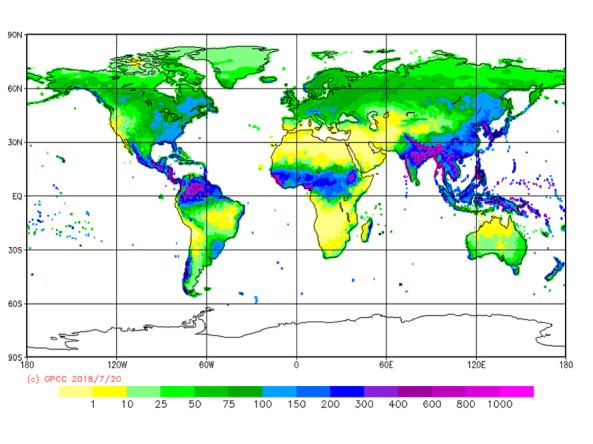
The GPCC provides unrestricted access to its monthly gridded precipitation data sets for climate monitoring purposes and related research.

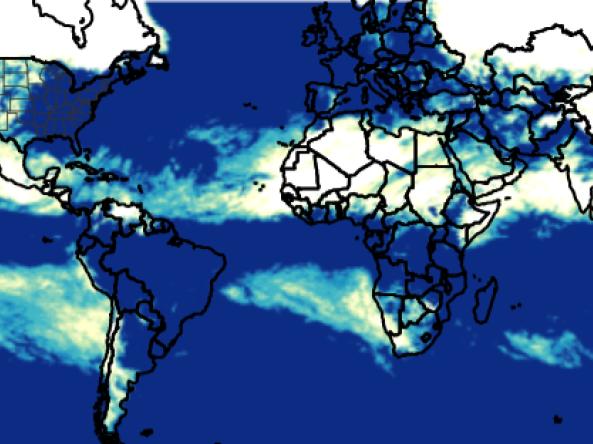
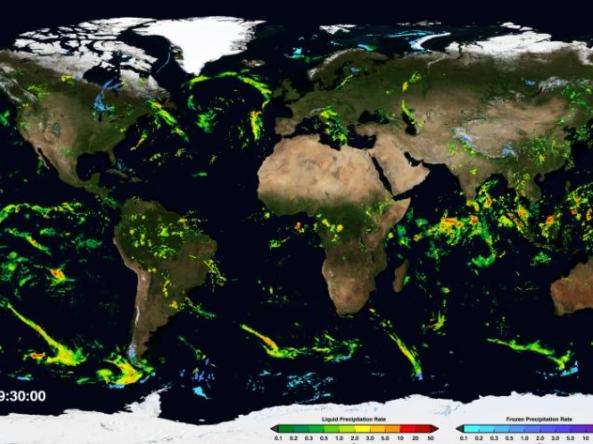
NASA GPM-IMERG: The Integrated Multi-satellitE Retrievals for GPM (IMERG) algorithm combines information from the GPM satellite constellation to estimate precipitation over the majority of the Earth's surface.  

ERA5 is the fifth generation ECMWF atmospheric reanalysis of the global climate covering the period from January 1940 to present. ERA5 is produced by the Copernicus Climate Change Service (C3S) at ECMWF.

NASA GPM-IMERG: The Integrated Multi-satellitE Retrievals for GPM (IMERG) algorithm combines information from the GPM satellite constellation to estimate precipitation over the majority of the Earth's surface.  

ERA5 is the fifth generation ECMWF atmospheric reanalysis of the global climate covering the period from January 1940 to present. ERA5 is produced by the Copernicus Climate Change Service (C3S) at ECMWF.

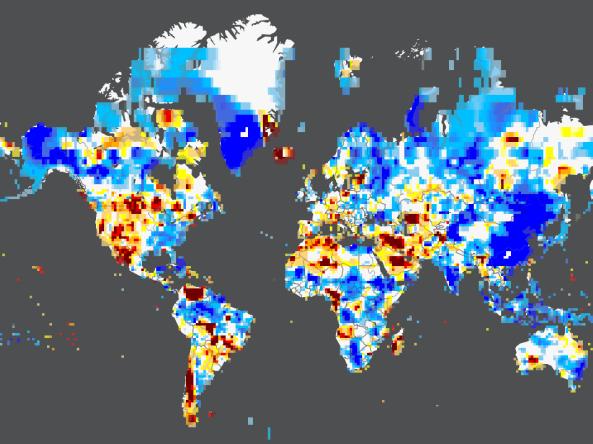
This Standardized Precipitation Index (SPI) is derived from the Global Precipitation Climatology Centre's gridded monthly precipitation dataset.

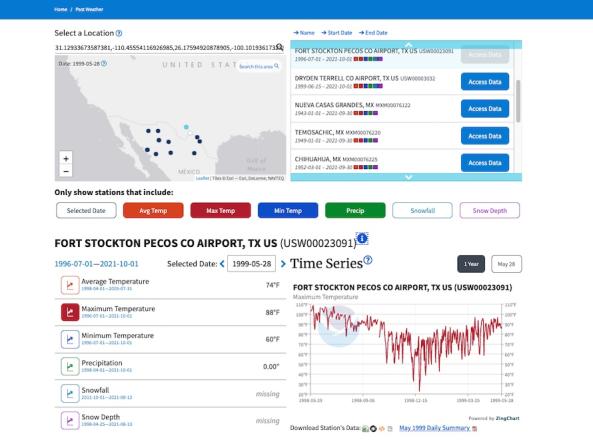
The NCEI Past Weather Tool allows users to search for historical temperature, precipitation, snowfall, and snow depth data for individual weather stations across the United States, as well as many international locations. Stations are part of the GHCN (Global Historical Climatology Network)-Daily dataset. 

Subscribe to Global